
Find these in Workbench → Models → Structural models → ASTM · Virtual Test Lab, or filter exercises by ASTM. Each opens a separate connected SIMULATE study. Review the laminate, edit the test inputs, then Run or use live refresh where available.
Test-inspired, not ASTM certification. Defaults are hypothetical teaching values. The standards define physical test procedures; these bounded calculations do not reproduce every fixture, correction or validity requirement. Always consult the applicable current standard.
D6641 · Compression coupon
Uniform small-strain compression using linked laminate Ex and thickness. Measured compressive strength supplies a screening ratio; fixture, tabs, buckling and failure evolution are not simulated.
Equations, inputs and interpretation
σ = P/(wt), ε = σ/Ex, δ = εL.
Ex and total thickness come from the connected laminate. Stress, strain and force are positive compression magnitudes. The curve is elastic specimen shortening, not crosshead travel. Measured compressive strength is an independent input; the solver does not predict it from Ex. The small-strain limit is 2%.
- Specimen width (mm)
- Gauge length (mm)
- Applied force (N)
- Measured compressive strength (MPa)
Connected workflow
Linked-input preview, not solved results. Gray blocks are not configured.
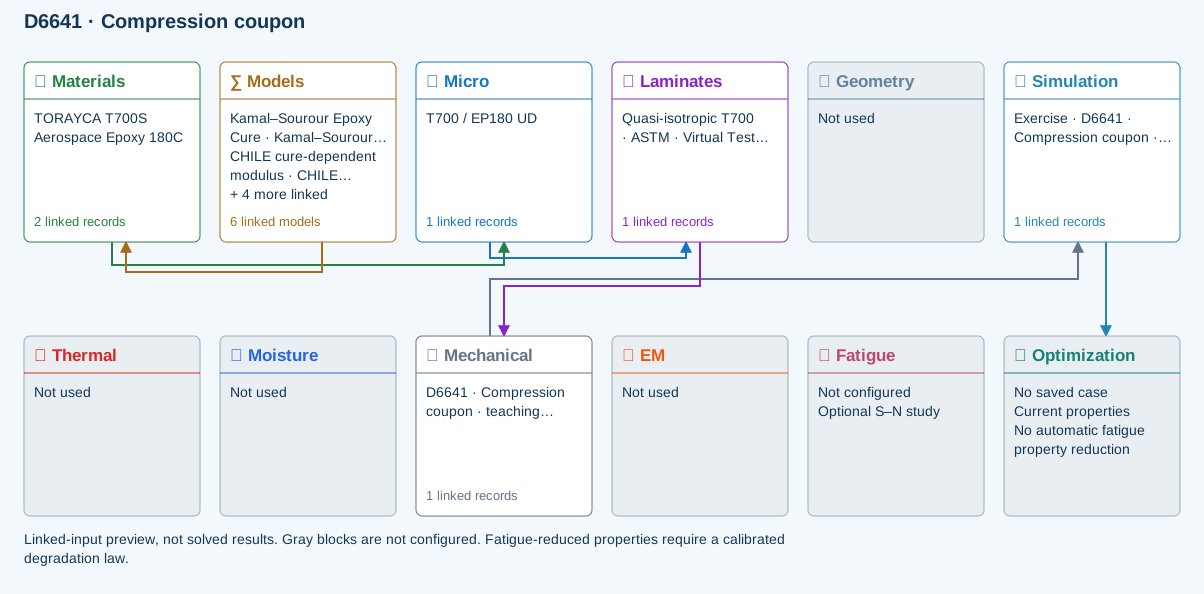
∑ Selected models & submodels
These are the exercise’s linked choices, not solved results. Open a first-layer model to see its submodels and scope.
Kamal–Sourour autocatalytic · Kamal–Sourour Epoxy Cure
Reusable material model. It contributes only when assigned to a material used by this simulation; separate model records can supply independent properties.
Calibration & applicability
Illustrative model defaults — replace with characterized resin kinetics
CHILE (degree of cure) · CHILE cure-dependent modulus
Reusable material model. It contributes only when assigned to a material used by this simulation; separate model records can supply independent properties. Cure-dependent modulus does not automatically scale strength allowables.
Calibration & applicability
CHILE(α), section 2.4 of Materials 2019, 12, 259. Example parameters, not measured EP180 data. Fixed Poisson ratio; no viscoelastic relaxation or Tg softening. Incremental elastic stress integration at saved process intervals: check time-step convergence. Strength allowables are independent measured inputs, not scaled with modulus.
Temperature-dependent tabular · Temperature-dependent Thermal
Reusable material model. It contributes only when assigned to a material used by this simulation; separate model records can supply independent properties. Micro uses the 23 °C reference; Process evaluates the same table at local temperature, without extrapolation.
Calibration & applicability
Check source data, applicable environment and validity limits in the model record; saved defaults are not experimental validation.
1D Fickian diffusion · Layered Fickian Diffusion
Reusable material model. It contributes only when assigned to a material used by this simulation; separate model records can supply independent properties.
Calibration & applicability
Check source data, applicable environment and validity limits in the model record; saved defaults are not experimental validation.
Halpin–Tsai · T700 / EP180 UD
One compatible homogenization model per Micro recipe. Separate recipes compare models; their predictions are not blended.
∑ Theory & assumptionsVirtual test · compression coupon · D6641 · Compression coupon · teaching study
Uniform small-strain compression using linked laminate Ex and thickness. Measured compressive strength supplies a screening ratio; fixture, tabs, buckling and failure evolution are not simulated.
Linked laminate reference state
Ply stiffness, thickness and orientation come from the linked laminate. Other thermal or structural analyses must be run separately.
Calibration & study controls
Teaching example
Specimen width: 25 mm
Gauge length: 25 mm
Applied force: 1000 N
Positive magnitude. Compression is reported as a magnitude.
Measured compressive strength: 400 MPa
Data travelling between blocks
Micro → Laminates
Predicted ply stiffness, strength, density and expansion properties.
Materials → Micro
Constituent stiffness, strength, density and thermal / moisture properties.
Models → Materials
Model choices and calibrated parameters.
Mechanical → Simulation
SIMULATION selects this case and its analysis model; the case owns its applicable cycle and input references.
Laminates → Mechanical
Ply angles and thicknesses, stiffness, mass and ply properties.
Simulation → Optimization
Linked inputs and current-property response for candidate evaluation.
D5379 / D7078 · Shear coupon
Uniform nominal shear between notches using linked laminate Gxy and thickness. Not a notch/fixture stress field or nonlinear shear solution. Gauge length is the effective shear deformation length, not crosshead travel.
Equations, inputs and interpretation
τ = P/(bnet t), γ = τ/Gxy, δ = γLg.
Gxy and thickness come from the connected laminate. This uniform nominal-field approximation does not resolve the V-notch or grip stresses. Lg is an effective shear gauge length, not fixture travel. Supply measured shear strength separately. Both D5379 and D7078 are represented only at this nominal-response level.
- Net section width (mm)
- Shear gauge length (mm)
- Applied force (N)
- Measured shear strength (MPa)
Connected workflow
Linked-input preview, not solved results. Gray blocks are not configured.
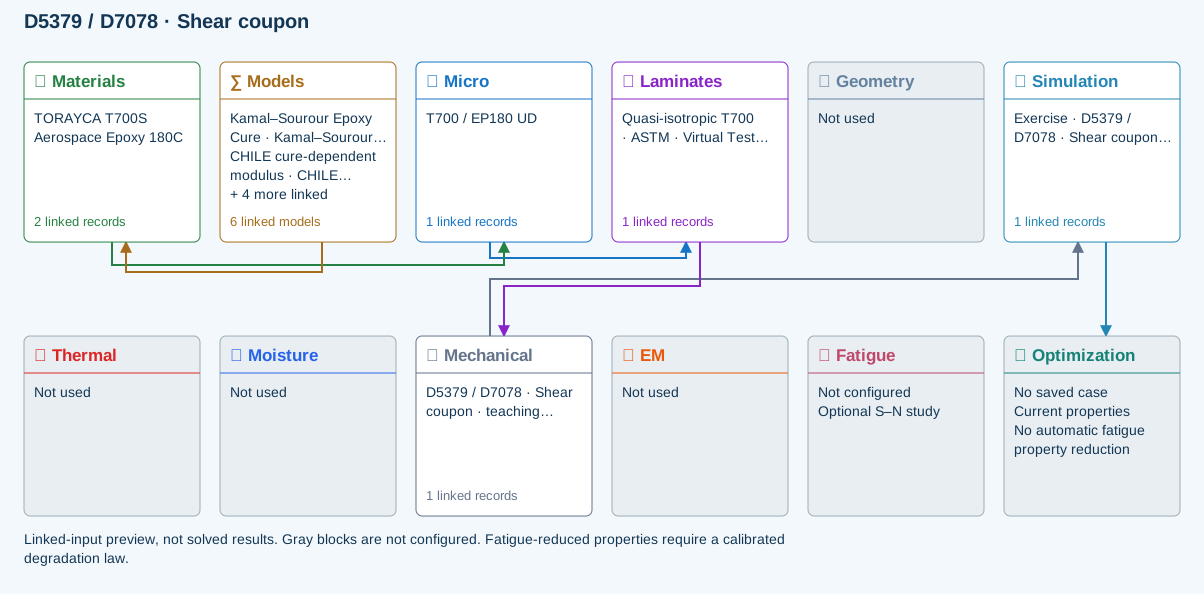
∑ Selected models & submodels
These are the exercise’s linked choices, not solved results. Open a first-layer model to see its submodels and scope.
Kamal–Sourour autocatalytic · Kamal–Sourour Epoxy Cure
Reusable material model. It contributes only when assigned to a material used by this simulation; separate model records can supply independent properties.
Calibration & applicability
Illustrative model defaults — replace with characterized resin kinetics
CHILE (degree of cure) · CHILE cure-dependent modulus
Reusable material model. It contributes only when assigned to a material used by this simulation; separate model records can supply independent properties. Cure-dependent modulus does not automatically scale strength allowables.
Calibration & applicability
CHILE(α), section 2.4 of Materials 2019, 12, 259. Example parameters, not measured EP180 data. Fixed Poisson ratio; no viscoelastic relaxation or Tg softening. Incremental elastic stress integration at saved process intervals: check time-step convergence. Strength allowables are independent measured inputs, not scaled with modulus.
Temperature-dependent tabular · Temperature-dependent Thermal
Reusable material model. It contributes only when assigned to a material used by this simulation; separate model records can supply independent properties. Micro uses the 23 °C reference; Process evaluates the same table at local temperature, without extrapolation.
Calibration & applicability
Check source data, applicable environment and validity limits in the model record; saved defaults are not experimental validation.
1D Fickian diffusion · Layered Fickian Diffusion
Reusable material model. It contributes only when assigned to a material used by this simulation; separate model records can supply independent properties.
Calibration & applicability
Check source data, applicable environment and validity limits in the model record; saved defaults are not experimental validation.
Halpin–Tsai · T700 / EP180 UD
One compatible homogenization model per Micro recipe. Separate recipes compare models; their predictions are not blended.
∑ Theory & assumptionsVirtual test · nominal shear coupon · D5379 / D7078 · Shear coupon · teaching study
Uniform nominal shear between notches using linked laminate Gxy and thickness. Not a notch/fixture stress field or nonlinear shear solution. Gauge length is the effective shear deformation length, not crosshead travel.
Linked laminate reference state
Ply stiffness, thickness and orientation come from the linked laminate. Other thermal or structural analyses must be run separately.
Calibration & study controls
Teaching example
Net section width: 12 mm
Shear gauge length: 10 mm
Applied force: 500 N
Measured shear strength: 80 MPa
Data travelling between blocks
Micro → Laminates
Predicted ply stiffness, strength, density and expansion properties.
Materials → Micro
Constituent stiffness, strength, density and thermal / moisture properties.
Models → Materials
Model choices and calibrated parameters.
Mechanical → Simulation
SIMULATION selects this case and its analysis model; the case owns its applicable cycle and input references.
Laminates → Mechanical
Ply angles and thicknesses, stiffness, mass and ply properties.
Simulation → Optimization
Linked inputs and current-property response for candidate evaluation.
D5528 · DCB opening
Ideal Euler–Bernoulli DCB with equal homogeneous 0° arms, each half the linked laminate thickness. No root rotation, shear, large displacement or cohesive growth. Critical load is an initiation estimate from supplied GIc.
Equations, inputs and interpretation
C = 8a³/(Ebh³), GI = 12P²a²/(Eb²h³), Pc = √[GIc Eb²h³/(12a²)].
Each identical homogeneous 0° arm has thickness h = t/2. P is the force on each arm and δ = CP is relative opening. The linked ply E1 supplies the ideal beam modulus. Crack length stays fixed; Pc estimates initiation only. Root rotation, shear deformation, large deflection and compliance corrections required in experimental interpretation are absent. Use a/h ≥ 10.
- Specimen width (mm)
- Crack length (mm)
- Applied force (N)
- Critical fracture energy (N/mm)
Connected workflow
Linked-input preview, not solved results. Gray blocks are not configured.
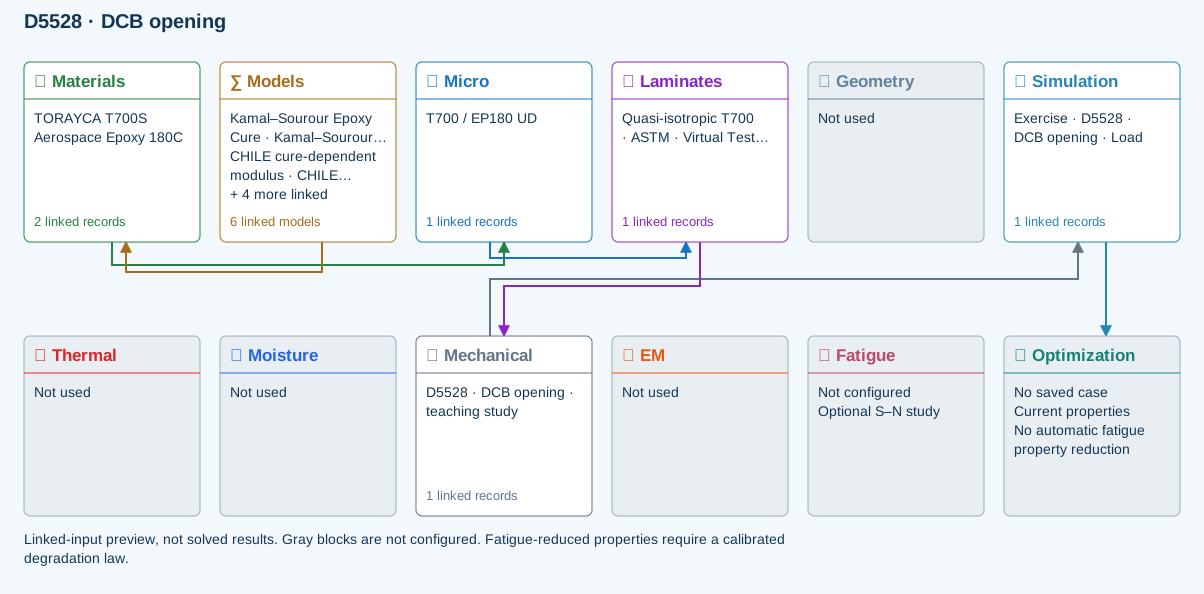
∑ Selected models & submodels
These are the exercise’s linked choices, not solved results. Open a first-layer model to see its submodels and scope.
Kamal–Sourour autocatalytic · Kamal–Sourour Epoxy Cure
Reusable material model. It contributes only when assigned to a material used by this simulation; separate model records can supply independent properties.
Calibration & applicability
Illustrative model defaults — replace with characterized resin kinetics
CHILE (degree of cure) · CHILE cure-dependent modulus
Reusable material model. It contributes only when assigned to a material used by this simulation; separate model records can supply independent properties. Cure-dependent modulus does not automatically scale strength allowables.
Calibration & applicability
CHILE(α), section 2.4 of Materials 2019, 12, 259. Example parameters, not measured EP180 data. Fixed Poisson ratio; no viscoelastic relaxation or Tg softening. Incremental elastic stress integration at saved process intervals: check time-step convergence. Strength allowables are independent measured inputs, not scaled with modulus.
Temperature-dependent tabular · Temperature-dependent Thermal
Reusable material model. It contributes only when assigned to a material used by this simulation; separate model records can supply independent properties. Micro uses the 23 °C reference; Process evaluates the same table at local temperature, without extrapolation.
Calibration & applicability
Check source data, applicable environment and validity limits in the model record; saved defaults are not experimental validation.
1D Fickian diffusion · Layered Fickian Diffusion
Reusable material model. It contributes only when assigned to a material used by this simulation; separate model records can supply independent properties.
Calibration & applicability
Check source data, applicable environment and validity limits in the model record; saved defaults are not experimental validation.
Halpin–Tsai · T700 / EP180 UD
One compatible homogenization model per Micro recipe. Separate recipes compare models; their predictions are not blended.
∑ Theory & assumptionsVirtual test · DCB beam compliance · D5528 · DCB opening · teaching study
Ideal Euler–Bernoulli DCB with equal homogeneous 0° arms, each half the linked laminate thickness. No root rotation, shear, large displacement or cohesive growth. Critical load is an initiation estimate from supplied GIc.
Linked laminate reference state
Ply stiffness, thickness and orientation come from the linked laminate. Other thermal or structural analyses must be run separately.
Calibration & study controls
Teaching example
Specimen width: 25 mm
Crack length: 30 mm
Applied force: 5 N
Critical fracture energy: 0.3 N/mm
Measured fracture energy; default is hypothetical.
Data travelling between blocks
Micro → Laminates
Predicted ply stiffness, strength, density and expansion properties.
Materials → Micro
Constituent stiffness, strength, density and thermal / moisture properties.
Models → Materials
Model choices and calibrated parameters.
Mechanical → Simulation
SIMULATION selects this case and its analysis model; the case owns its applicable cycle and input references.
Laminates → Mechanical
Ply angles and thicknesses, stiffness, mass and ply properties.
Simulation → Optimization
Linked inputs and current-property response for candidate evaluation.
D7905 · ENF sliding
Ideal equal-arm, homogeneous 0° ENF beam; support span is twice the half-span. Crack must be shorter than the half-span. No shear/root correction or unstable crack growth. GIIc is supplied, not fitted automatically.
Equations, inputs and interpretation
C = (2L³ + 3a³)/(8Ebh³), GII = 9P²a²/(16Eb²h³).
L is the support HALF-span; each identical 0° arm has thickness h = t/2. The crack must satisfy a < L. At fixed crack length, δ = CP and the supplied GIIc determines the ideal initiation load. This is not an unstable crack-propagation simulation or a complete standard test reduction. Use slender beams.
- Specimen width (mm)
- Crack length (mm)
- Applied force (N)
- Critical fracture energy (N/mm)
- Support half-span (mm)
Connected workflow
Linked-input preview, not solved results. Gray blocks are not configured.
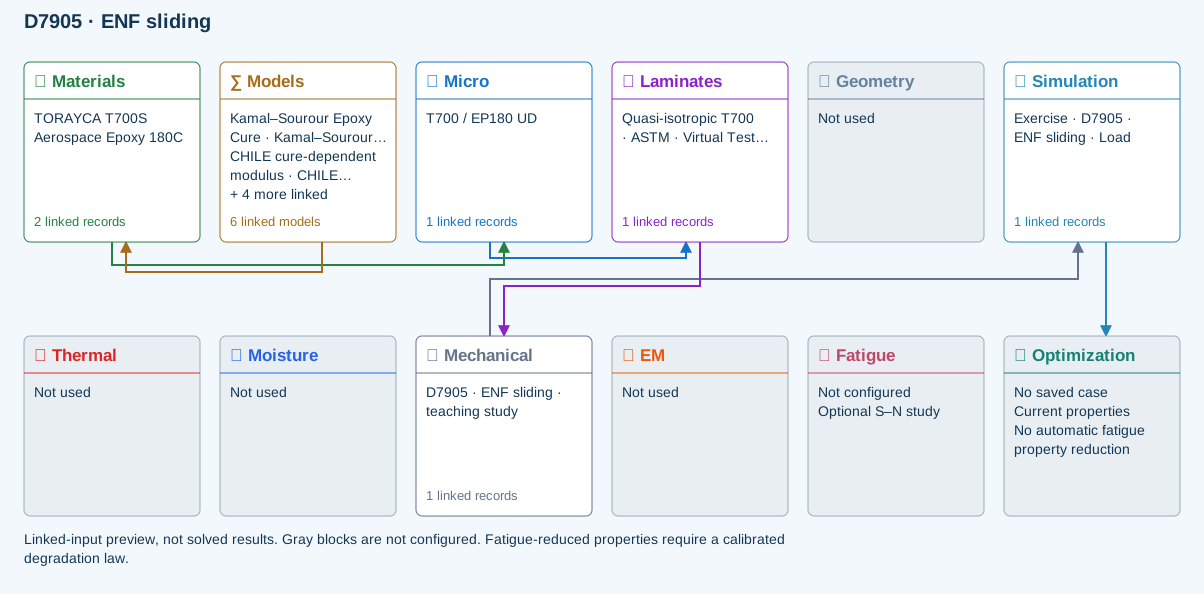
∑ Selected models & submodels
These are the exercise’s linked choices, not solved results. Open a first-layer model to see its submodels and scope.
Kamal–Sourour autocatalytic · Kamal–Sourour Epoxy Cure
Reusable material model. It contributes only when assigned to a material used by this simulation; separate model records can supply independent properties.
Calibration & applicability
Illustrative model defaults — replace with characterized resin kinetics
CHILE (degree of cure) · CHILE cure-dependent modulus
Reusable material model. It contributes only when assigned to a material used by this simulation; separate model records can supply independent properties. Cure-dependent modulus does not automatically scale strength allowables.
Calibration & applicability
CHILE(α), section 2.4 of Materials 2019, 12, 259. Example parameters, not measured EP180 data. Fixed Poisson ratio; no viscoelastic relaxation or Tg softening. Incremental elastic stress integration at saved process intervals: check time-step convergence. Strength allowables are independent measured inputs, not scaled with modulus.
Temperature-dependent tabular · Temperature-dependent Thermal
Reusable material model. It contributes only when assigned to a material used by this simulation; separate model records can supply independent properties. Micro uses the 23 °C reference; Process evaluates the same table at local temperature, without extrapolation.
Calibration & applicability
Check source data, applicable environment and validity limits in the model record; saved defaults are not experimental validation.
1D Fickian diffusion · Layered Fickian Diffusion
Reusable material model. It contributes only when assigned to a material used by this simulation; separate model records can supply independent properties.
Calibration & applicability
Check source data, applicable environment and validity limits in the model record; saved defaults are not experimental validation.
Halpin–Tsai · T700 / EP180 UD
One compatible homogenization model per Micro recipe. Separate recipes compare models; their predictions are not blended.
∑ Theory & assumptionsVirtual test · ENF beam compliance · D7905 · ENF sliding · teaching study
Ideal equal-arm, homogeneous 0° ENF beam; support span is twice the half-span. Crack must be shorter than the half-span. No shear/root correction or unstable crack growth. GIIc is supplied, not fitted automatically.
Linked laminate reference state
Ply stiffness, thickness and orientation come from the linked laminate. Other thermal or structural analyses must be run separately.
Calibration & study controls
Teaching example
Specimen width: 25 mm
Crack length: 30 mm
Applied force: 5 N
Critical fracture energy: 0.3 N/mm
Measured fracture energy; default is hypothetical.
Support half-span: 50 mm
Data travelling between blocks
Micro → Laminates
Predicted ply stiffness, strength, density and expansion properties.
Materials → Micro
Constituent stiffness, strength, density and thermal / moisture properties.
Models → Materials
Model choices and calibrated parameters.
Mechanical → Simulation
SIMULATION selects this case and its analysis model; the case owns its applicable cycle and input references.
Laminates → Mechanical
Ply angles and thicknesses, stiffness, mass and ply properties.
Simulation → Optimization
Linked inputs and current-property response for candidate evaluation.
D6671 · Mixed-mode fracture envelope
Benzeggagh–Kenane envelope from calibrated GIc, GIIc and exponent. Supplied GI/GII are energy-release rates from a separate test reduction or analysis. This does not resolve the MMB lever fixture or propagate a crack.
Equations, inputs and interpretation
Gc = GIc + (GIIc − GIc) [GII/(GI + GII)]^η.
The BK envelope interpolates between measured pure-mode toughnesses using a calibrated exponent. The supplied GI and GII must come from an independent test reduction or compatible analysis. No lever-arm geometry or MMB fixture is solved. The laminate link keeps study provenance; laminate stiffness is not used to infer these energy-release rates.
- Mode I toughness (N/mm)
- Mode II toughness (N/mm)
- BK exponent (—)
- Applied GI (N/mm)
- Applied GII (N/mm)
Connected workflow
Linked-input preview, not solved results. Gray blocks are not configured.
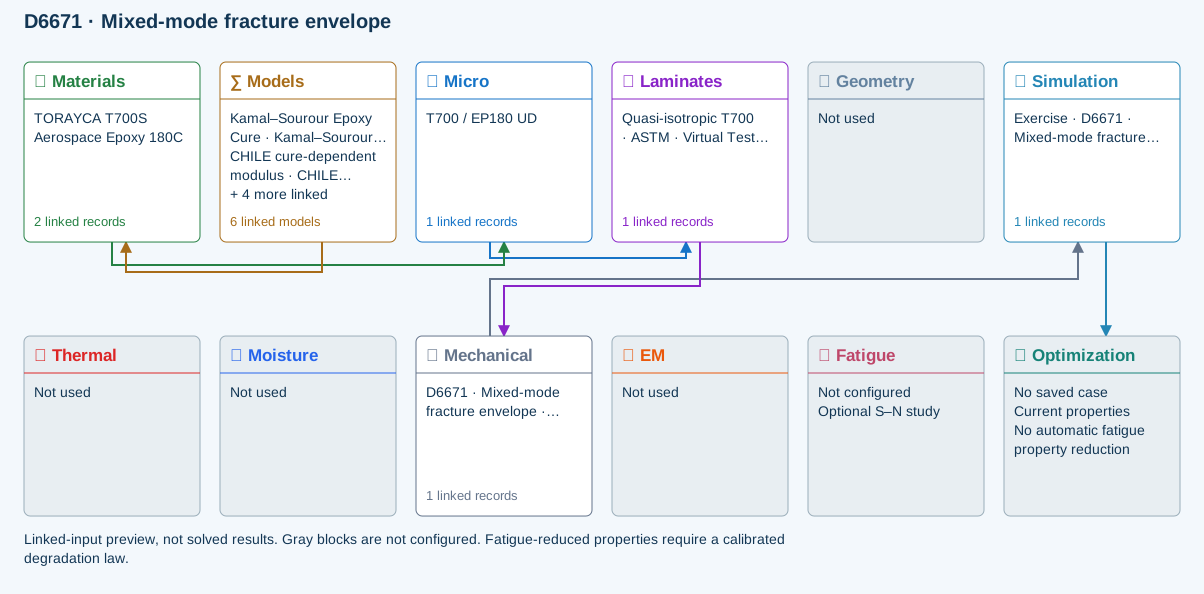
∑ Selected models & submodels
These are the exercise’s linked choices, not solved results. Open a first-layer model to see its submodels and scope.
Kamal–Sourour autocatalytic · Kamal–Sourour Epoxy Cure
Reusable material model. It contributes only when assigned to a material used by this simulation; separate model records can supply independent properties.
Calibration & applicability
Illustrative model defaults — replace with characterized resin kinetics
CHILE (degree of cure) · CHILE cure-dependent modulus
Reusable material model. It contributes only when assigned to a material used by this simulation; separate model records can supply independent properties. Cure-dependent modulus does not automatically scale strength allowables.
Calibration & applicability
CHILE(α), section 2.4 of Materials 2019, 12, 259. Example parameters, not measured EP180 data. Fixed Poisson ratio; no viscoelastic relaxation or Tg softening. Incremental elastic stress integration at saved process intervals: check time-step convergence. Strength allowables are independent measured inputs, not scaled with modulus.
Temperature-dependent tabular · Temperature-dependent Thermal
Reusable material model. It contributes only when assigned to a material used by this simulation; separate model records can supply independent properties. Micro uses the 23 °C reference; Process evaluates the same table at local temperature, without extrapolation.
Calibration & applicability
Check source data, applicable environment and validity limits in the model record; saved defaults are not experimental validation.
1D Fickian diffusion · Layered Fickian Diffusion
Reusable material model. It contributes only when assigned to a material used by this simulation; separate model records can supply independent properties.
Calibration & applicability
Check source data, applicable environment and validity limits in the model record; saved defaults are not experimental validation.
Halpin–Tsai · T700 / EP180 UD
One compatible homogenization model per Micro recipe. Separate recipes compare models; their predictions are not blended.
∑ Theory & assumptionsVirtual test · BK mixed-mode envelope · D6671 · Mixed-mode fracture envelope · teaching study
Benzeggagh–Kenane envelope from calibrated GIc, GIIc and exponent. Supplied GI/GII are energy-release rates from a separate test reduction or analysis. This does not resolve the MMB lever fixture or propagate a crack.
Linked laminate reference state
Ply stiffness, thickness and orientation come from the linked laminate. Other thermal or structural analyses must be run separately.
Calibration & study controls
Teaching example
Mode I toughness: 0.3 N/mm
Mode II toughness: 0.9 N/mm
BK exponent: 1.6 —
Applied GI: 0.1 N/mm
Applied GII: 0.2 N/mm
Data travelling between blocks
Micro → Laminates
Predicted ply stiffness, strength, density and expansion properties.
Materials → Micro
Constituent stiffness, strength, density and thermal / moisture properties.
Models → Materials
Model choices and calibrated parameters.
Mechanical → Simulation
SIMULATION selects this case and its analysis model; the case owns its applicable cycle and input references.
Laminates → Mechanical
Ply angles and thicknesses, stiffness, mass and ply properties.
Simulation → Optimization
Linked inputs and current-property response for candidate evaluation.
D5229 · Moisture uptake calibration
Homogeneous slab, initially dry, both faces held at equilibrium moisture. Fits diffusivity from two early uptake measurements (both ≤50% saturation) using the square-root-time approximation. Edge ingress and temperature dependence are excluded. Does not overwrite material properties.
Equations, inputs and interpretation
D = π [t × slope/(4M∞)]²; M(T)/M∞ = 1 − (8/π²) Σ exp[−(2j+1)²π²DT/t²]/(2j+1)².
Here t is total slab thickness and T is elapsed time. Two increasing early mass-gain points define slope = ΔM/Δ√T. Both must remain at or below 50% of equilibrium; an inconsistent dry intercept is rejected. The model assumes an initially dry homogeneous slab with both faces held at equilibrium, no edge ingress and constant diffusivity. D is reported in mm²/s. Copy it into a material only after independent validation; no saved material is changed. No temperature shifting or hot-wet strength degradation is inferred.
- Equilibrium mass gain (percent)
- Measurement time 1 (h)
- Mass gain 1 (percent)
- Measurement time 2 (h)
- Mass gain 2 (percent)
- Conditioning duration (h)
Connected workflow
Linked-input preview, not solved results. Gray blocks are not configured.
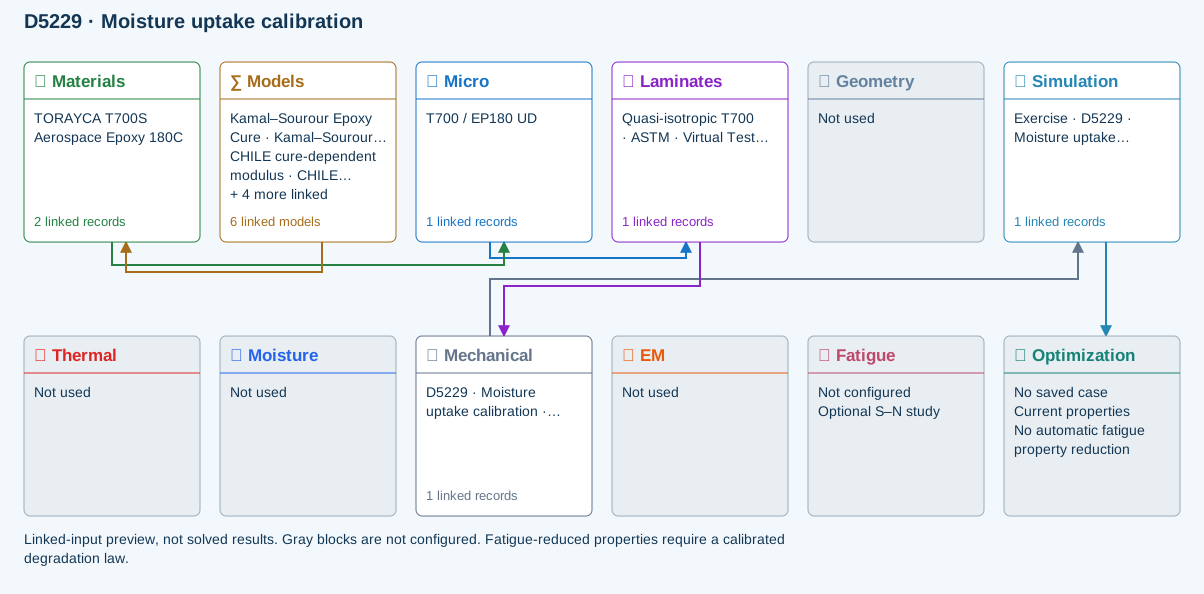
∑ Selected models & submodels
These are the exercise’s linked choices, not solved results. Open a first-layer model to see its submodels and scope.
Kamal–Sourour autocatalytic · Kamal–Sourour Epoxy Cure
Reusable material model. It contributes only when assigned to a material used by this simulation; separate model records can supply independent properties.
Calibration & applicability
Illustrative model defaults — replace with characterized resin kinetics
CHILE (degree of cure) · CHILE cure-dependent modulus
Reusable material model. It contributes only when assigned to a material used by this simulation; separate model records can supply independent properties. Cure-dependent modulus does not automatically scale strength allowables.
Calibration & applicability
CHILE(α), section 2.4 of Materials 2019, 12, 259. Example parameters, not measured EP180 data. Fixed Poisson ratio; no viscoelastic relaxation or Tg softening. Incremental elastic stress integration at saved process intervals: check time-step convergence. Strength allowables are independent measured inputs, not scaled with modulus.
Temperature-dependent tabular · Temperature-dependent Thermal
Reusable material model. It contributes only when assigned to a material used by this simulation; separate model records can supply independent properties. Micro uses the 23 °C reference; Process evaluates the same table at local temperature, without extrapolation.
Calibration & applicability
Check source data, applicable environment and validity limits in the model record; saved defaults are not experimental validation.
1D Fickian diffusion · Layered Fickian Diffusion
Reusable material model. It contributes only when assigned to a material used by this simulation; separate model records can supply independent properties.
Calibration & applicability
Check source data, applicable environment and validity limits in the model record; saved defaults are not experimental validation.
Halpin–Tsai · T700 / EP180 UD
One compatible homogenization model per Micro recipe. Separate recipes compare models; their predictions are not blended.
∑ Theory & assumptionsVirtual test · Fickian uptake calibration · D5229 · Moisture uptake calibration · teaching study
Homogeneous slab, initially dry, both faces held at equilibrium moisture. Fits diffusivity from two early uptake measurements (both ≤50% saturation) using the square-root-time approximation. Edge ingress and temperature dependence are excluded. Does not overwrite material properties.
Linked laminate reference state
Ply stiffness, thickness and orientation come from the linked laminate. Other thermal or structural analyses must be run separately.
Calibration & study controls
Teaching example
Equilibrium mass gain: 1 percent
Measurement time 1: 1 h
Mass gain 1: 0.05 percent
Measurement time 2: 4 h
Mass gain 2: 0.1 percent
Conditioning duration: 100 h
Data travelling between blocks
Micro → Laminates
Predicted ply stiffness, strength, density and expansion properties.
Materials → Micro
Constituent stiffness, strength, density and thermal / moisture properties.
Models → Materials
Model choices and calibrated parameters.
Mechanical → Simulation
SIMULATION selects this case and its analysis model; the case owns its applicable cycle and input references.
Laminates → Mechanical
Ply angles and thicknesses, stiffness, mass and ply properties.
Simulation → Optimization
Linked inputs and current-property response for candidate evaluation.
D5961 · Bearing / bypass screening
Single-pin nominal bearing, net-section and shear-out checks with independent measured allowables. Bypass tension is added to net-section load only. No contact, bolt preload, load redistribution or validated bearing–bypass interaction envelope.
Equations, inputs and interpretation
σbearing = P/(dt); σnet = (P + Pbypass)/[(w − d)t]; τout = P/[2(e − d/2)t].
e is the hole-center distance to the loaded free edge. Each nominal stress is compared with its own measured allowable. Bypass tension contributes to the net-section load. These independent ratios are not a validated bearing–bypass interaction surface. Bolt preload, contact, friction, multi-fastener load sharing and progressive damage require further modeling.
- Specimen width (mm)
- Hole diameter (mm)
- Edge distance (mm)
- Pin force (N)
- Bypass tensile force (N)
- Bearing allowable (MPa)
- Net tensile allowable (MPa)
- Shear-out allowable (MPa)
Connected workflow
Linked-input preview, not solved results. Gray blocks are not configured.
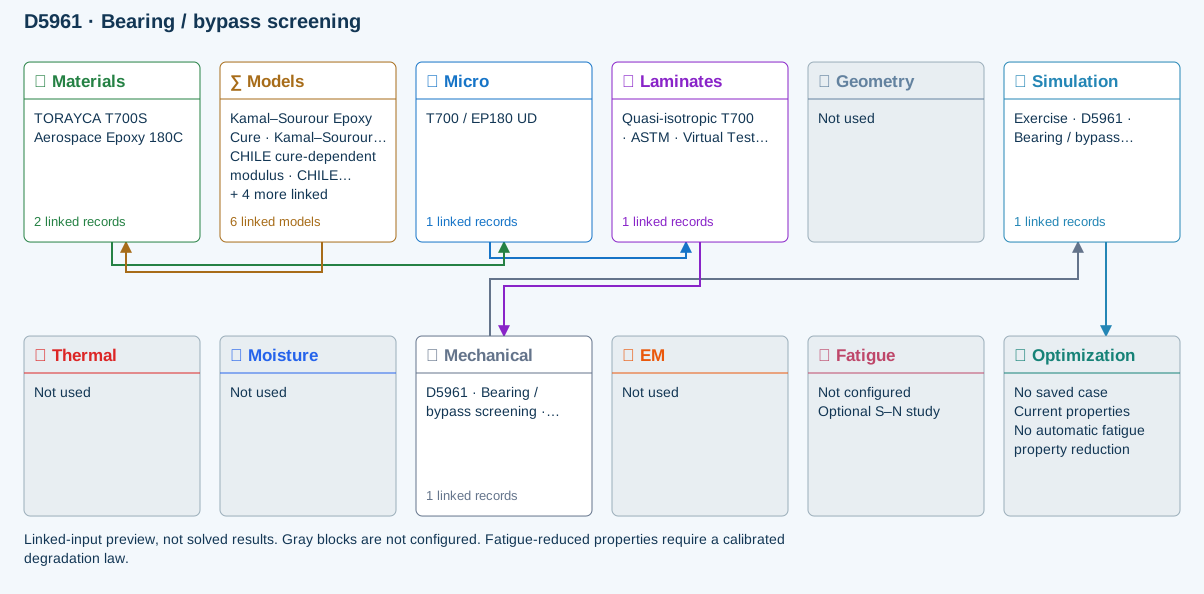
∑ Selected models & submodels
These are the exercise’s linked choices, not solved results. Open a first-layer model to see its submodels and scope.
Kamal–Sourour autocatalytic · Kamal–Sourour Epoxy Cure
Reusable material model. It contributes only when assigned to a material used by this simulation; separate model records can supply independent properties.
Calibration & applicability
Illustrative model defaults — replace with characterized resin kinetics
CHILE (degree of cure) · CHILE cure-dependent modulus
Reusable material model. It contributes only when assigned to a material used by this simulation; separate model records can supply independent properties. Cure-dependent modulus does not automatically scale strength allowables.
Calibration & applicability
CHILE(α), section 2.4 of Materials 2019, 12, 259. Example parameters, not measured EP180 data. Fixed Poisson ratio; no viscoelastic relaxation or Tg softening. Incremental elastic stress integration at saved process intervals: check time-step convergence. Strength allowables are independent measured inputs, not scaled with modulus.
Temperature-dependent tabular · Temperature-dependent Thermal
Reusable material model. It contributes only when assigned to a material used by this simulation; separate model records can supply independent properties. Micro uses the 23 °C reference; Process evaluates the same table at local temperature, without extrapolation.
Calibration & applicability
Check source data, applicable environment and validity limits in the model record; saved defaults are not experimental validation.
1D Fickian diffusion · Layered Fickian Diffusion
Reusable material model. It contributes only when assigned to a material used by this simulation; separate model records can supply independent properties.
Calibration & applicability
Check source data, applicable environment and validity limits in the model record; saved defaults are not experimental validation.
Halpin–Tsai · T700 / EP180 UD
One compatible homogenization model per Micro recipe. Separate recipes compare models; their predictions are not blended.
∑ Theory & assumptionsVirtual test · bearing bypass screening · D5961 · Bearing / bypass screening · teaching study
Single-pin nominal bearing, net-section and shear-out checks with independent measured allowables. Bypass tension is added to net-section load only. No contact, bolt preload, load redistribution or validated bearing–bypass interaction envelope.
Linked laminate reference state
Ply stiffness, thickness and orientation come from the linked laminate. Other thermal or structural analyses must be run separately.
Calibration & study controls
Teaching example
Specimen width: 36 mm
Hole diameter: 6 mm
Edge distance: 18 mm
Hole center to loaded free edge.
Pin force: 1000 N
Bypass tensile force: 500 N
Bearing allowable: 300 MPa
Net tensile allowable: 400 MPa
Shear-out allowable: 80 MPa
Data travelling between blocks
Micro → Laminates
Predicted ply stiffness, strength, density and expansion properties.
Materials → Micro
Constituent stiffness, strength, density and thermal / moisture properties.
Models → Materials
Model choices and calibrated parameters.
Mechanical → Simulation
SIMULATION selects this case and its analysis model; the case owns its applicable cycle and input references.
Laminates → Mechanical
Ply angles and thicknesses, stiffness, mass and ply properties.
Simulation → Optimization
Linked inputs and current-property response for candidate evaluation.
D6484 · Open-hole compression
Nominal gross/net stress and demand relative to measured open-hole compressive strength for this geometry and layup. This is test-data screening, not an uncalibrated notch-strength prediction. No local buckling or kink-band simulation.
Equations, inputs and interpretation
σgross = P/(wt); σnet = P/[(w − d)t]; demand = σgross/XOHC.
XOHC is the measured gross-section compressive strength for this layup and hole geometry. Do not compare net stress with a gross-section allowable. This assessment does not reuse the Whitney–Nuismer tension model or predict compressive notch strength.
- Specimen width (mm)
- Hole diameter (mm)
- Applied force (N)
- Measured open-hole compressive strength (MPa)
Connected workflow
Linked-input preview, not solved results. Gray blocks are not configured.
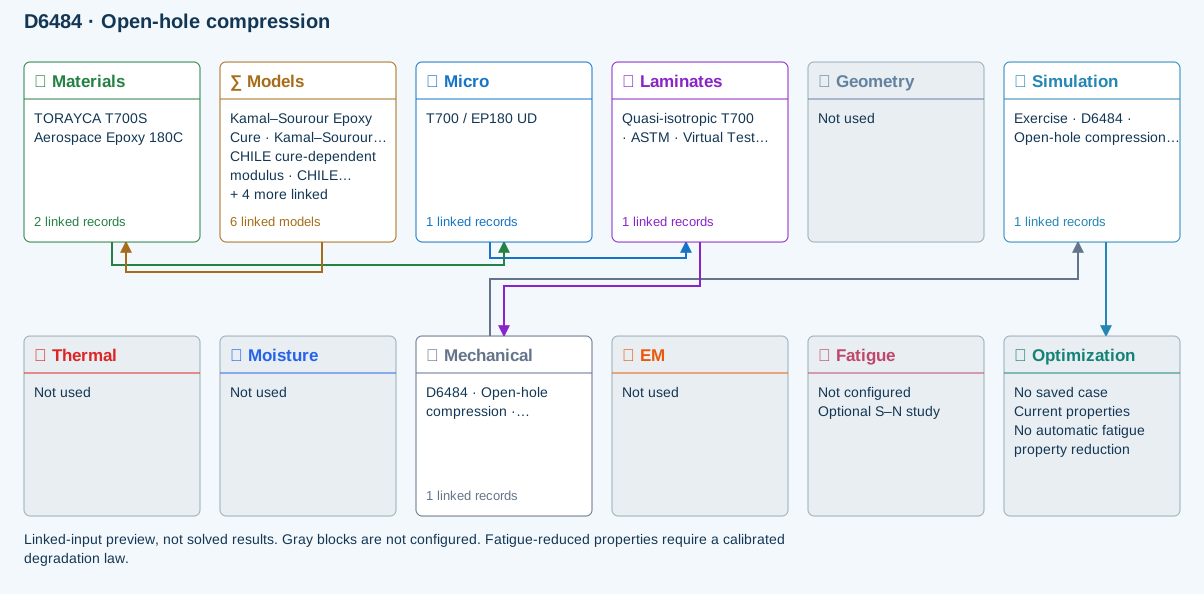
∑ Selected models & submodels
These are the exercise’s linked choices, not solved results. Open a first-layer model to see its submodels and scope.
Kamal–Sourour autocatalytic · Kamal–Sourour Epoxy Cure
Reusable material model. It contributes only when assigned to a material used by this simulation; separate model records can supply independent properties.
Calibration & applicability
Illustrative model defaults — replace with characterized resin kinetics
CHILE (degree of cure) · CHILE cure-dependent modulus
Reusable material model. It contributes only when assigned to a material used by this simulation; separate model records can supply independent properties. Cure-dependent modulus does not automatically scale strength allowables.
Calibration & applicability
CHILE(α), section 2.4 of Materials 2019, 12, 259. Example parameters, not measured EP180 data. Fixed Poisson ratio; no viscoelastic relaxation or Tg softening. Incremental elastic stress integration at saved process intervals: check time-step convergence. Strength allowables are independent measured inputs, not scaled with modulus.
Temperature-dependent tabular · Temperature-dependent Thermal
Reusable material model. It contributes only when assigned to a material used by this simulation; separate model records can supply independent properties. Micro uses the 23 °C reference; Process evaluates the same table at local temperature, without extrapolation.
Calibration & applicability
Check source data, applicable environment and validity limits in the model record; saved defaults are not experimental validation.
1D Fickian diffusion · Layered Fickian Diffusion
Reusable material model. It contributes only when assigned to a material used by this simulation; separate model records can supply independent properties.
Calibration & applicability
Check source data, applicable environment and validity limits in the model record; saved defaults are not experimental validation.
Halpin–Tsai · T700 / EP180 UD
One compatible homogenization model per Micro recipe. Separate recipes compare models; their predictions are not blended.
∑ Theory & assumptionsVirtual test · measured open-hole compression · D6484 · Open-hole compression · teaching study
Nominal gross/net stress and demand relative to measured open-hole compressive strength for this geometry and layup. This is test-data screening, not an uncalibrated notch-strength prediction. No local buckling or kink-band simulation.
Linked laminate reference state
Ply stiffness, thickness and orientation come from the linked laminate. Other thermal or structural analyses must be run separately.
Calibration & study controls
Teaching example
Specimen width: 36 mm
Hole diameter: 6 mm
Applied force: 1000 N
Measured open-hole compressive strength: 250 MPa
Data travelling between blocks
Micro → Laminates
Predicted ply stiffness, strength, density and expansion properties.
Materials → Micro
Constituent stiffness, strength, density and thermal / moisture properties.
Models → Materials
Model choices and calibrated parameters.
Mechanical → Simulation
SIMULATION selects this case and its analysis model; the case owns its applicable cycle and input references.
Laminates → Mechanical
Ply angles and thicknesses, stiffness, mass and ply properties.
Simulation → Optimization
Linked inputs and current-property response for candidate evaluation.
D6742 · Filled-hole comparison
Compares user-measured open- and filled-hole compressive strengths using gross-section stress. Use matched layup, hole, environment and fastener condition. Filling a hole does not automatically recover strength; no fastener contact/preload model is applied.
Equations, inputs and interpretation
Demandopen = σgross/XOHC; Demandfilled = σgross/XFHC.
Compare matched measured open- and filled-hole compressive strengths. Pin fit, preload, environment and geometry must match the calibration basis. Filling the hole is not assumed to restore strength, and the curves show nominal demand scaling rather than predicted damage or load–deflection.
- Specimen width (mm)
- Hole diameter (mm)
- Applied force (N)
- Measured open-hole compressive strength (MPa)
- Measured filled-hole compressive strength (MPa)
Connected workflow
Linked-input preview, not solved results. Gray blocks are not configured.
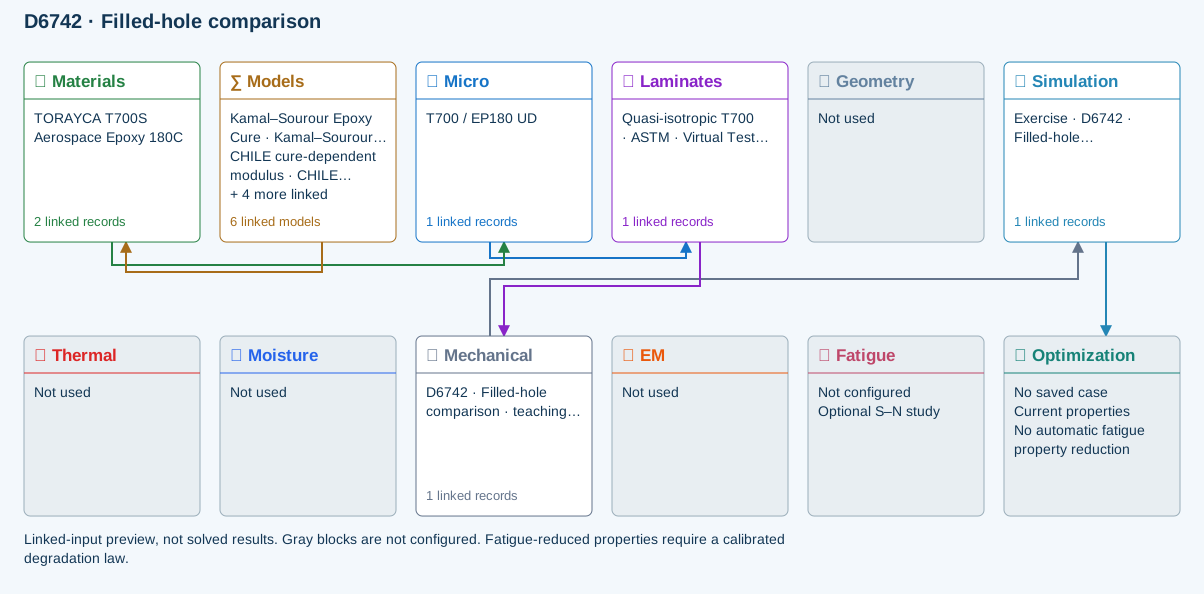
∑ Selected models & submodels
These are the exercise’s linked choices, not solved results. Open a first-layer model to see its submodels and scope.
Kamal–Sourour autocatalytic · Kamal–Sourour Epoxy Cure
Reusable material model. It contributes only when assigned to a material used by this simulation; separate model records can supply independent properties.
Calibration & applicability
Illustrative model defaults — replace with characterized resin kinetics
CHILE (degree of cure) · CHILE cure-dependent modulus
Reusable material model. It contributes only when assigned to a material used by this simulation; separate model records can supply independent properties. Cure-dependent modulus does not automatically scale strength allowables.
Calibration & applicability
CHILE(α), section 2.4 of Materials 2019, 12, 259. Example parameters, not measured EP180 data. Fixed Poisson ratio; no viscoelastic relaxation or Tg softening. Incremental elastic stress integration at saved process intervals: check time-step convergence. Strength allowables are independent measured inputs, not scaled with modulus.
Temperature-dependent tabular · Temperature-dependent Thermal
Reusable material model. It contributes only when assigned to a material used by this simulation; separate model records can supply independent properties. Micro uses the 23 °C reference; Process evaluates the same table at local temperature, without extrapolation.
Calibration & applicability
Check source data, applicable environment and validity limits in the model record; saved defaults are not experimental validation.
1D Fickian diffusion · Layered Fickian Diffusion
Reusable material model. It contributes only when assigned to a material used by this simulation; separate model records can supply independent properties.
Calibration & applicability
Check source data, applicable environment and validity limits in the model record; saved defaults are not experimental validation.
Halpin–Tsai · T700 / EP180 UD
One compatible homogenization model per Micro recipe. Separate recipes compare models; their predictions are not blended.
∑ Theory & assumptionsVirtual test · measured filled-hole comparison · D6742 · Filled-hole comparison · teaching study
Compares user-measured open- and filled-hole compressive strengths using gross-section stress. Use matched layup, hole, environment and fastener condition. Filling a hole does not automatically recover strength; no fastener contact/preload model is applied.
Linked laminate reference state
Ply stiffness, thickness and orientation come from the linked laminate. Other thermal or structural analyses must be run separately.
Calibration & study controls
Teaching example
Specimen width: 36 mm
Hole diameter: 6 mm
Applied force: 1000 N
Measured open-hole compressive strength: 250 MPa
Measured filled-hole compressive strength: 300 MPa
Data travelling between blocks
Micro → Laminates
Predicted ply stiffness, strength, density and expansion properties.
Materials → Micro
Constituent stiffness, strength, density and thermal / moisture properties.
Models → Materials
Model choices and calibrated parameters.
Mechanical → Simulation
SIMULATION selects this case and its analysis model; the case owns its applicable cycle and input references.
Laminates → Mechanical
Ply angles and thicknesses, stiffness, mass and ply properties.
Simulation → Optimization
Linked inputs and current-property response for candidate evaluation.
D7136 / D7137 · Impact & CAI assessment
Incident energy from measured impact velocity; residual compressive strength from measured peak CAI force. Rebound energy estimates energy not returned to the striker, NOT damage energy. No impact/contact solver, damage-area prediction or energy-to-strength extrapolation.
Equations, inputs and interpretation
Eincident = mv²/2; Erebound = mvr²/2; XCAI = Ppeak/(wt).
Enter measured impact and rebound velocities, measured CAI peak force and pristine compressive strength. Energy not returned to the striker includes mechanisms other than damage. The strength-retention ratio is a measured comparison, not an energy-to-strength prediction. No synthetic impact pulse, damage footprint or full-wave impact solution is generated.
- Impactor mass (kg)
- Impact speed (m/s)
- Rebound speed (m/s)
- Specimen width (mm)
- Measured CAI peak force (N)
- Measured pristine compressive strength (MPa)
Connected workflow
Linked-input preview, not solved results. Gray blocks are not configured.
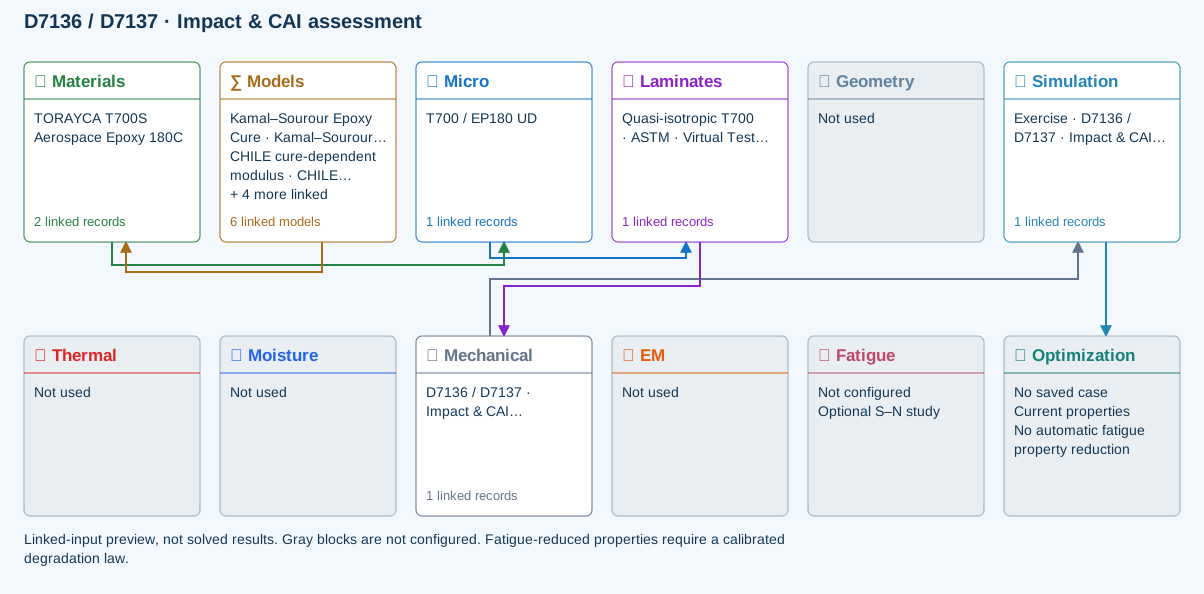
∑ Selected models & submodels
These are the exercise’s linked choices, not solved results. Open a first-layer model to see its submodels and scope.
Kamal–Sourour autocatalytic · Kamal–Sourour Epoxy Cure
Reusable material model. It contributes only when assigned to a material used by this simulation; separate model records can supply independent properties.
Calibration & applicability
Illustrative model defaults — replace with characterized resin kinetics
CHILE (degree of cure) · CHILE cure-dependent modulus
Reusable material model. It contributes only when assigned to a material used by this simulation; separate model records can supply independent properties. Cure-dependent modulus does not automatically scale strength allowables.
Calibration & applicability
CHILE(α), section 2.4 of Materials 2019, 12, 259. Example parameters, not measured EP180 data. Fixed Poisson ratio; no viscoelastic relaxation or Tg softening. Incremental elastic stress integration at saved process intervals: check time-step convergence. Strength allowables are independent measured inputs, not scaled with modulus.
Temperature-dependent tabular · Temperature-dependent Thermal
Reusable material model. It contributes only when assigned to a material used by this simulation; separate model records can supply independent properties. Micro uses the 23 °C reference; Process evaluates the same table at local temperature, without extrapolation.
Calibration & applicability
Check source data, applicable environment and validity limits in the model record; saved defaults are not experimental validation.
1D Fickian diffusion · Layered Fickian Diffusion
Reusable material model. It contributes only when assigned to a material used by this simulation; separate model records can supply independent properties.
Calibration & applicability
Check source data, applicable environment and validity limits in the model record; saved defaults are not experimental validation.
Halpin–Tsai · T700 / EP180 UD
One compatible homogenization model per Micro recipe. Separate recipes compare models; their predictions are not blended.
∑ Theory & assumptionsVirtual test · measured impact and CAI · D7136 / D7137 · Impact & CAI assessment · teaching study
Incident energy from measured impact velocity; residual compressive strength from measured peak CAI force. Rebound energy estimates energy not returned to the striker, NOT damage energy. No impact/contact solver, damage-area prediction or energy-to-strength extrapolation.
Linked laminate reference state
Ply stiffness, thickness and orientation come from the linked laminate. Other thermal or structural analyses must be run separately.
Calibration & study controls
Teaching example
Impactor mass: 5 kg
Impact speed: 2 m/s
Rebound speed: 0.5 m/s
Specimen width: 100 mm
Measured CAI peak force: 30000 N
Measured pristine compressive strength: 400 MPa
Data travelling between blocks
Micro → Laminates
Predicted ply stiffness, strength, density and expansion properties.
Materials → Micro
Constituent stiffness, strength, density and thermal / moisture properties.
Models → Materials
Model choices and calibrated parameters.
Mechanical → Simulation
SIMULATION selects this case and its analysis model; the case owns its applicable cycle and input references.
Laminates → Mechanical
Ply angles and thicknesses, stiffness, mass and ply properties.
Simulation → Optimization
Linked inputs and current-property response for candidate evaluation.
What comes next?
Full impact/contact/damage prediction, fixture-resolved compression and shear, experimental compliance corrections, crack-growth validation and bearing–bypass interaction calibration remain separate development and validation work. This release does not claim those capabilities.
Workbench availability: released models, inputs and compatible study paths. The wider theory library includes reference formulations not available in every Workbench solve.