Constituents & architecture
Constituents, architecture, fractions and calibrated modifiers
05.0 / Explore the models
Start with the engineering question, select a model family and follow its inputs into the representative exercise. Open the directory for formulations, assumptions and references.
06.1 Manuals · read online, preview or download →
Use the online User Guide for current controls, the released model directory for selectable models and compatibility, and the Training Manual for connected exercises. Wider theory references do not mean every formulation is enabled in Workbench.
Screenshots and download editions carry revision dates; consult the current chapter for updated Workbench instructions. Find the overview PDF, guides and exercise databases in Your CDS library.
Follow the connections
Constituents, architecture, fractions and calibrated modifiers
Reference ply properties for each linked laminate ply
Representative exercise: this map shows its supplied records and active connections, not every possible configuration of the model family.
All blocks keep the CREATE / DISCOVER / SIMULATE positions, with Equipment below Geometry; unused records remain disconnected. This changes the view only, not the exercise records.
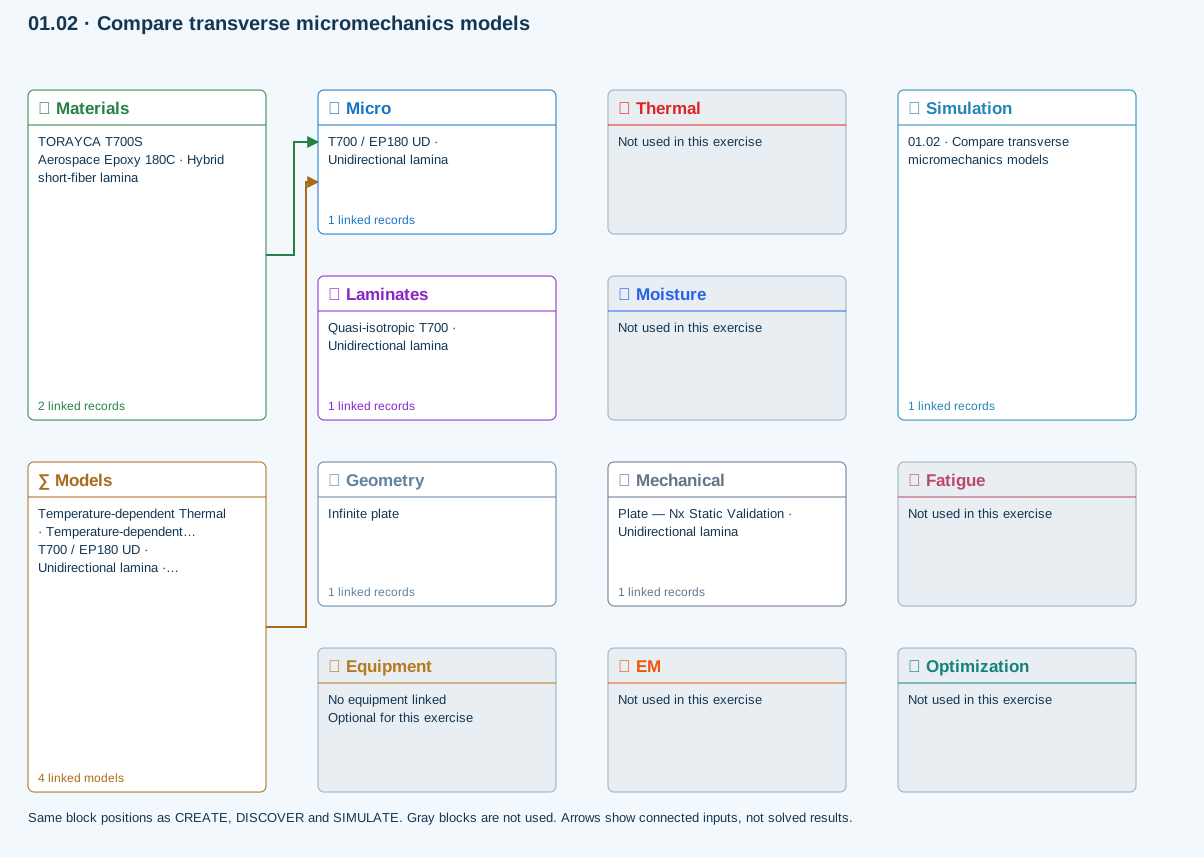
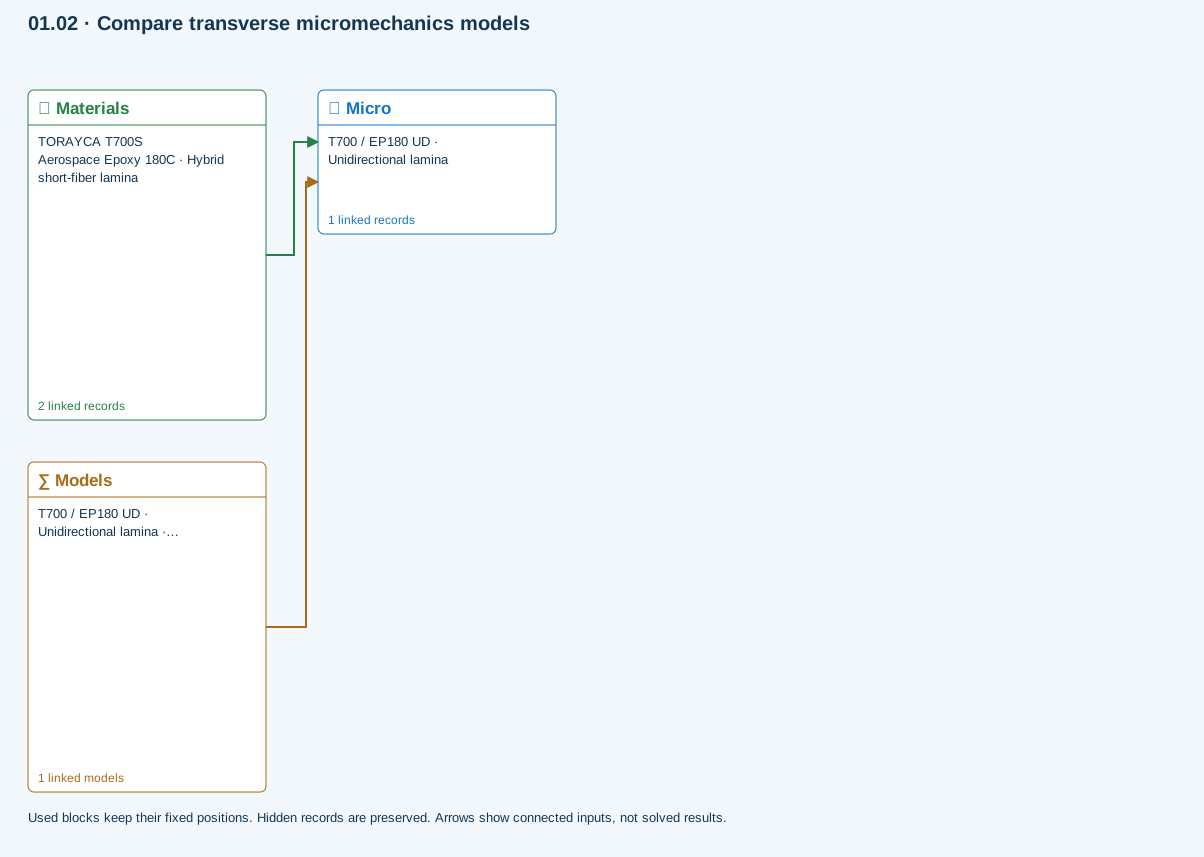
One compatible homogenization model per Micro recipe. Use separate recipes for comparisons; they are not combined in a single ply.
Models browser → Micromechanics · source: Micro
Design a ply or reinforced feedstock
Models browser → Micromechanics · source: Micro
Representative exercise workflow · supplied records remain in place; only used connections have arrows.
All blocks keep the CREATE / DISCOVER / SIMULATE positions, with Equipment below Geometry; unused records remain disconnected. This changes the view only, not the exercise records.
One compatible homogenization model per Micro recipe. Use separate recipes for comparisons; they are not combined in a single ply.
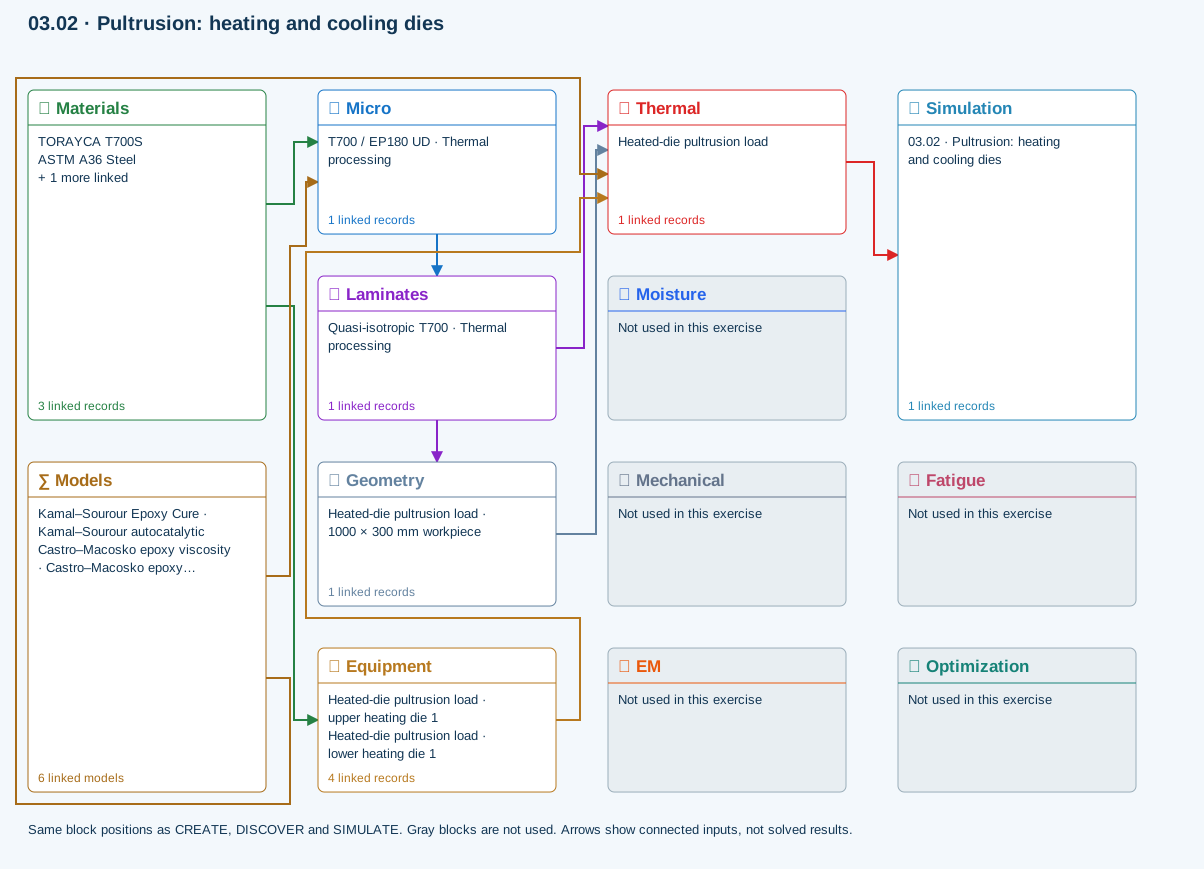
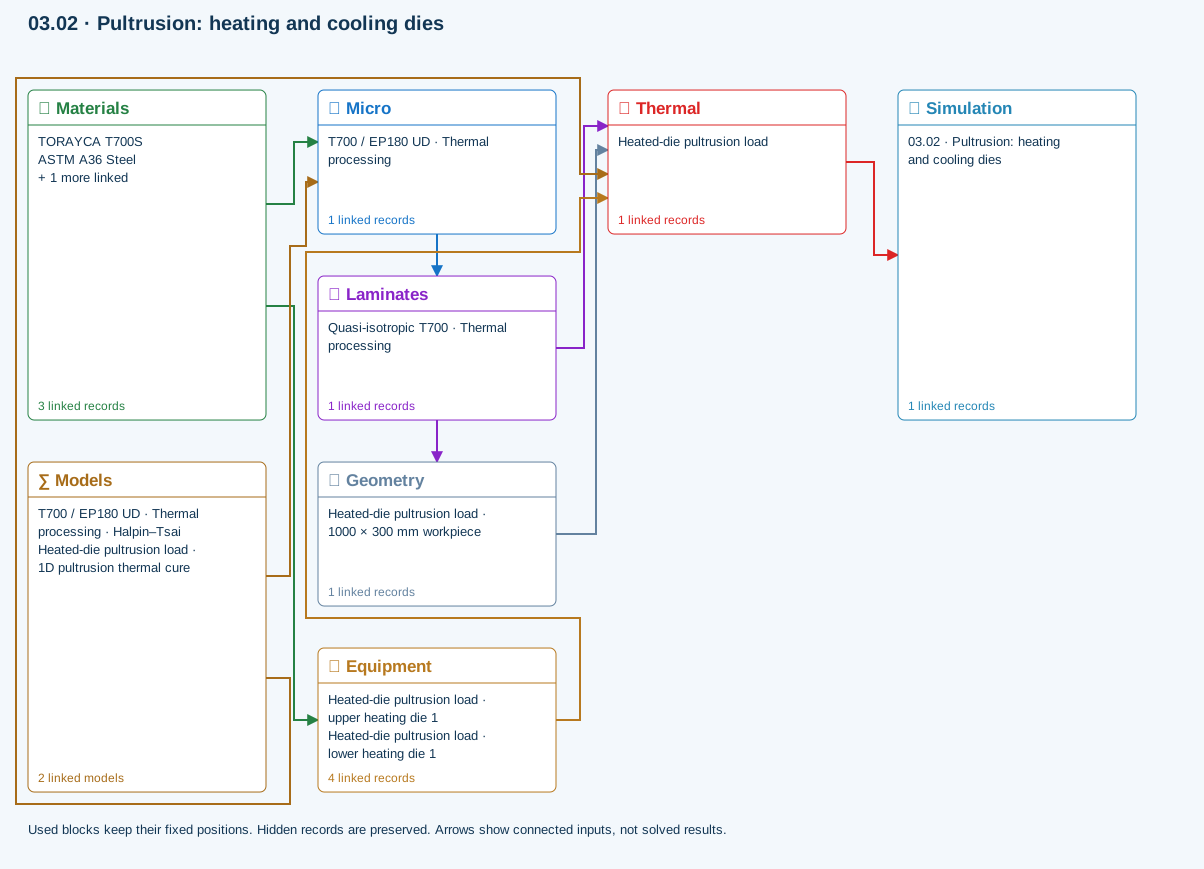
Cure, pultrusion, conditioning and tool release
Models → material-model folders · assigned through Materials
Representative exercise workflow · supplied records remain in place; only used connections have arrows.
All blocks keep the CREATE / DISCOVER / SIMULATE positions, with Equipment below Geometry; unused records remain disconnected. This changes the view only, not the exercise records.
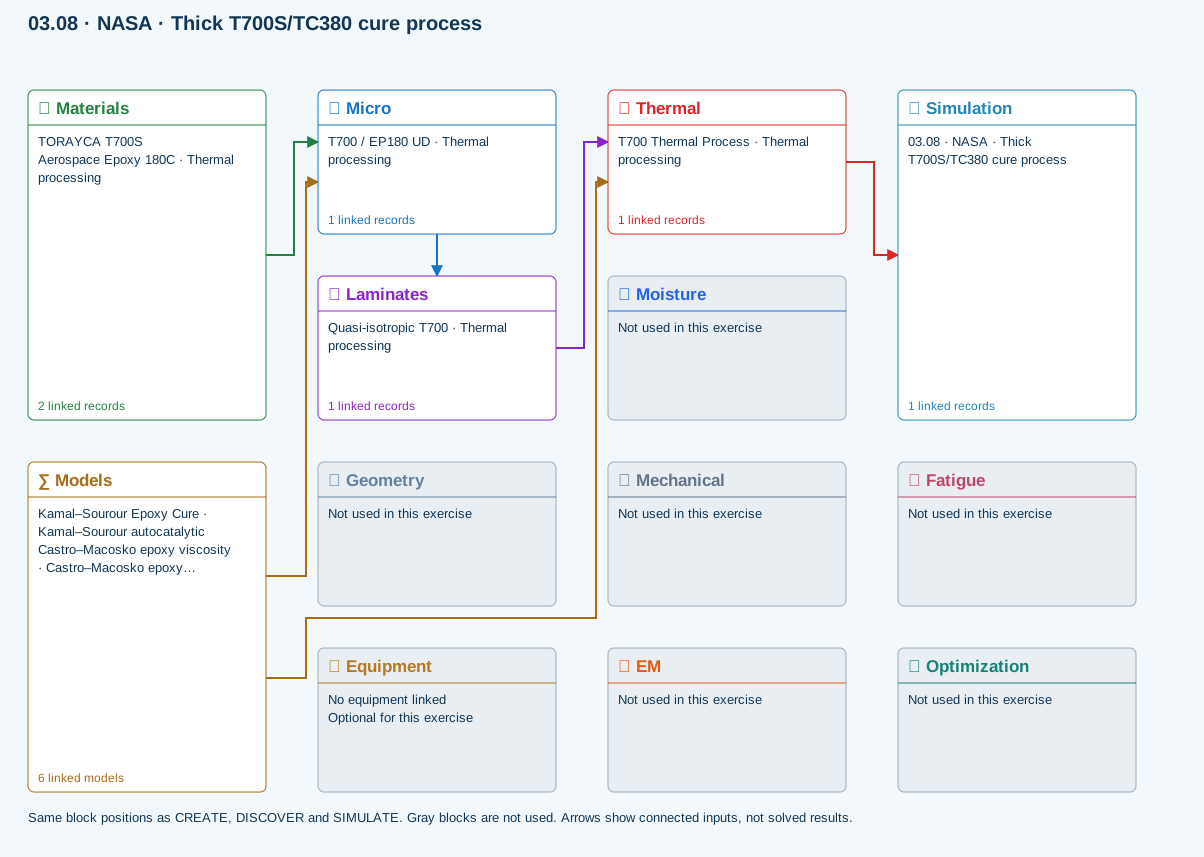
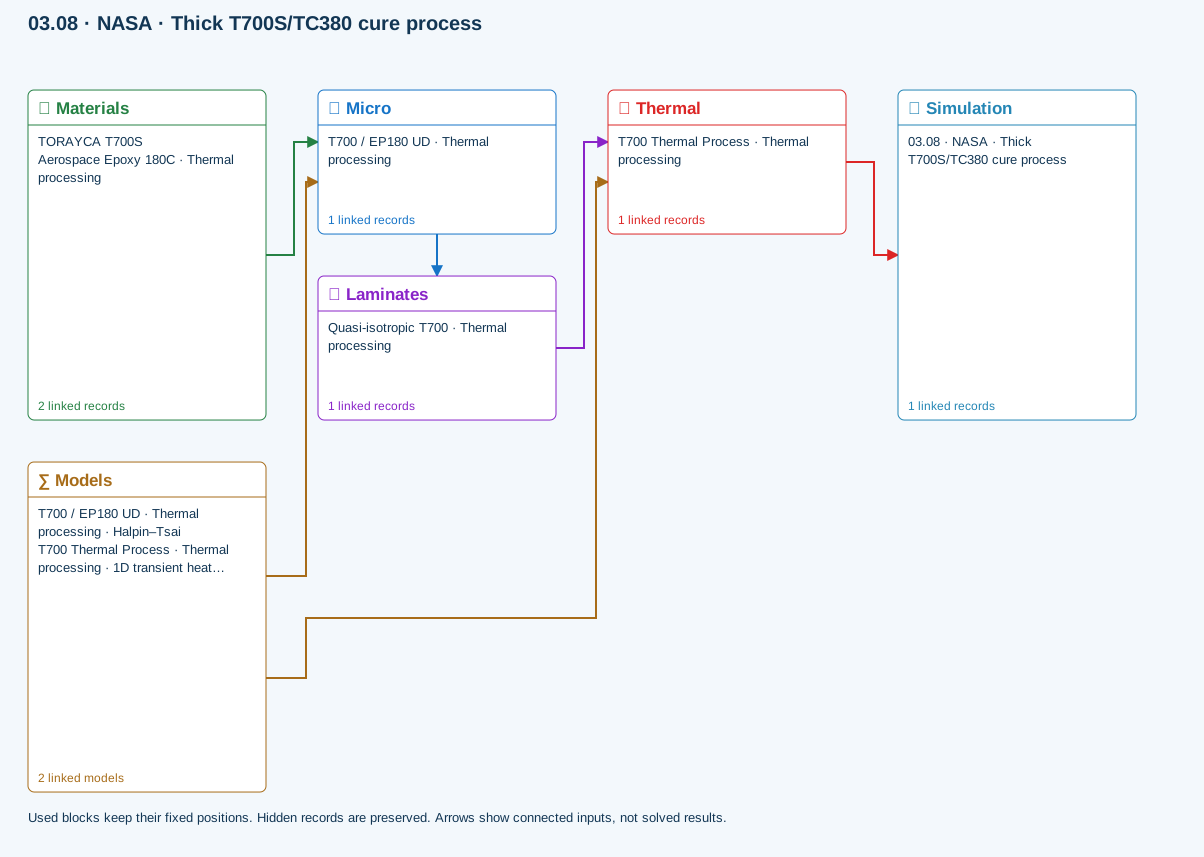
Independent model records can be linked together through material inputs. A saved model must be assigned to a material before it contributes to a simulation.
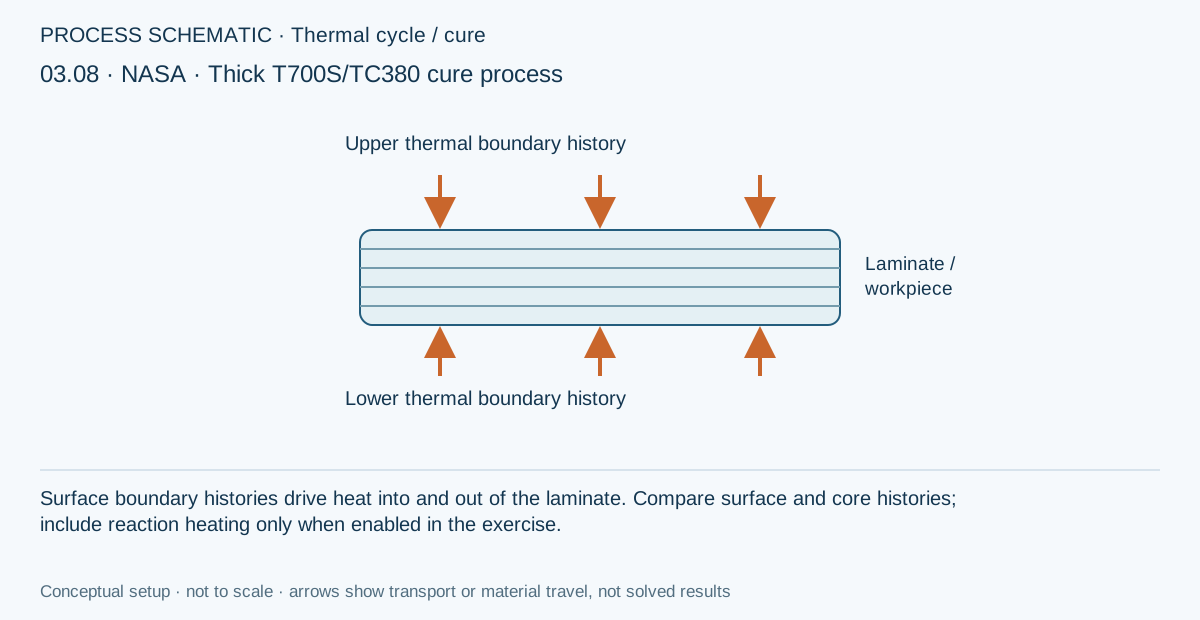
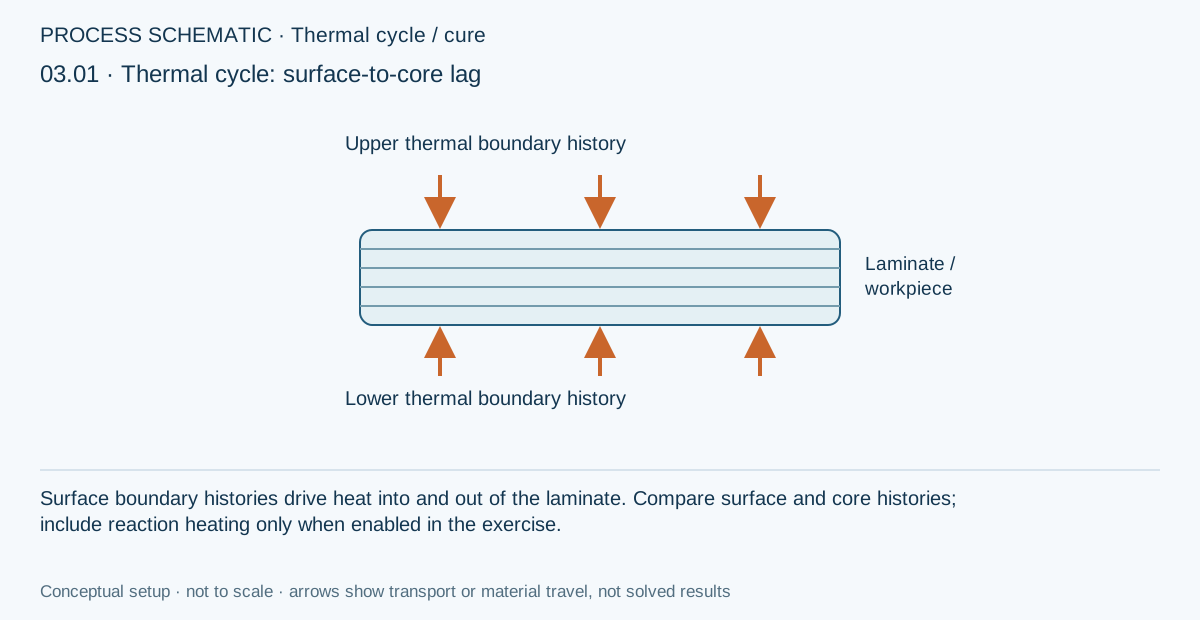
Models browser → Thermal transport · source: CASES / Thermal
Representative exercise workflow · supplied records remain in place; only used connections have arrows.
All blocks keep the CREATE / DISCOVER / SIMULATE positions, with Equipment below Geometry; unused records remain disconnected. This changes the view only, not the exercise records.
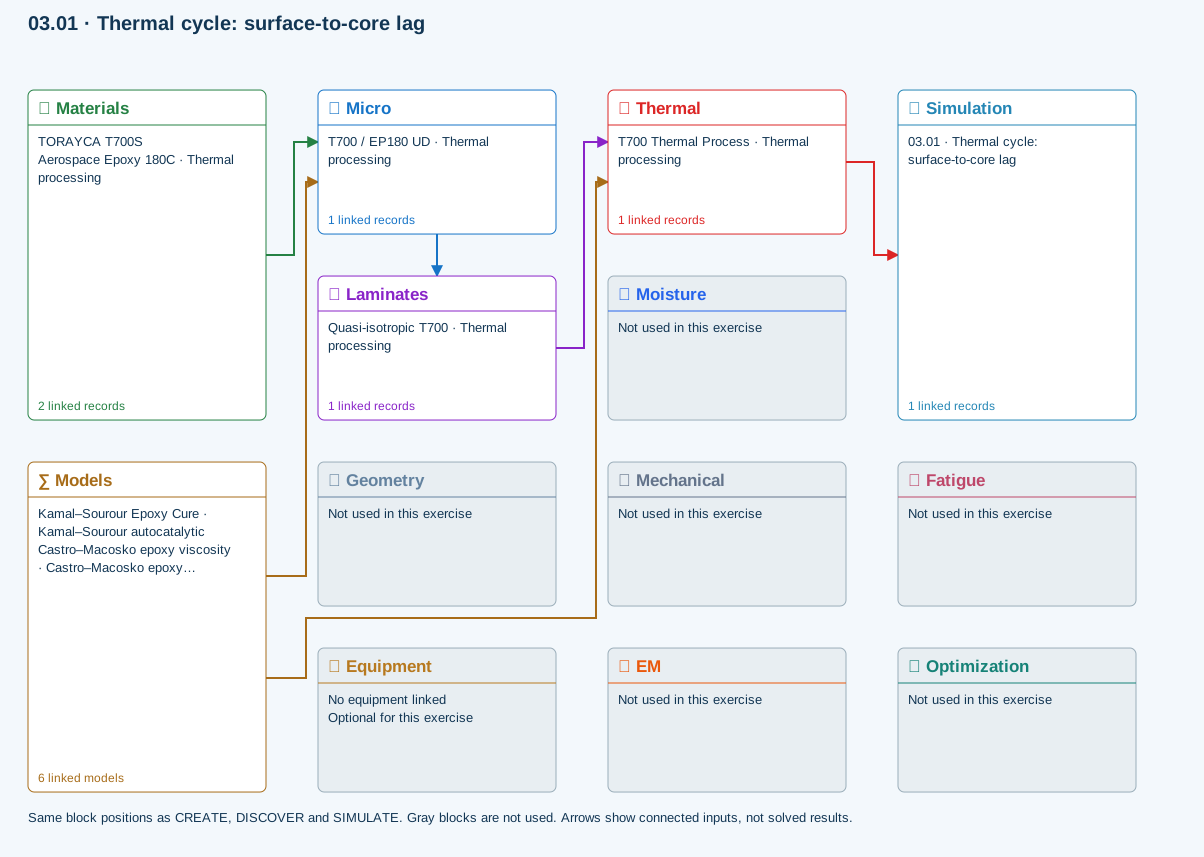
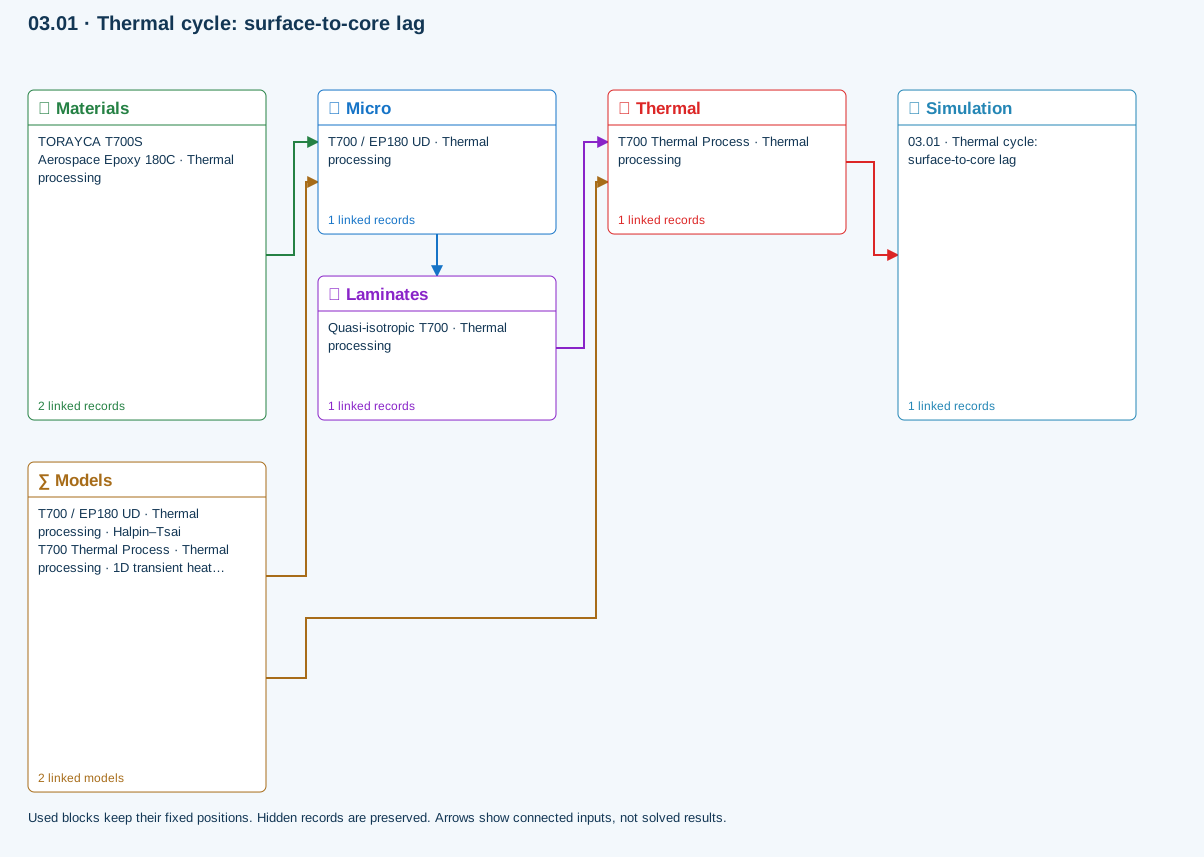
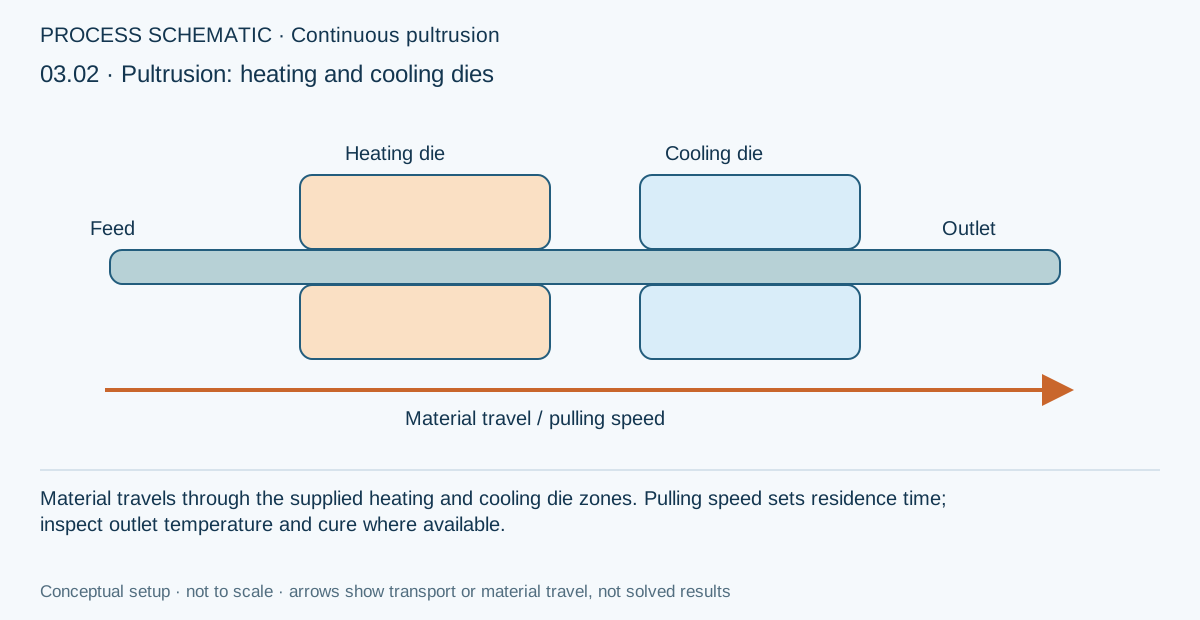
One transport formulation per thermal case. Select its laminate and configure its own initial conditions and surface cycle; pultrusion additionally requires a distance-based die schedule and pulling velocity.
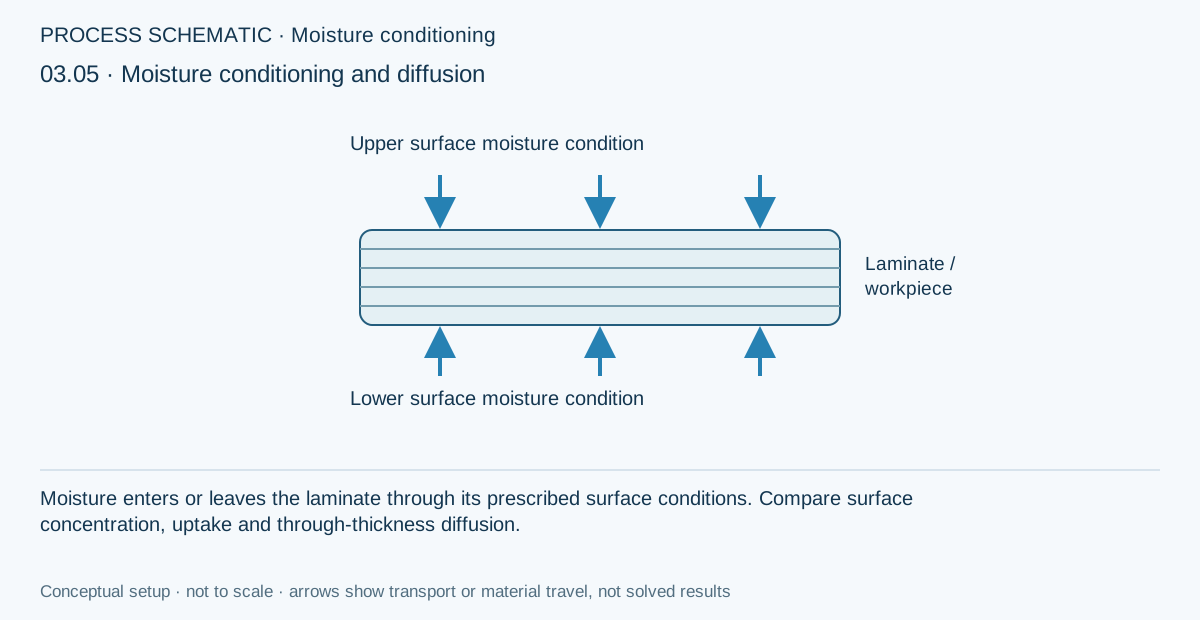
Models browser → Moisture transport · source: CASES / Moisture
Representative exercise workflow · supplied records remain in place; only used connections have arrows.
All blocks keep the CREATE / DISCOVER / SIMULATE positions, with Equipment below Geometry; unused records remain disconnected. This changes the view only, not the exercise records.
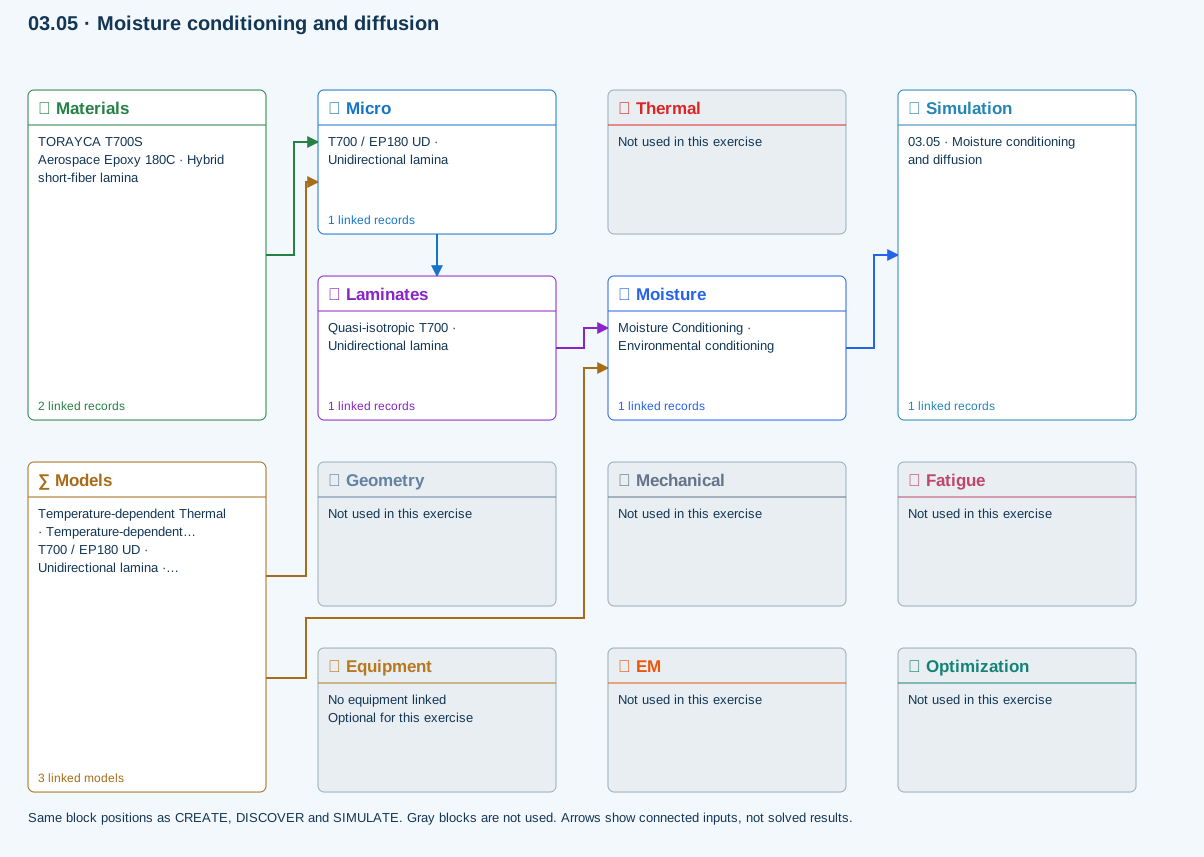
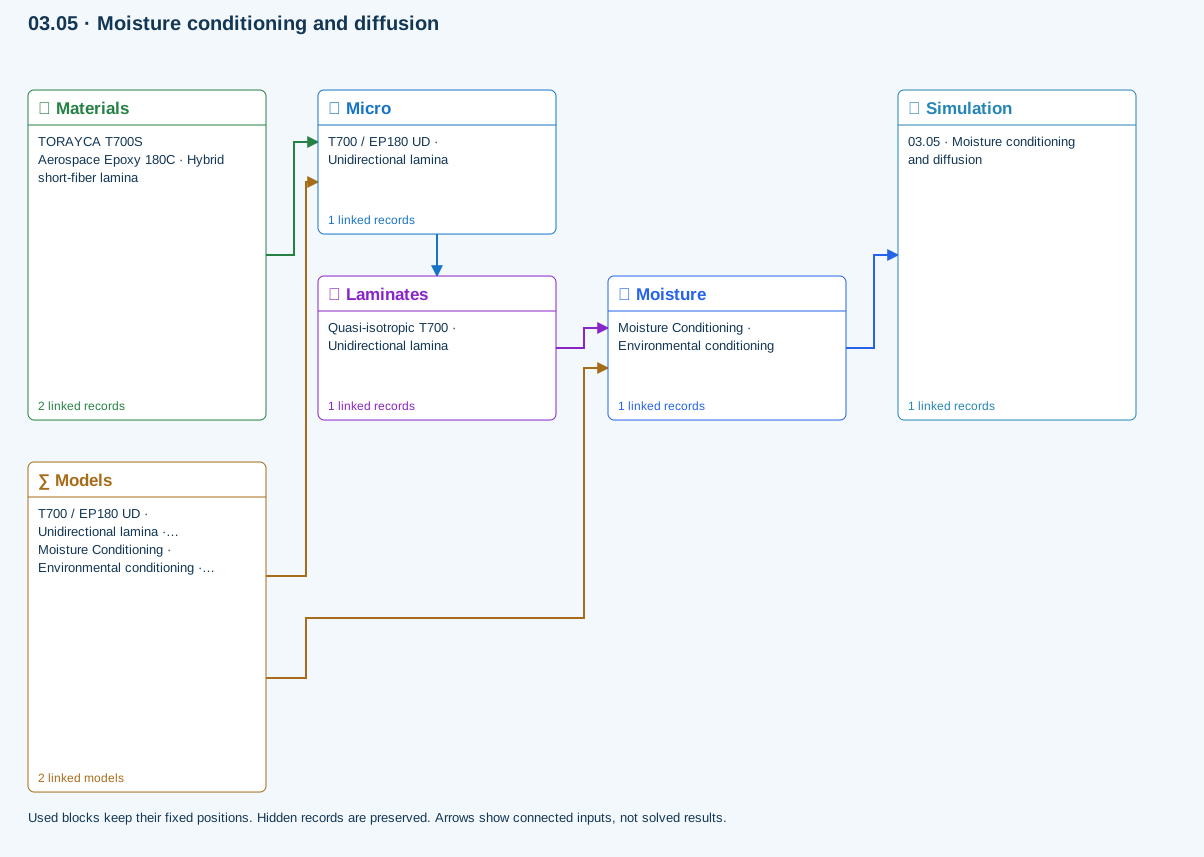
One formulation per moisture analysis. Thermal and moisture analyses can both be linked in Simulation; each needs its own boundary conditions.
Geometry → Rollers; Models → Roller contact
Thermal starting point: add roller Geometry and a roller boundary; the supplied die exercise does not contain a roller.
All blocks keep the CREATE / DISCOVER / SIMULATE positions, with Equipment below Geometry; unused records remain disconnected. This changes the view only, not the exercise records.
Bonded coating on a rigid core against a rigid flat. Geometry selects Infinite width (analytical plane strain) or Finite width (3D elastic contact with axial end spreading). Small deformation and optional prescribed sliding friction; no hyperelasticity or rolling resistance.
Structural models → Tool-release shape
Representative exercise workflow · supplied records remain in place; only used connections have arrows.
All blocks keep the CREATE / DISCOVER / SIMULATE positions, with Equipment below Geometry; unused records remain disconnected. This changes the view only, not the exercise records.
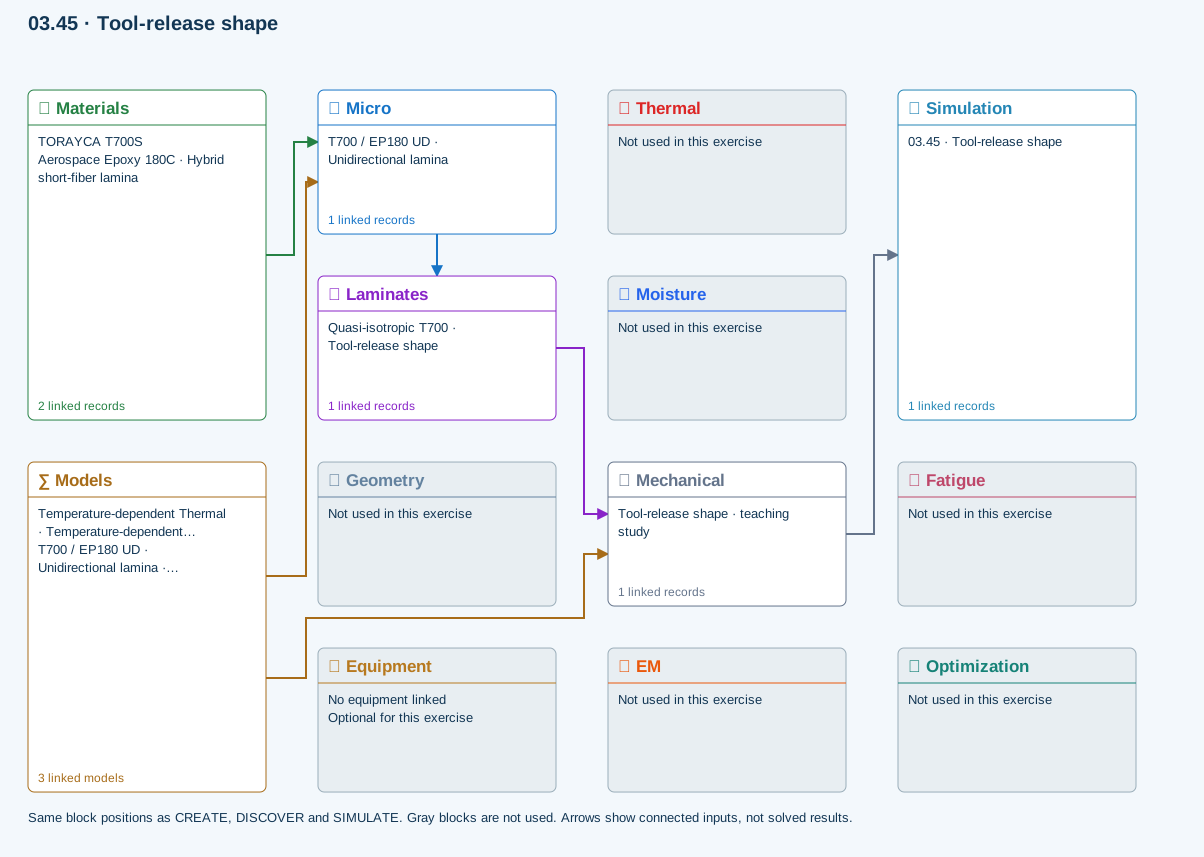
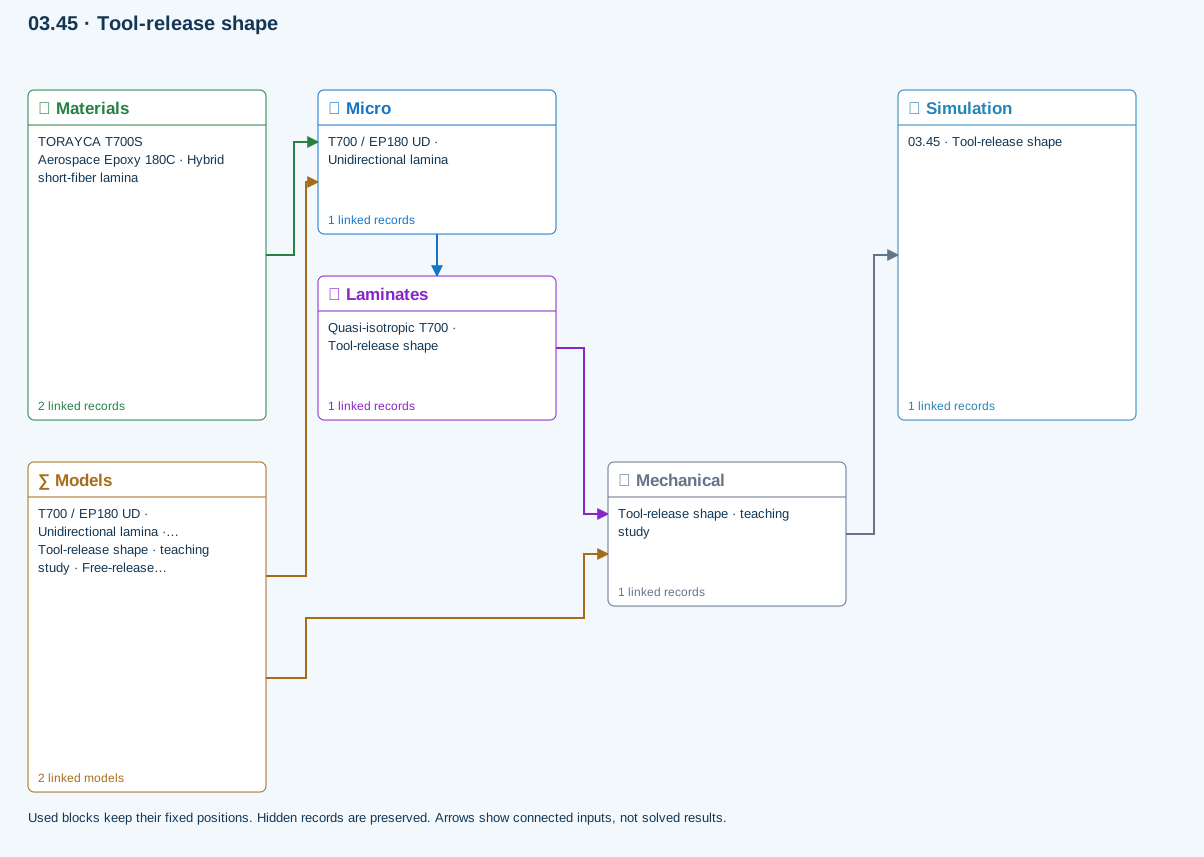
Free CLT release from prescribed ply-local shrinkage/thermal eigenstrains. Corner spring-in is a separate uniform-strain estimate. Stress-free temperature and effective post-gel shrinkage need calibration. No tool friction, cure kinetics or viscoelastic restraint history.
Size plates, beams, shells, sandwich panels and joints
Structural models → Laminate mechanics · CLT / FSDT
Representative exercise workflow · supplied records remain in place; only used connections have arrows.
All blocks keep the CREATE / DISCOVER / SIMULATE positions, with Equipment below Geometry; unused records remain disconnected. This changes the view only, not the exercise records.
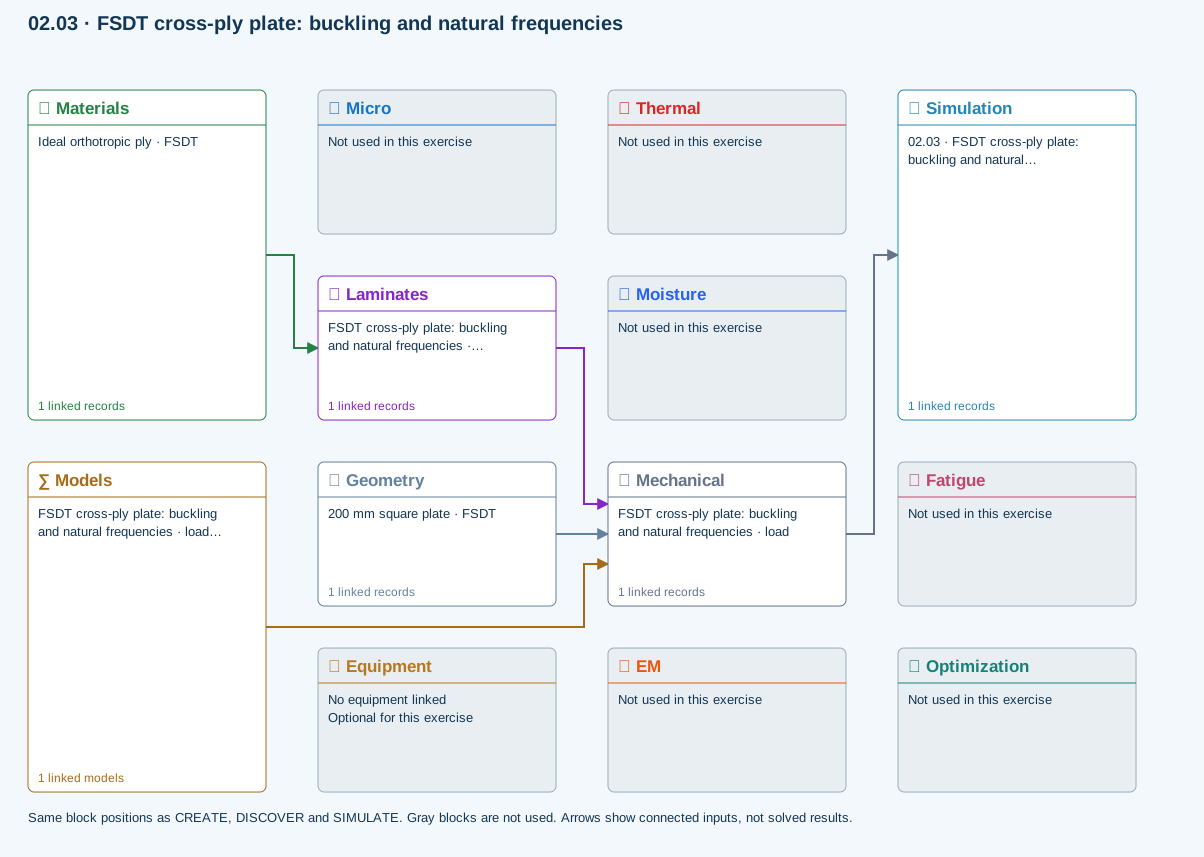
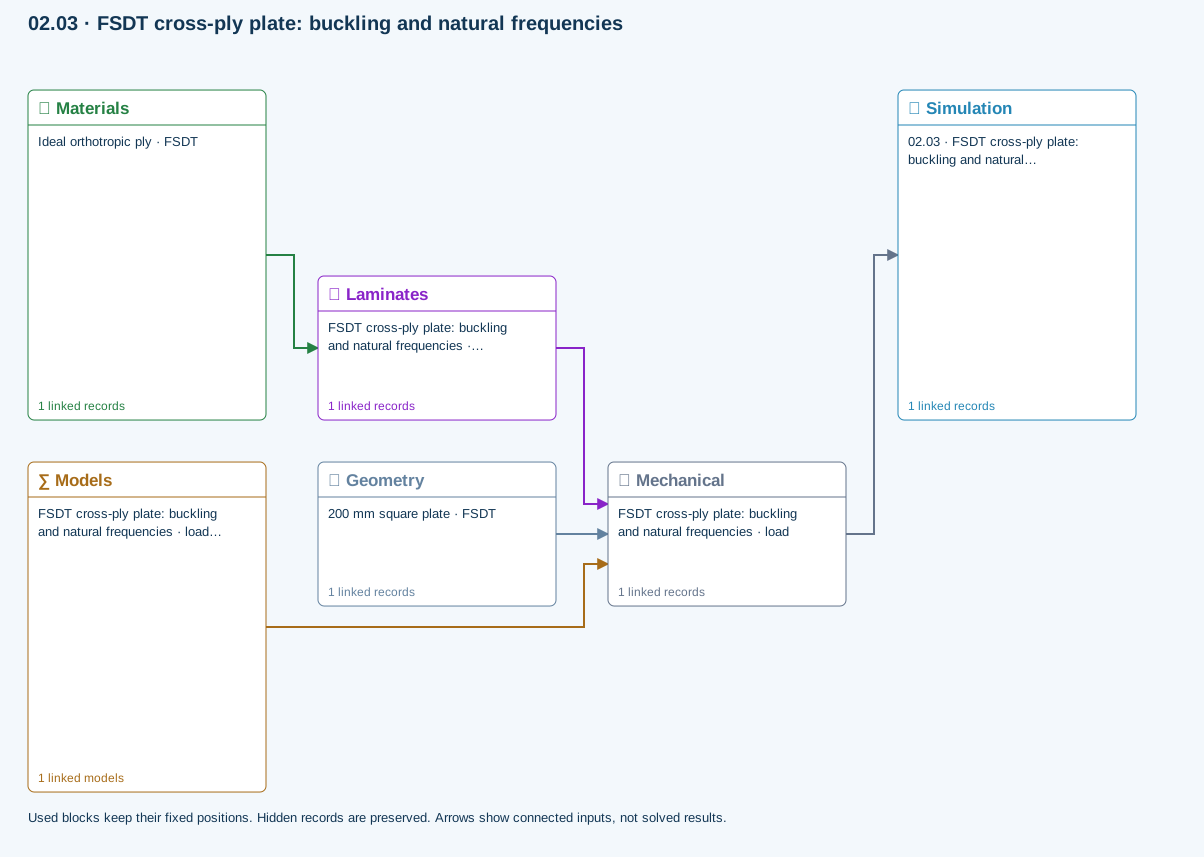
Choose a formulation and study. Buckling and modal can be requested together; static bending requires FSDT. These are reference-elastic studies, separate from coupled process or progressive failure.
Structural models → Cylinder models
Representative exercise workflow · supplied records remain in place; only used connections have arrows.
All blocks keep the CREATE / DISCOVER / SIMULATE positions, with Equipment below Geometry; unused records remain disconnected. This changes the view only, not the exercise records.
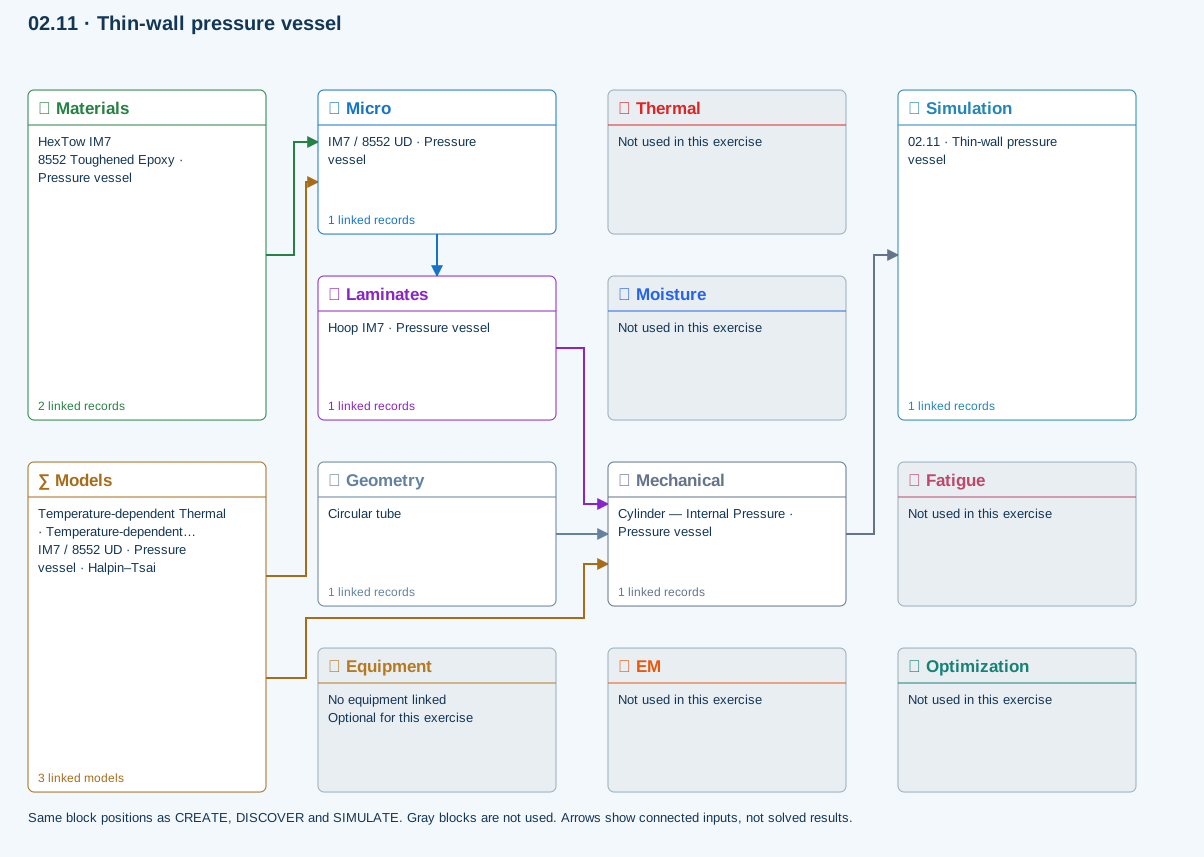
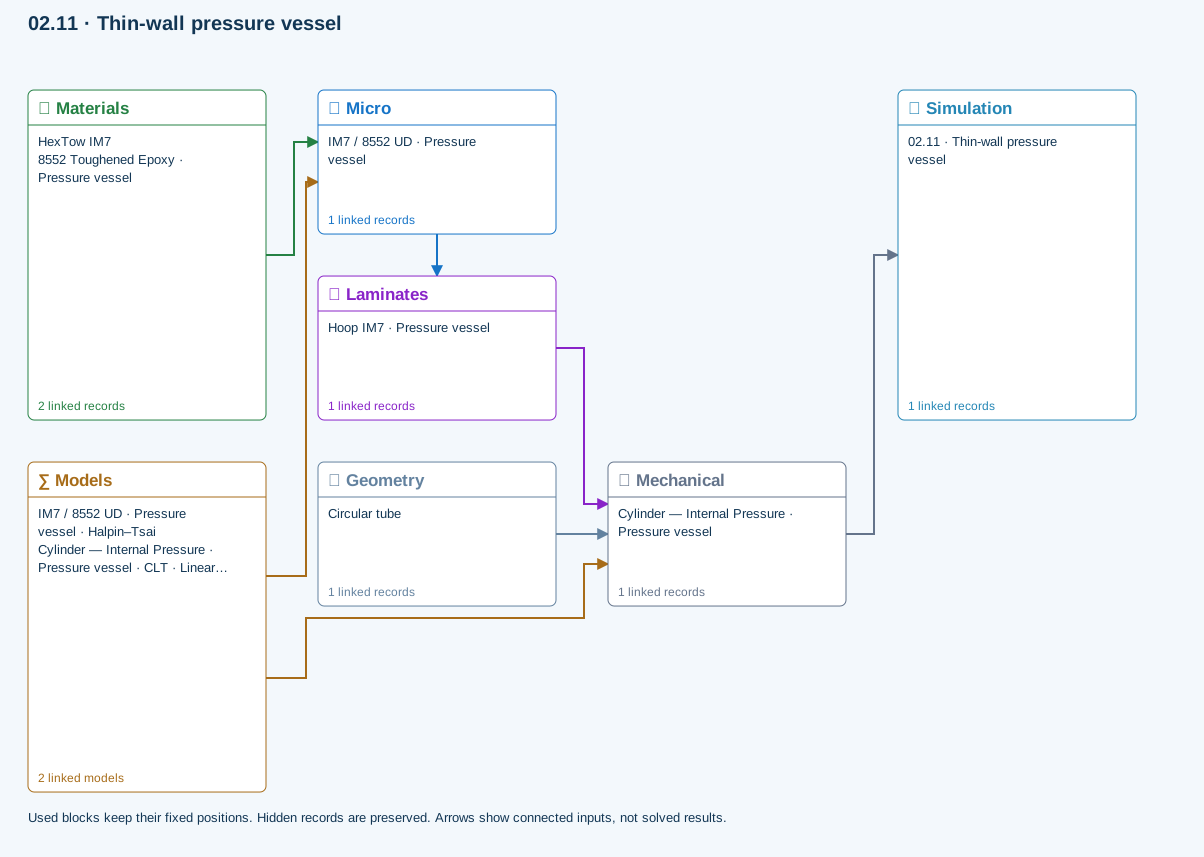
Choose one cylinder formulation per case record. Geometry and plies remain shared; thick-wall radial results exclude torsion and process strains.
Structural models → Laminate mechanics → Membrane, bending & beam
Representative exercise workflow · supplied records remain in place; only used connections have arrows.
All blocks keep the CREATE / DISCOVER / SIMULATE positions, with Equipment below Geometry; unused records remain disconnected. This changes the view only, not the exercise records.
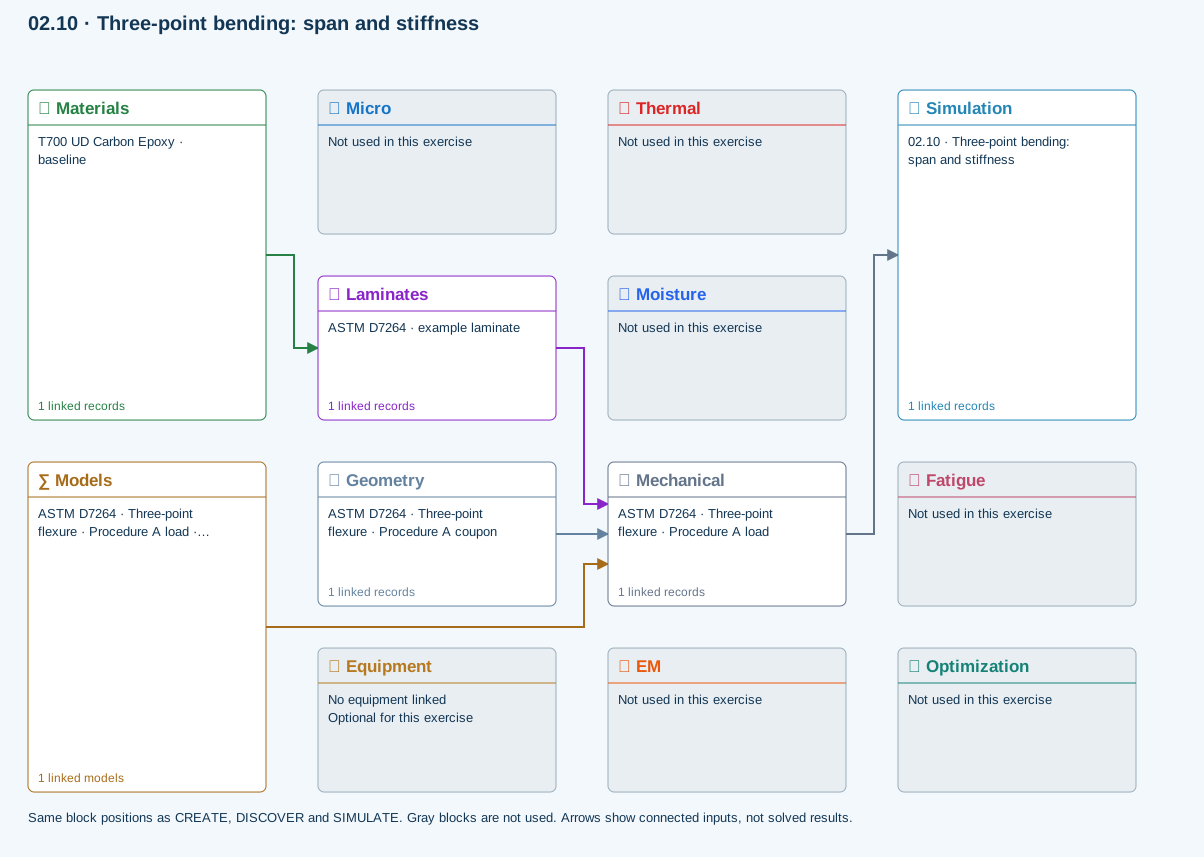
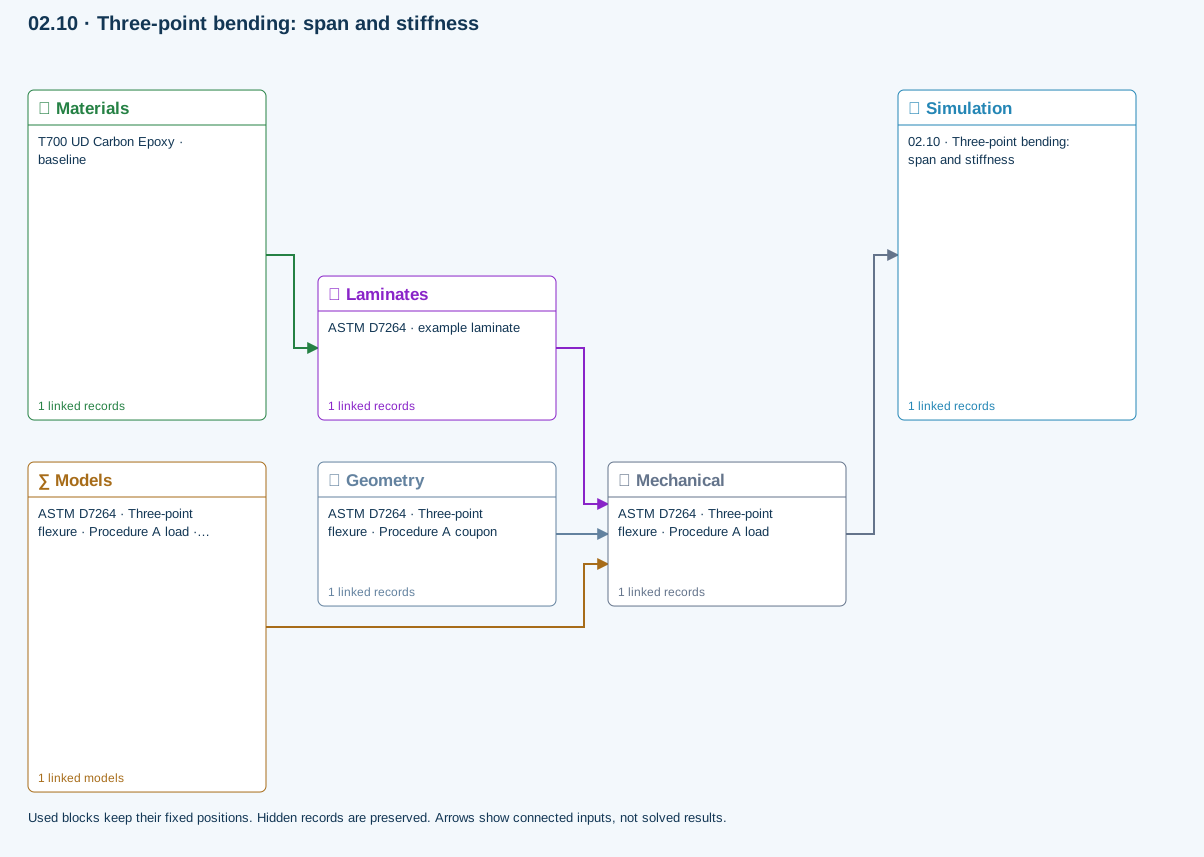
Geometry and the case determine the membrane or beam-test interpretation. Euler buckling requires a compatible beam section and a separate reference-elastic study; it is not a strength or local-buckling pass.
Structural models → Layerwise sections & joints
Representative exercise workflow · supplied records remain in place; only used connections have arrows.
All blocks keep the CREATE / DISCOVER / SIMULATE positions, with Equipment below Geometry; unused records remain disconnected. This changes the view only, not the exercise records.
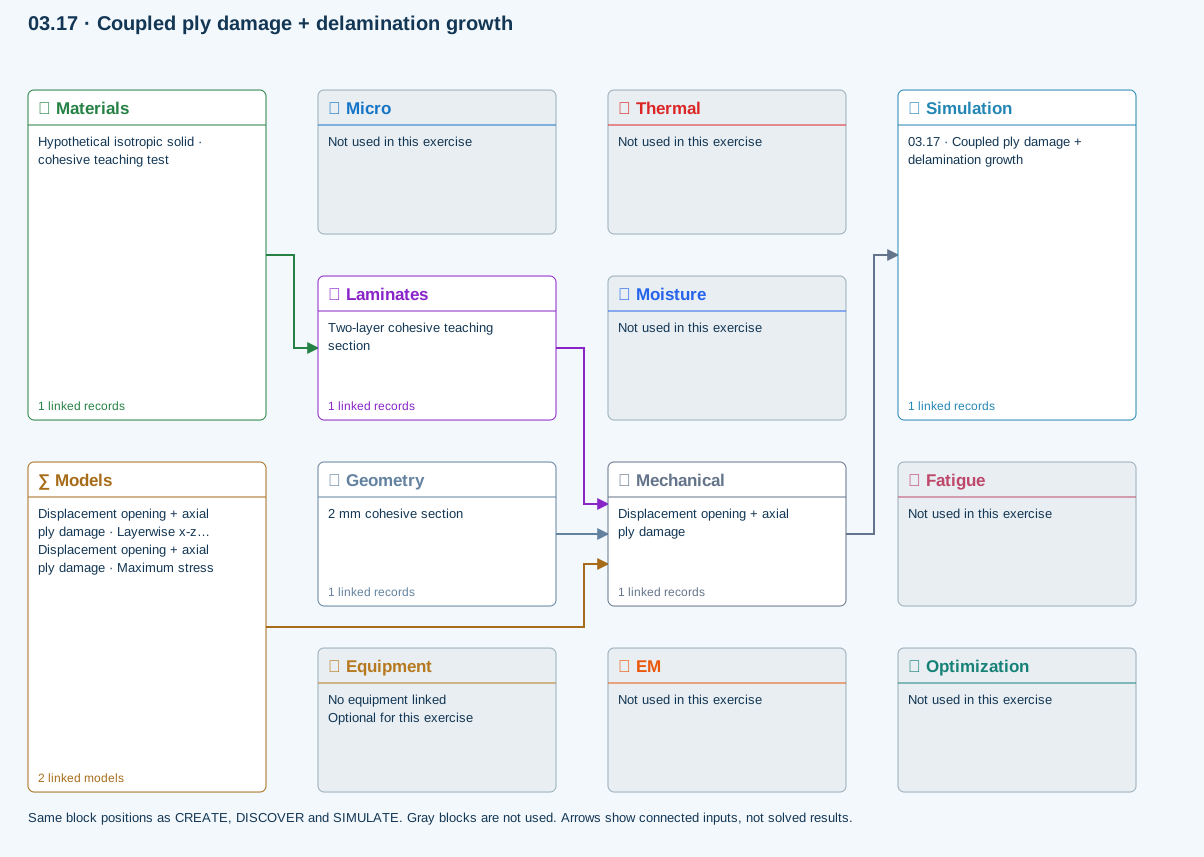
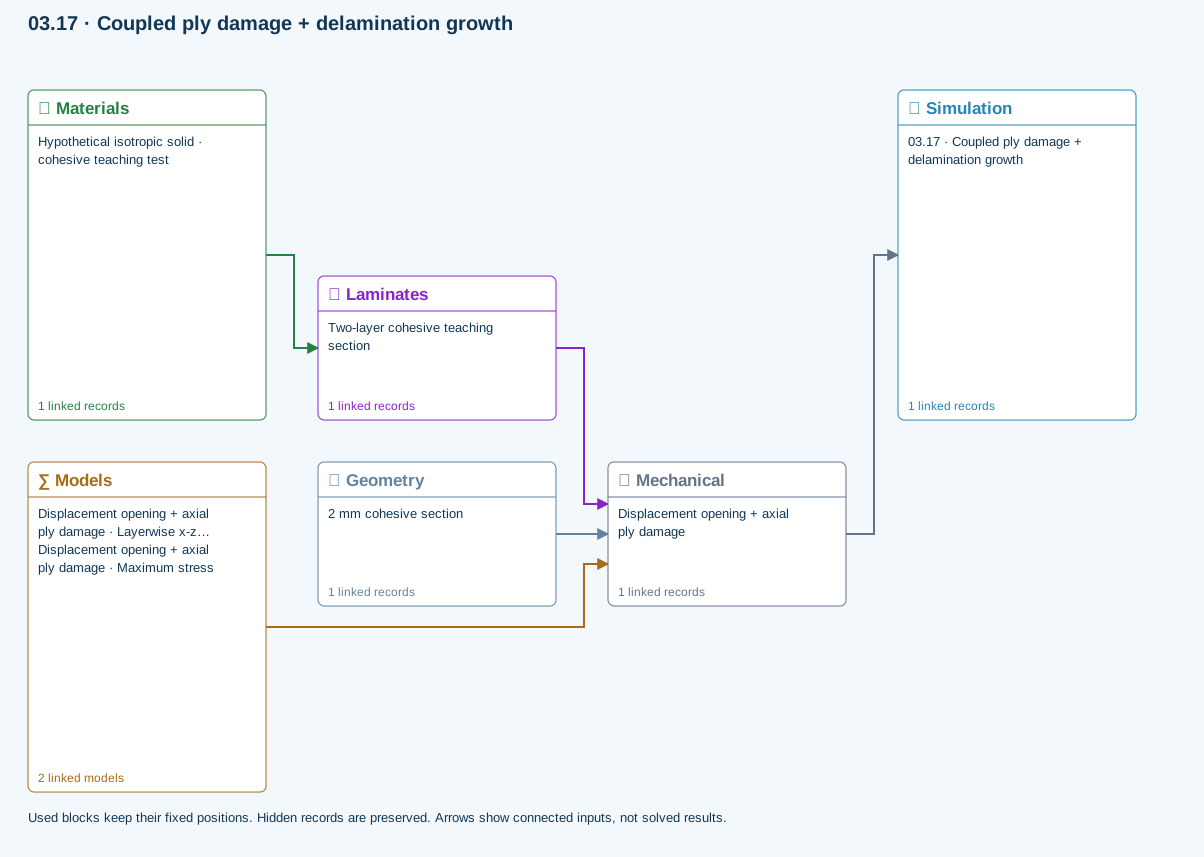
Coupled delamination is available only for the layerwise Plate section and needs calibrated interface and ply properties. Lap-shear uses its separate joint geometry and perfectly bonded elastic formulation.
Structural models → Sandwich bending
Representative exercise workflow · supplied records remain in place; only used connections have arrows.
All blocks keep the CREATE / DISCOVER / SIMULATE positions, with Equipment below Geometry; unused records remain disconnected. This changes the view only, not the exercise records.
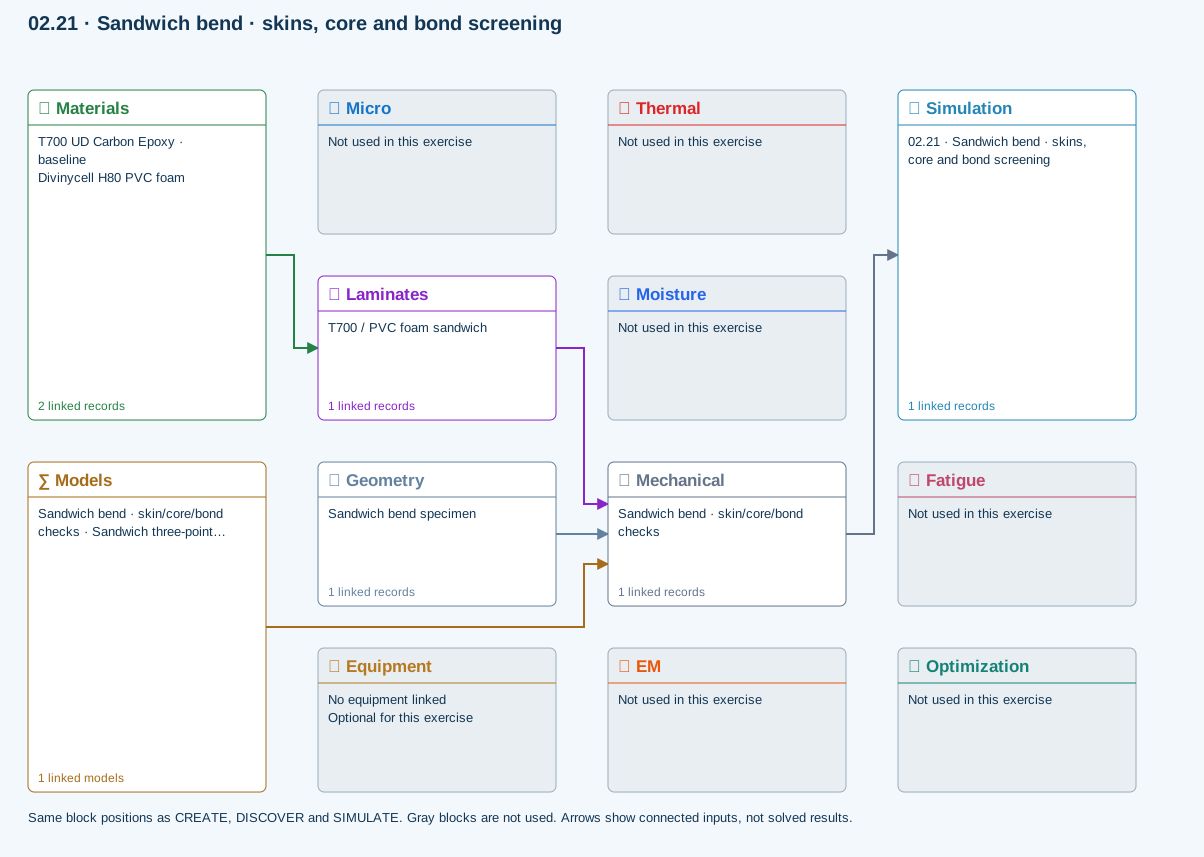
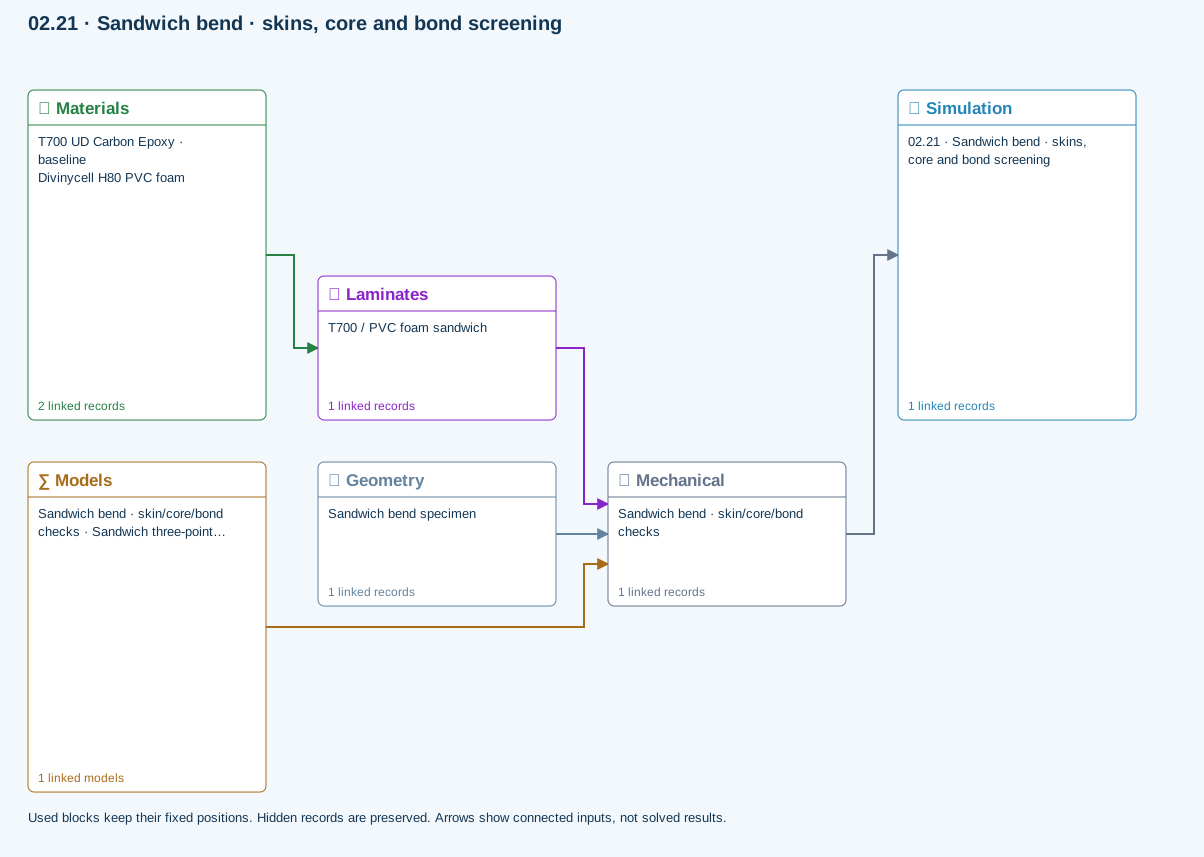
Dedicated sandwich screening. Check core, faces and nominal bond shear separately; peel, mixed-mode debonding and crack growth are not assessed.
Structural models → Layerwise sections & joints → Analytical bonded joint
Representative exercise workflow · supplied records remain in place; only used connections have arrows.
All blocks keep the CREATE / DISCOVER / SIMULATE positions, with Equipment below Geometry; unused records remain disconnected. This changes the view only, not the exercise records.
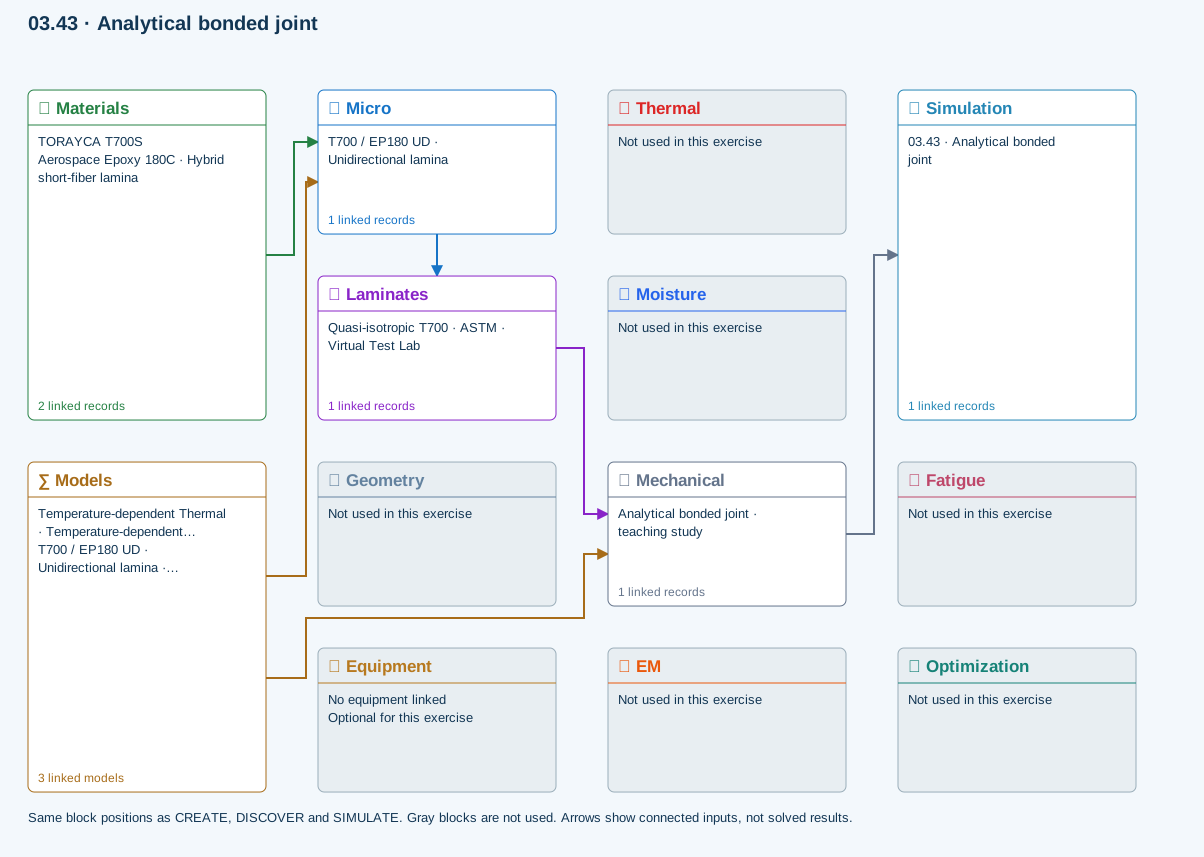
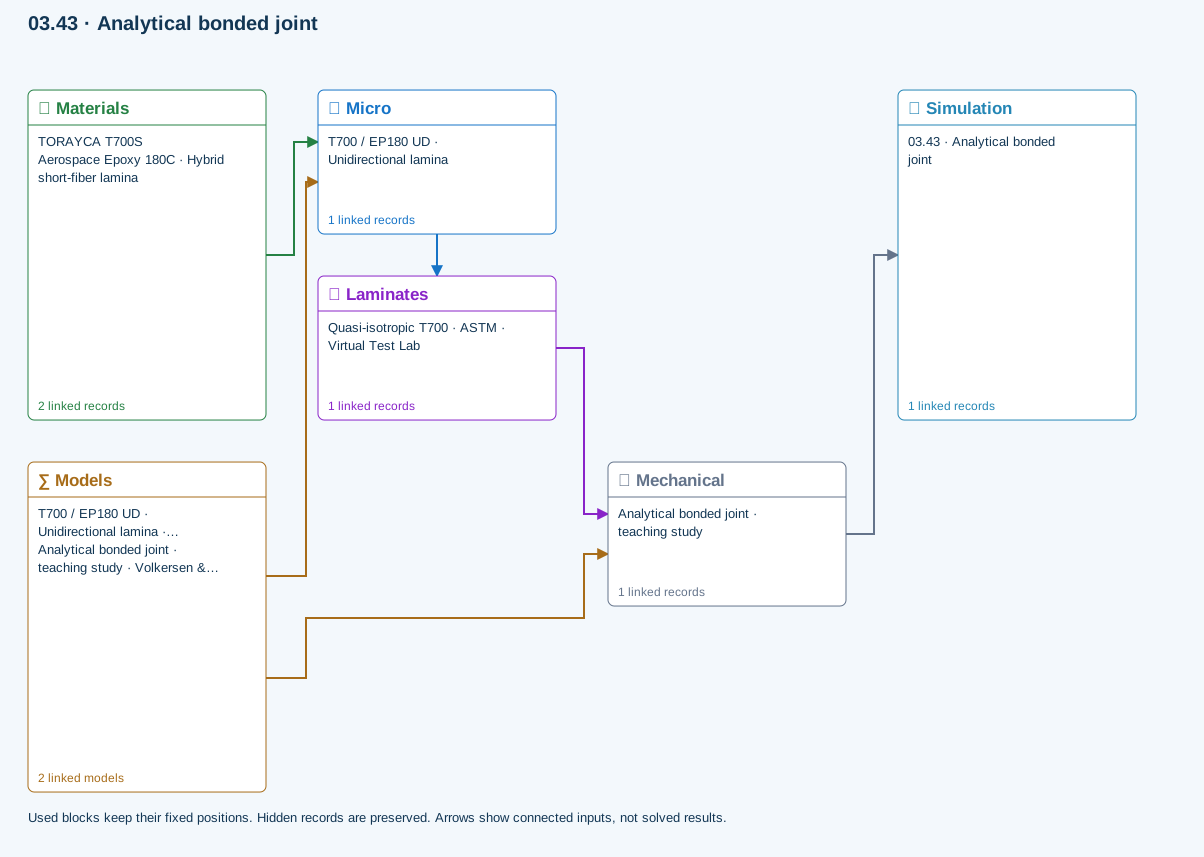
Identical equivalent-elastic adherends, long free arms and a thin elastic adhesive. Compare shear-only Volkersen with eccentric single-lap shear and peel. Not a debonding, plasticity or strength calculation.
Structural models → Cylinder models → Cylinder buckling
Representative exercise workflow · supplied records remain in place; only used connections have arrows.
All blocks keep the CREATE / DISCOVER / SIMULATE positions, with Equipment below Geometry; unused records remain disconnected. This changes the view only, not the exercise records.
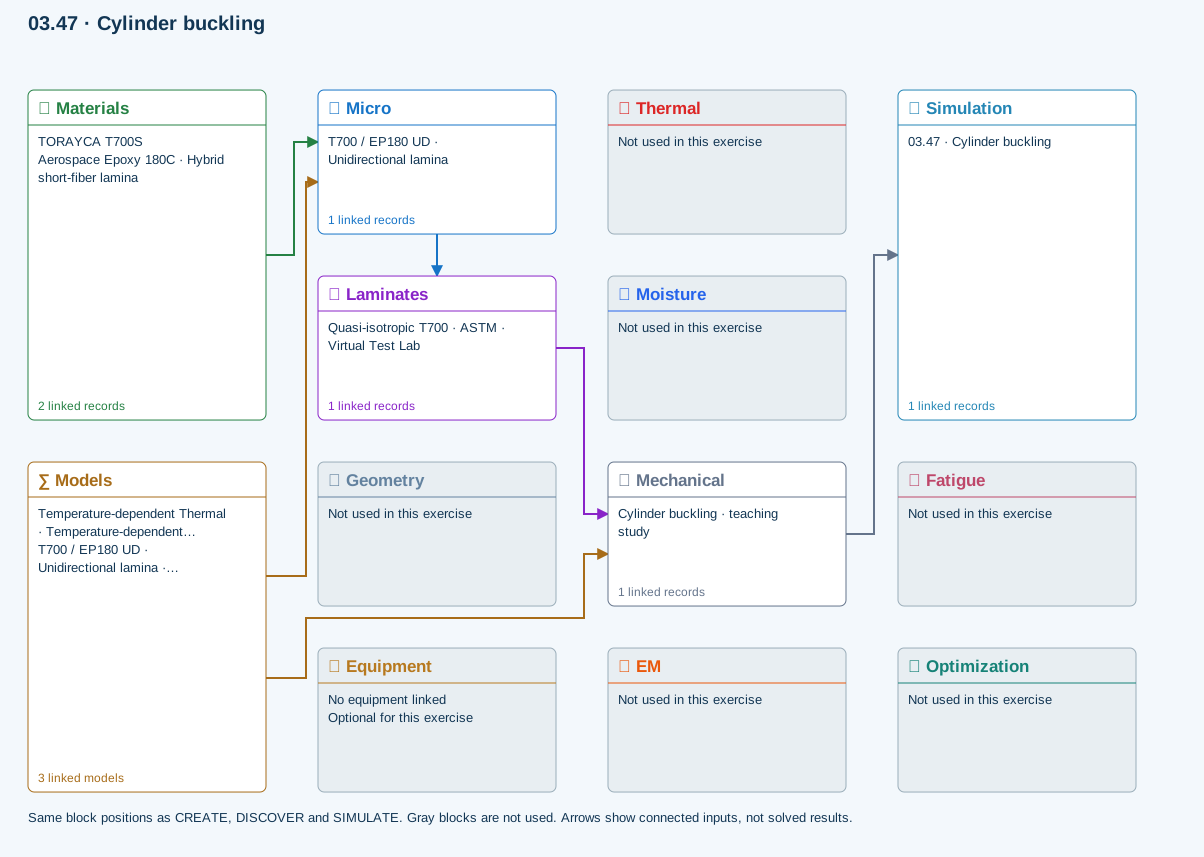
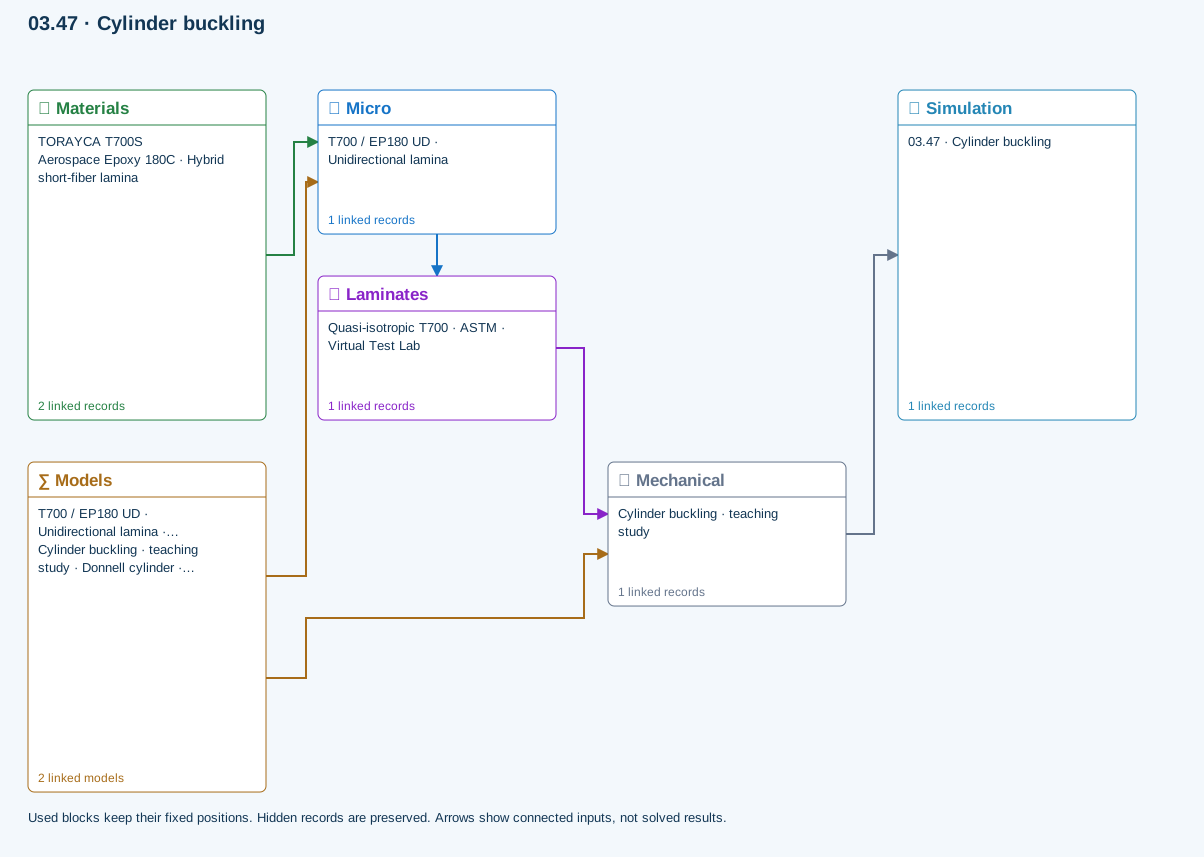
Simply supported, thin, specially orthotropic cylinder under uniform axial compression. Discrete Donnell modes; prescribed knockdown factor explores imperfection sensitivity, not a prediction from measured imperfection amplitude. No pressure, torsion, postbuckling or strength pass.
Assess strength, service life and sensitivity
Structural models → Laminate mechanics → Failure criteria
Representative exercise workflow · supplied records remain in place; only used connections have arrows.
All blocks keep the CREATE / DISCOVER / SIMULATE positions, with Equipment below Geometry; unused records remain disconnected. This changes the view only, not the exercise records.
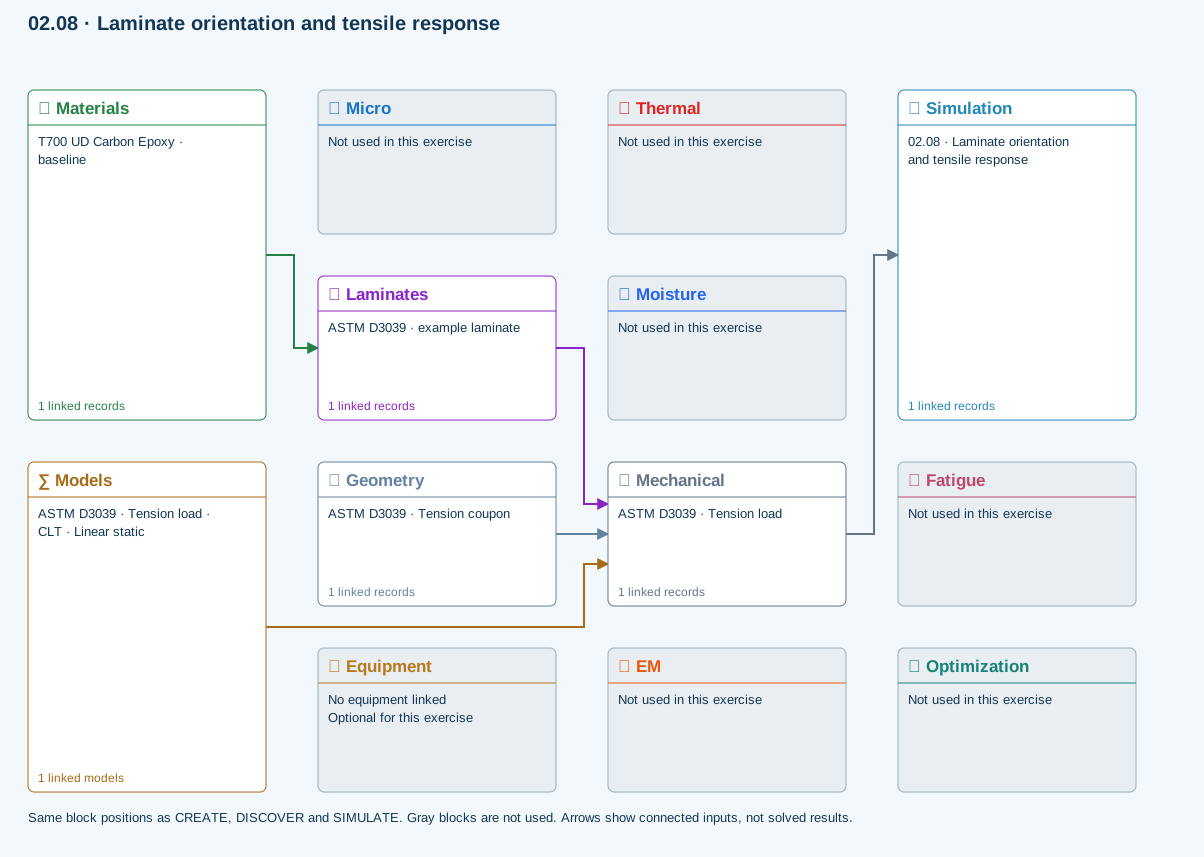
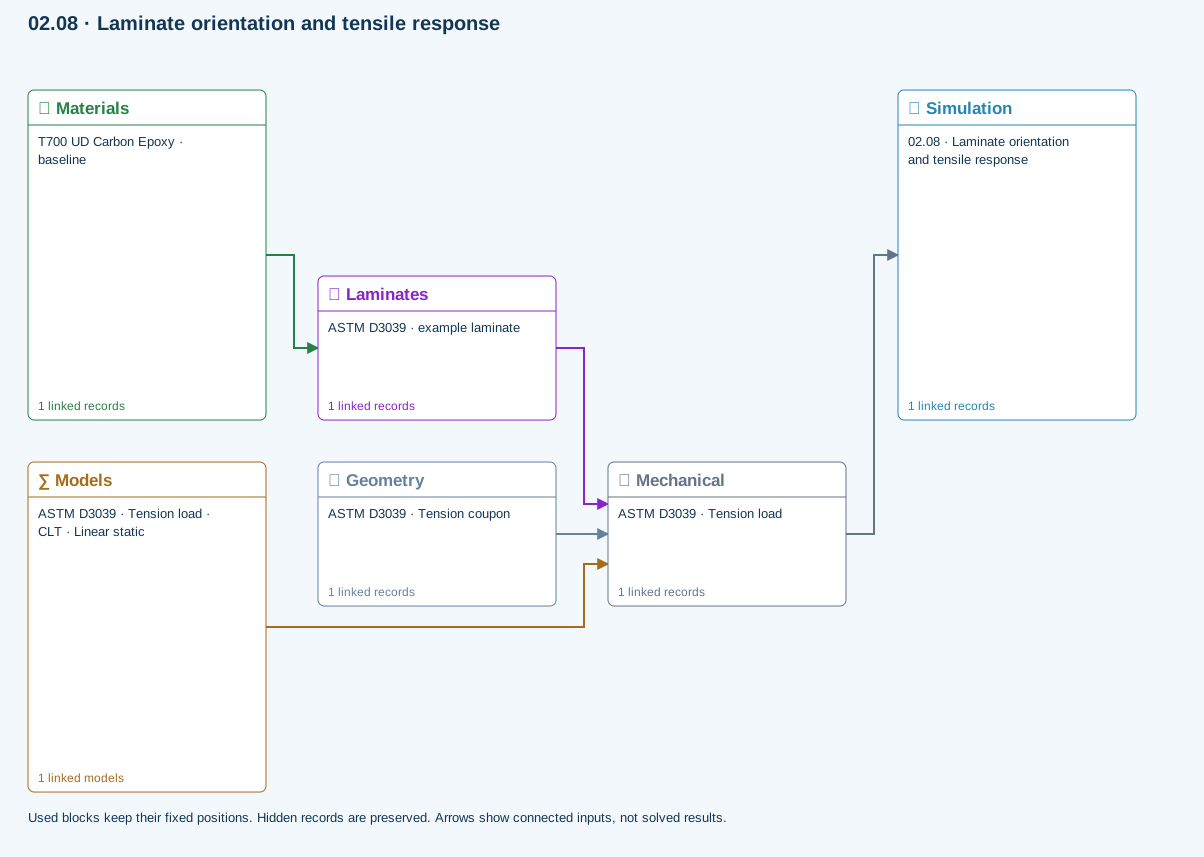
One primary failure criterion per load. In Response → Failure, compare all eligible theories or a custom selection in the envelope controls. Each theory runs independently; criteria are not blended.
Structural models → Laminate mechanics → Fatigue
Representative exercise workflow · supplied records remain in place; only used connections have arrows.
All blocks keep the CREATE / DISCOVER / SIMULATE positions, with Equipment below Geometry; unused records remain disconnected. This changes the view only, not the exercise records.
Select calibrated S–N curves for each material, direction and stress sign in Fatigue. Different sources can use different models. S–N life does not define residual stiffness or strength.
Structural models → Laminate mechanics → Failure criteria → Open-hole strength
Representative exercise workflow · supplied records remain in place; only used connections have arrows.
All blocks keep the CREATE / DISCOVER / SIMULATE positions, with Equipment below Geometry; unused records remain disconnected. This changes the view only, not the exercise records.
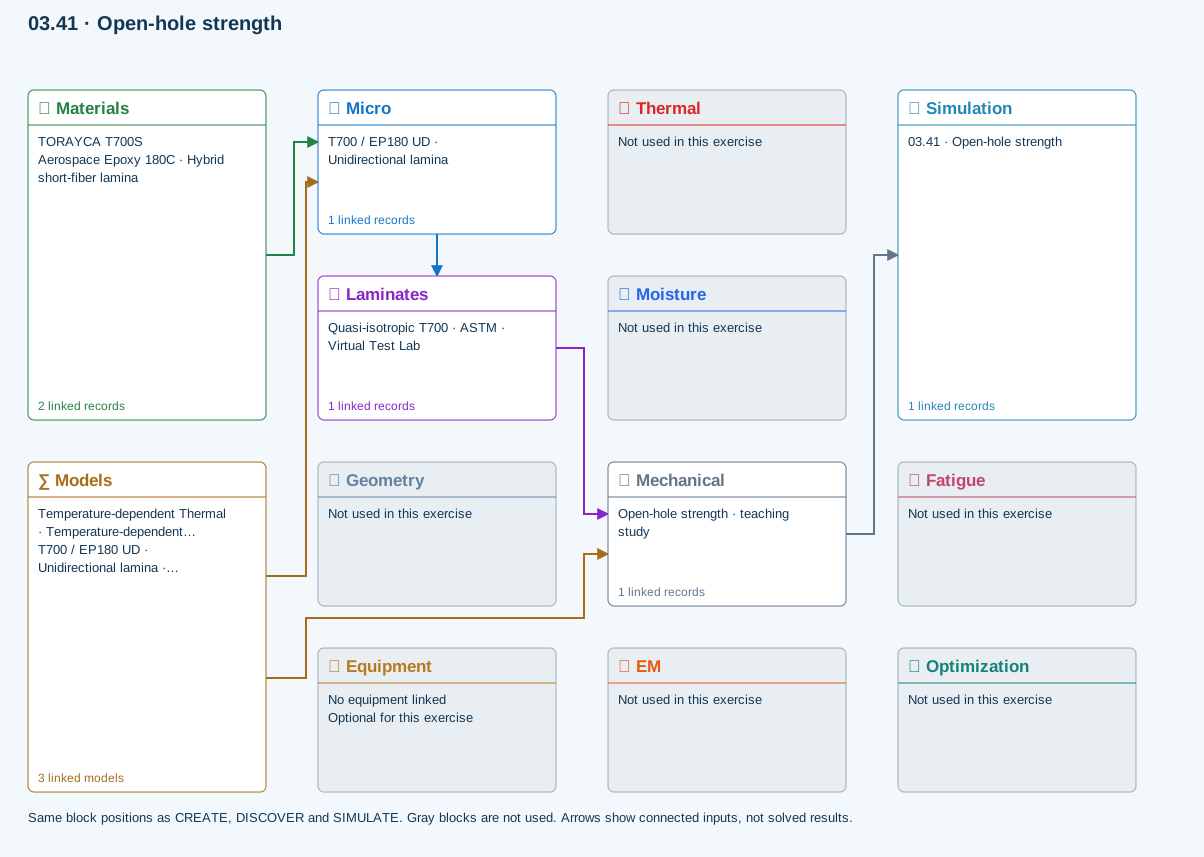
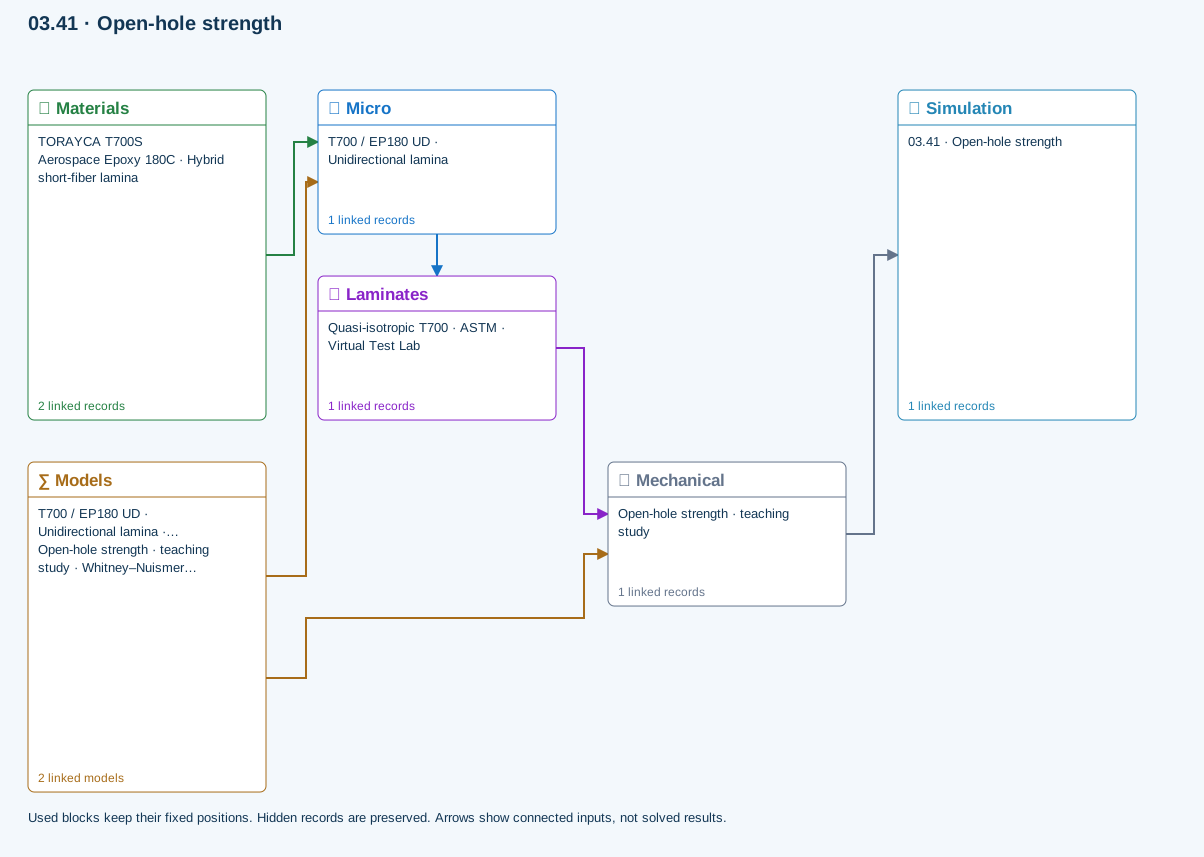
Infinite-width, specially orthotropic tension screening. Point and average stress distances must be calibrated independently for this laminate. Not compression, bearing or a joint allowable.
Structural models → Laminate mechanics → Creep & stress relaxation
Representative exercise workflow · supplied records remain in place; only used connections have arrows.
All blocks keep the CREATE / DISCOVER / SIMULATE positions, with Equipment below Geometry; unused records remain disconnected. This changes the view only, not the exercise records.
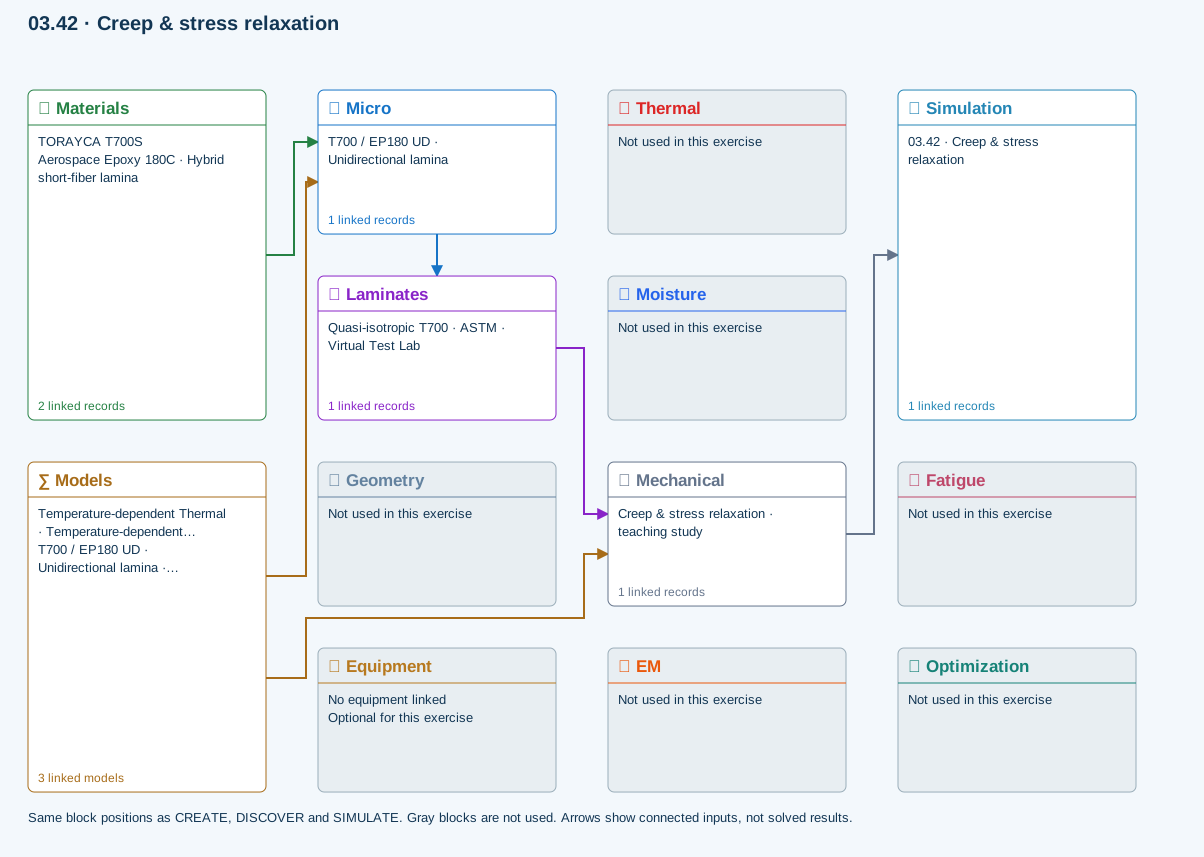
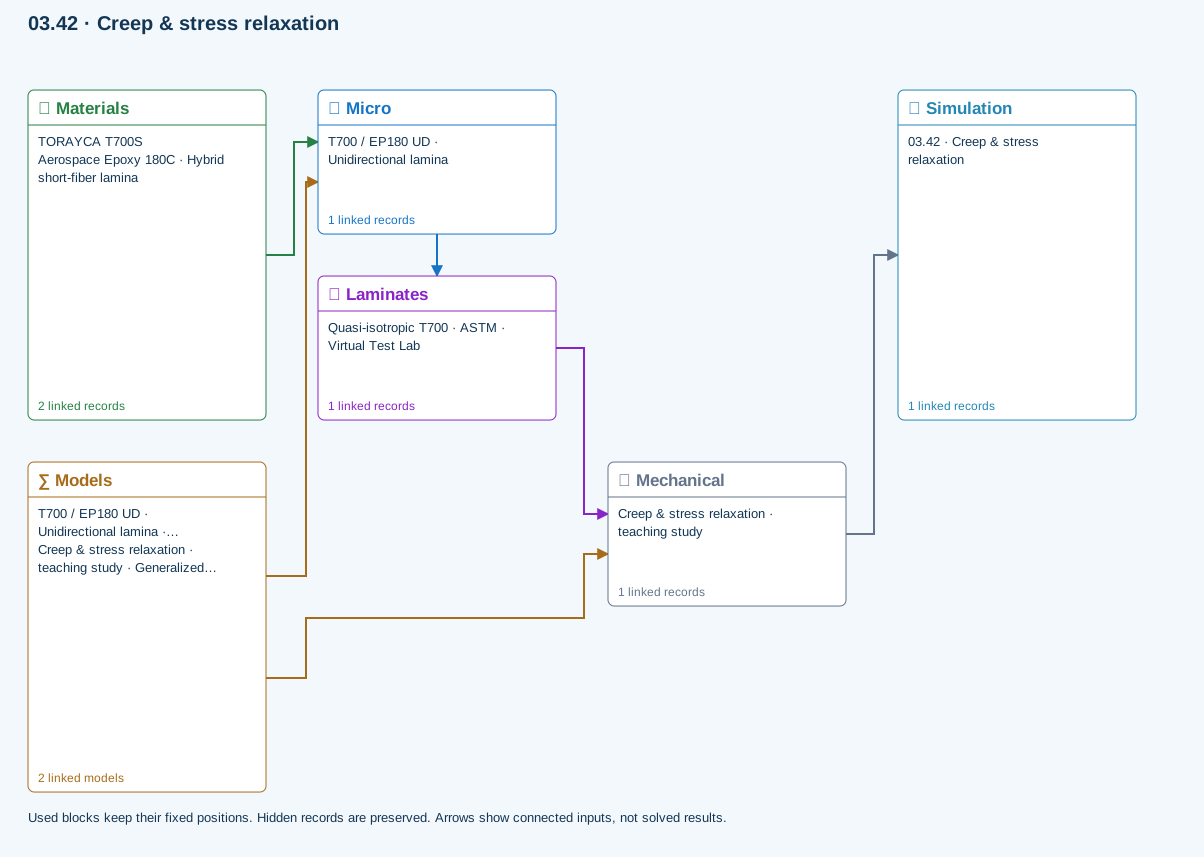
Linear uniaxial response at the calibration temperature. Reference Ex is the instantaneous modulus. Three Maxwell branches; creep is solved from stress equilibrium, not the reciprocal relaxation modulus. No thermal shifting or nonlinear creep.
Structural models → Laminate mechanics → Failure criteria → LaRC04
Representative exercise workflow · supplied records remain in place; only used connections have arrows.
All blocks keep the CREATE / DISCOVER / SIMULATE positions, with Equipment below Geometry; unused records remain disconnected. This changes the view only, not the exercise records.
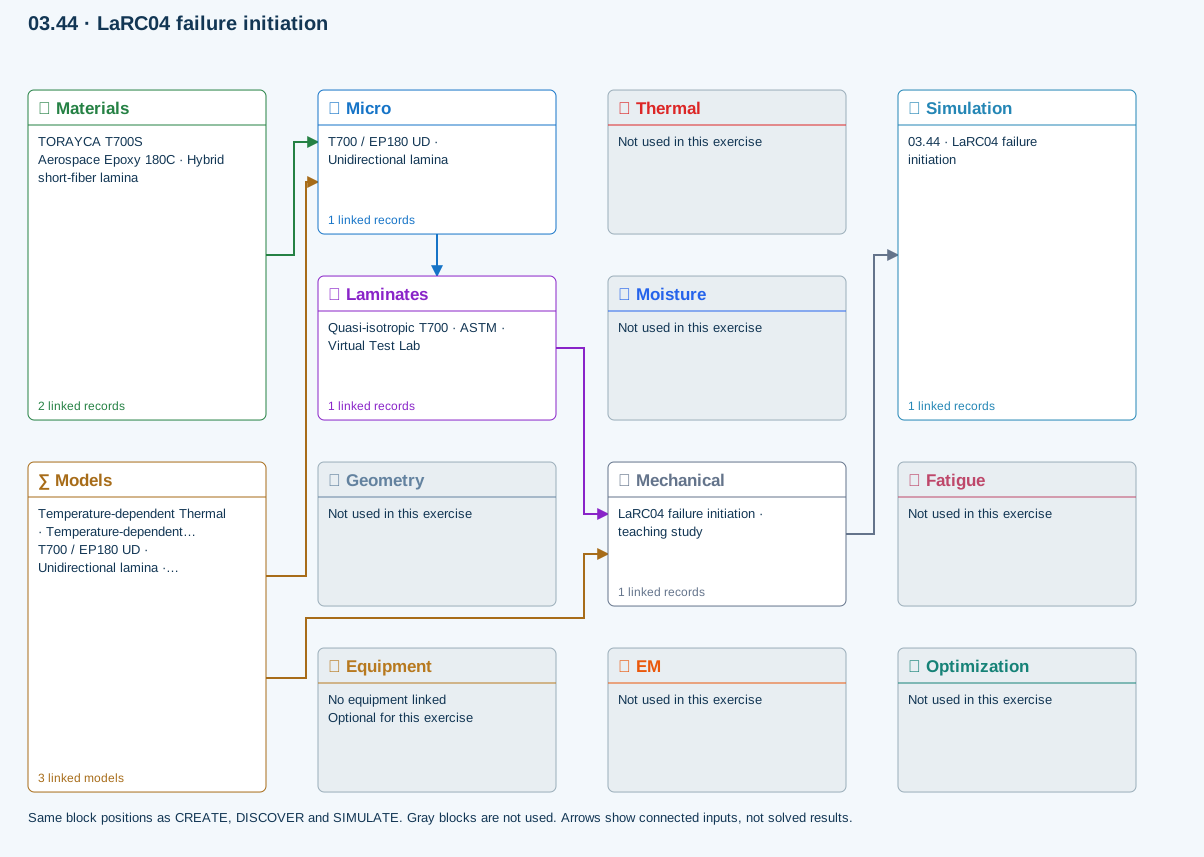
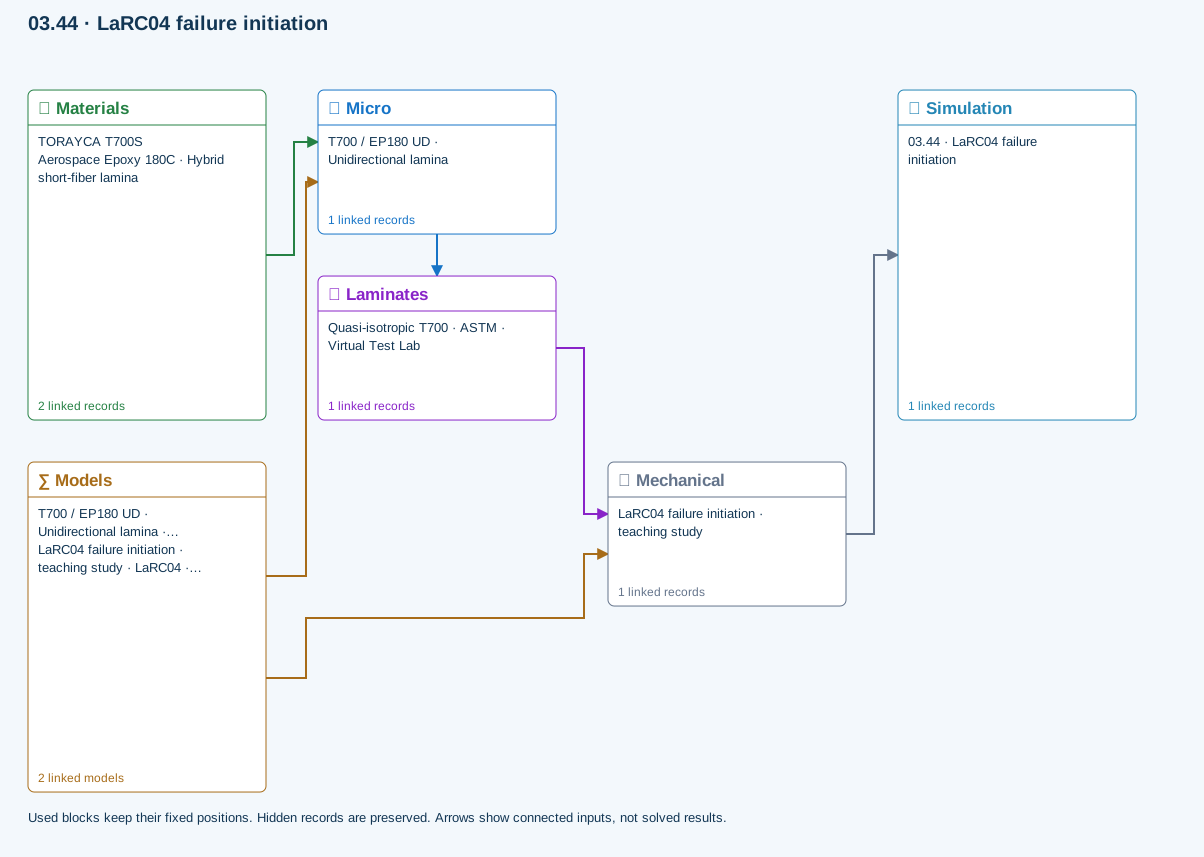
NASA LaRC04 linear-shear specialization, evaluated at both faces of every ply under membrane and bending loads. Supplied ply strengths are effective/in-situ values; no automatic thin-ply enhancement. Initiation only, not degradation or nonlinear-shear instability.
Structural models → Laminate mechanics → Fatigue → Residual properties
Representative exercise workflow · supplied records remain in place; only used connections have arrows.
All blocks keep the CREATE / DISCOVER / SIMULATE positions, with Equipment below Geometry; unused records remain disconnected. This changes the view only, not the exercise records.
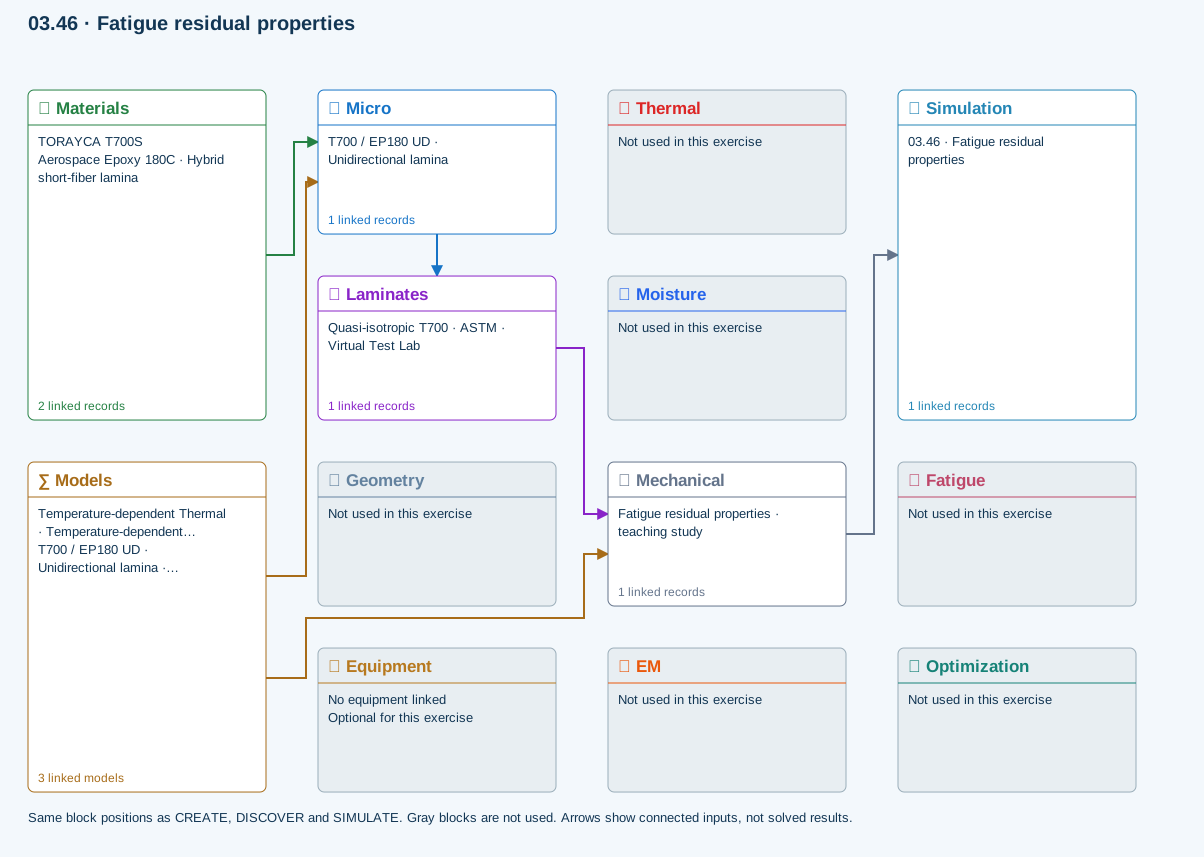
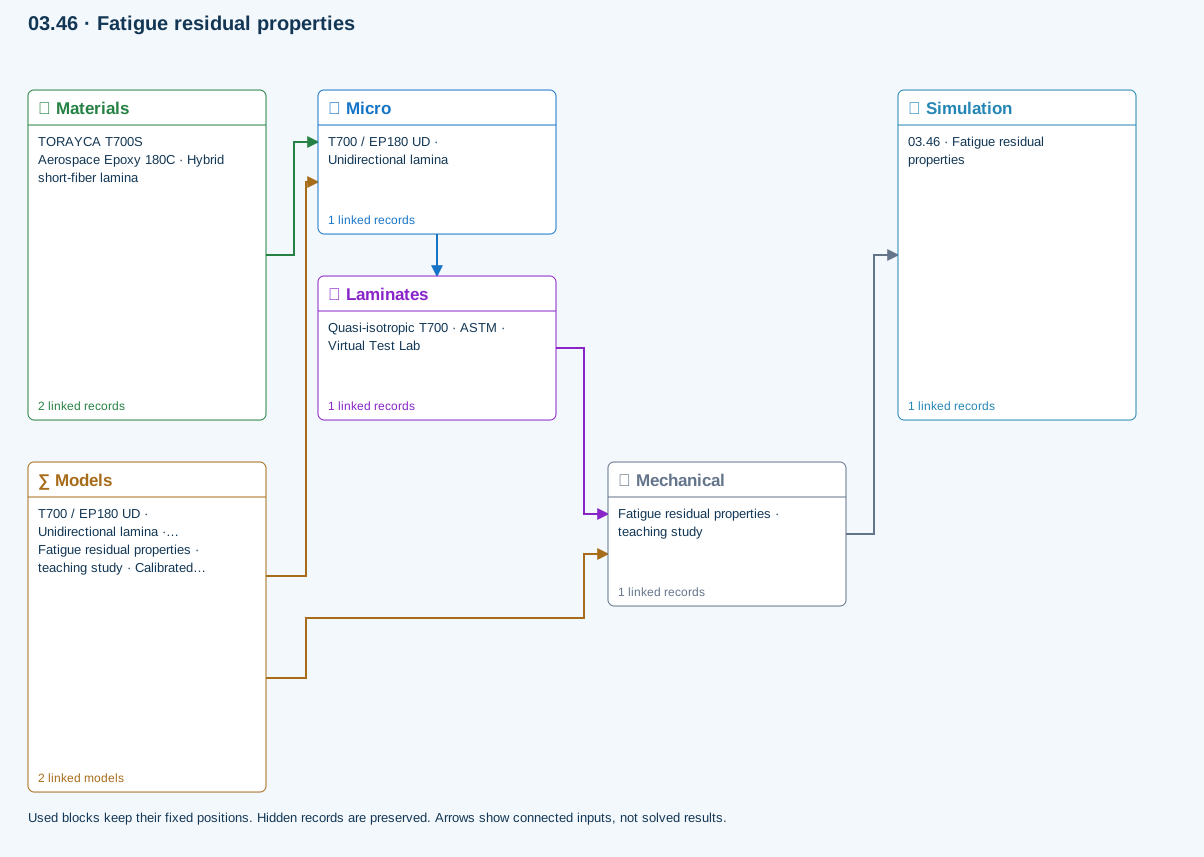
Prescribed power-law retention fitted to constant-amplitude tests at a fixed stress ratio, amplitude and temperature. Stiffness and strength have independent coefficients. S–N life alone cannot calibrate either. Does not modify the saved laminate.
Structural models → Uncertainty & sensitivity
Representative exercise workflow · supplied records remain in place; only used connections have arrows.
All blocks keep the CREATE / DISCOVER / SIMULATE positions, with Equipment below Geometry; unused records remain disconnected. This changes the view only, not the exercise records.
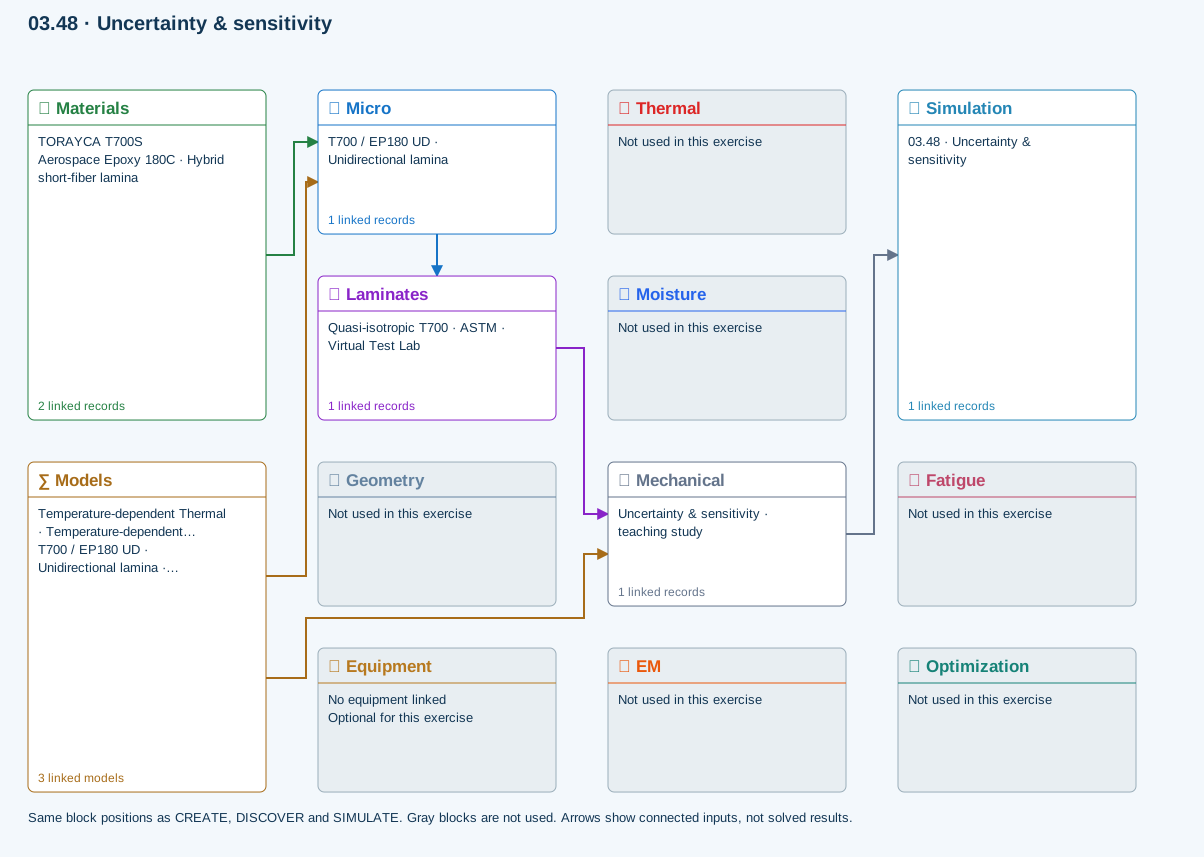
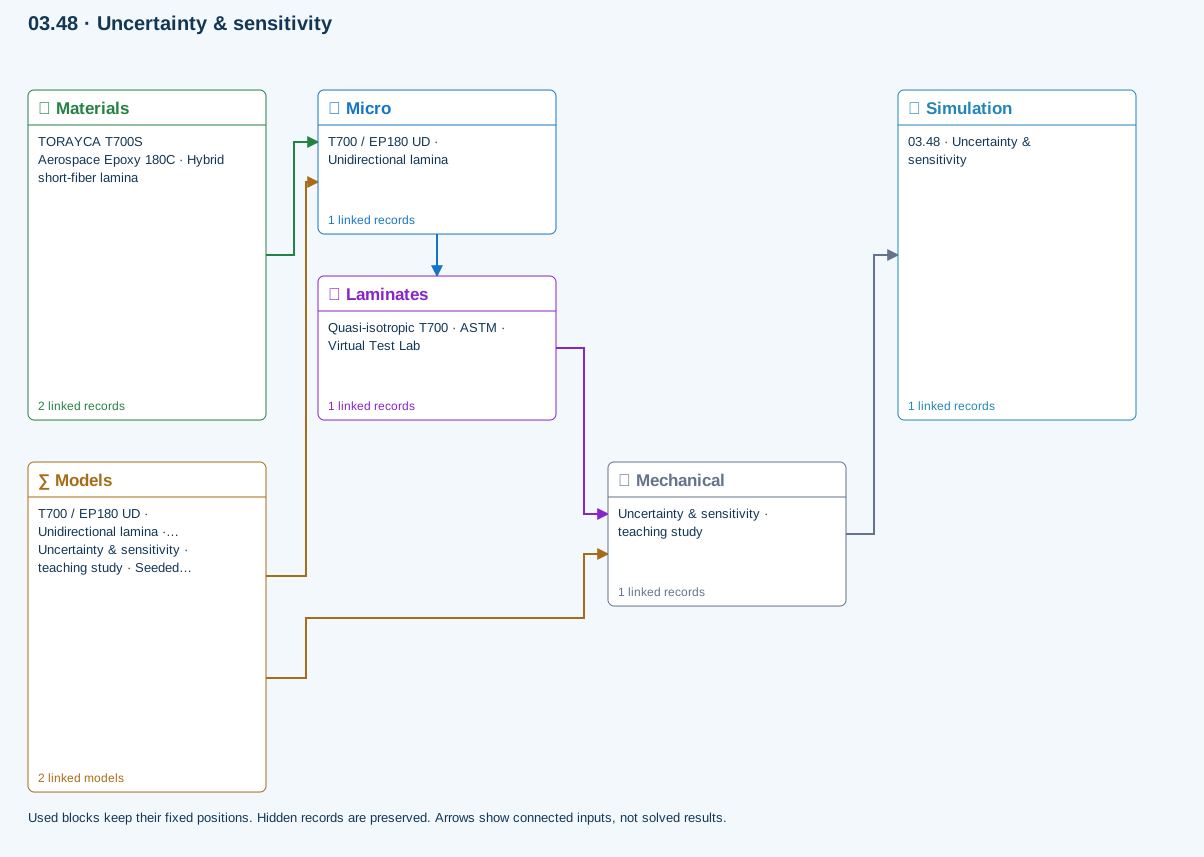
Seeded independent uniform sampling of shared modulus, ply-thickness and angle offsets. Recomputes laminate ABD for each sample. Bounds are assumptions, not measured distributions. Percentiles and sensitivity are exploratory, not reliability certification.
Explore specimen behavior and calibration
Models → Structural models → ASTM · Virtual Test Lab
Representative exercise workflow · supplied records remain in place; only used connections have arrows.
All blocks keep the CREATE / DISCOVER / SIMULATE positions, with Equipment below Geometry; unused records remain disconnected. This changes the view only, not the exercise records.
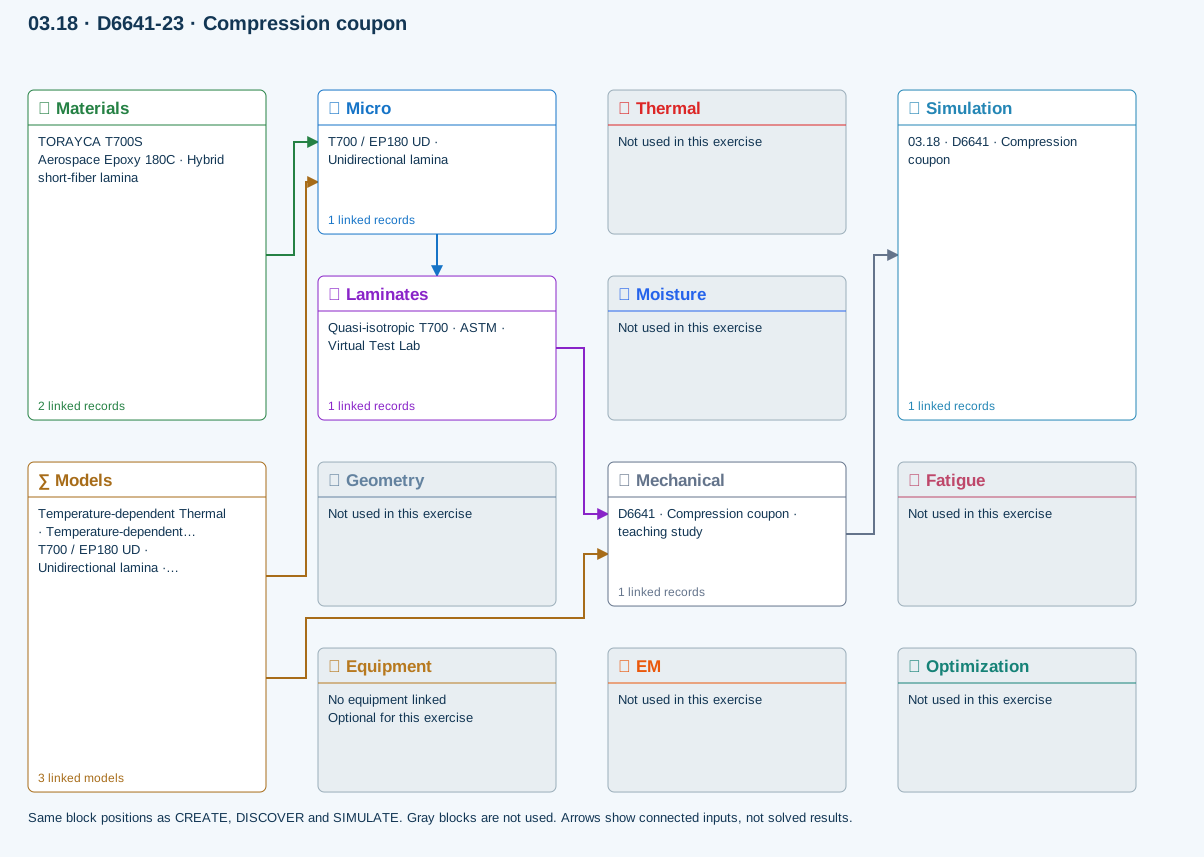
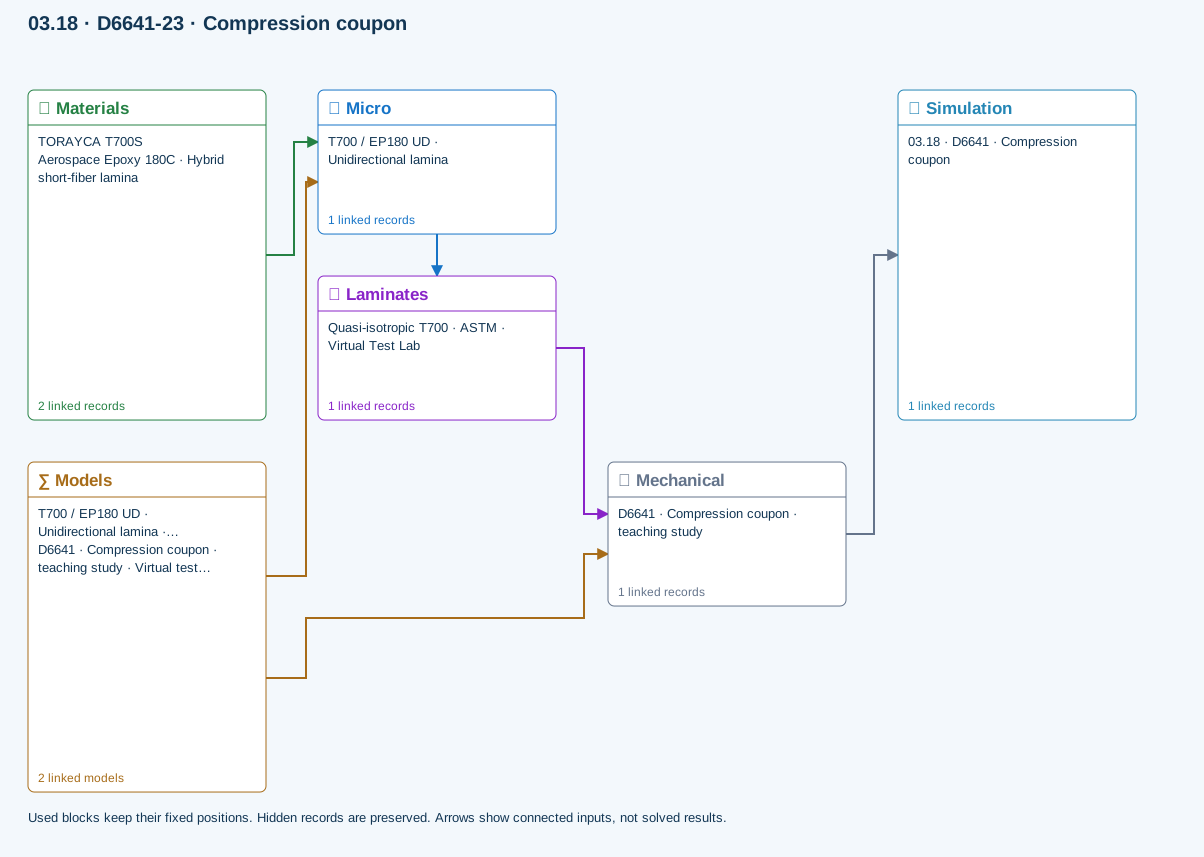
Uniform small-strain compression using linked laminate Ex and thickness. Measured compressive strength supplies a screening ratio; fixture, tabs, buckling and failure evolution are not simulated.
Models → Structural models → ASTM · Virtual Test Lab
Representative exercise workflow · supplied records remain in place; only used connections have arrows.
All blocks keep the CREATE / DISCOVER / SIMULATE positions, with Equipment below Geometry; unused records remain disconnected. This changes the view only, not the exercise records.
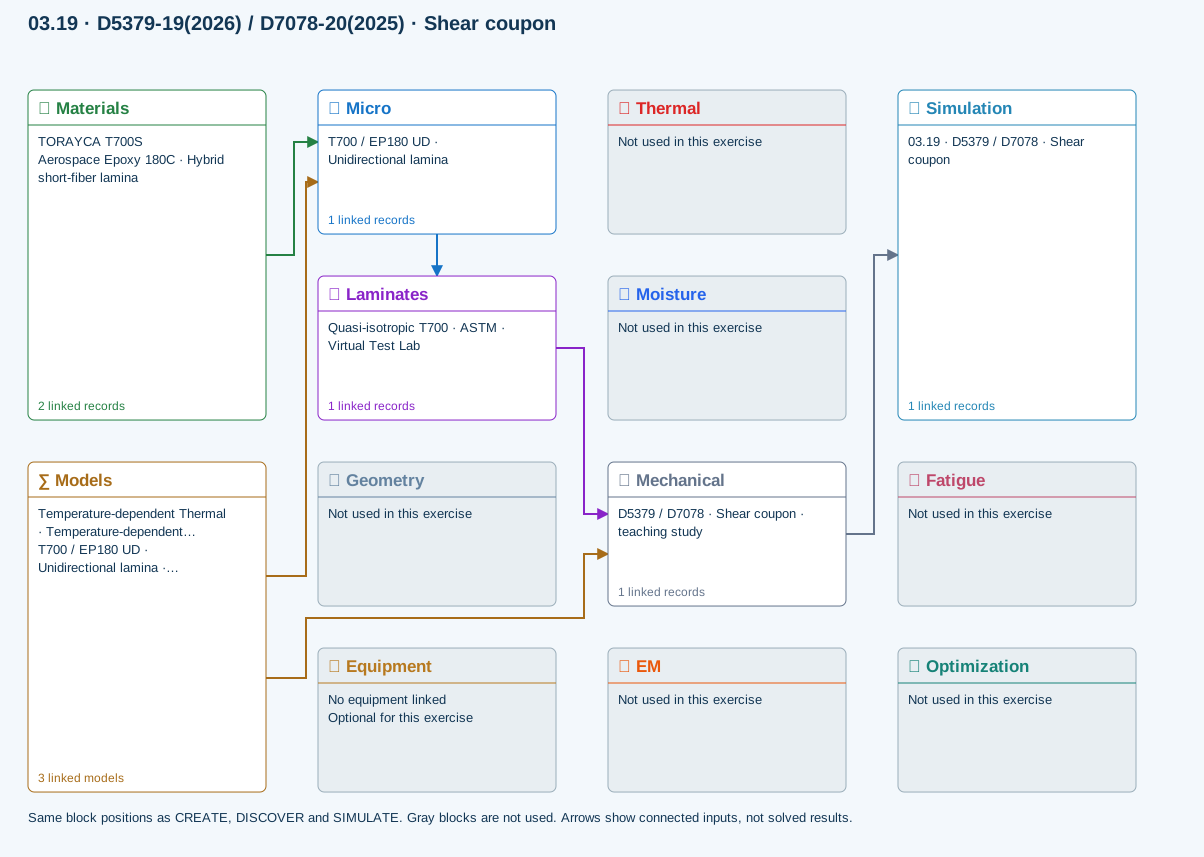
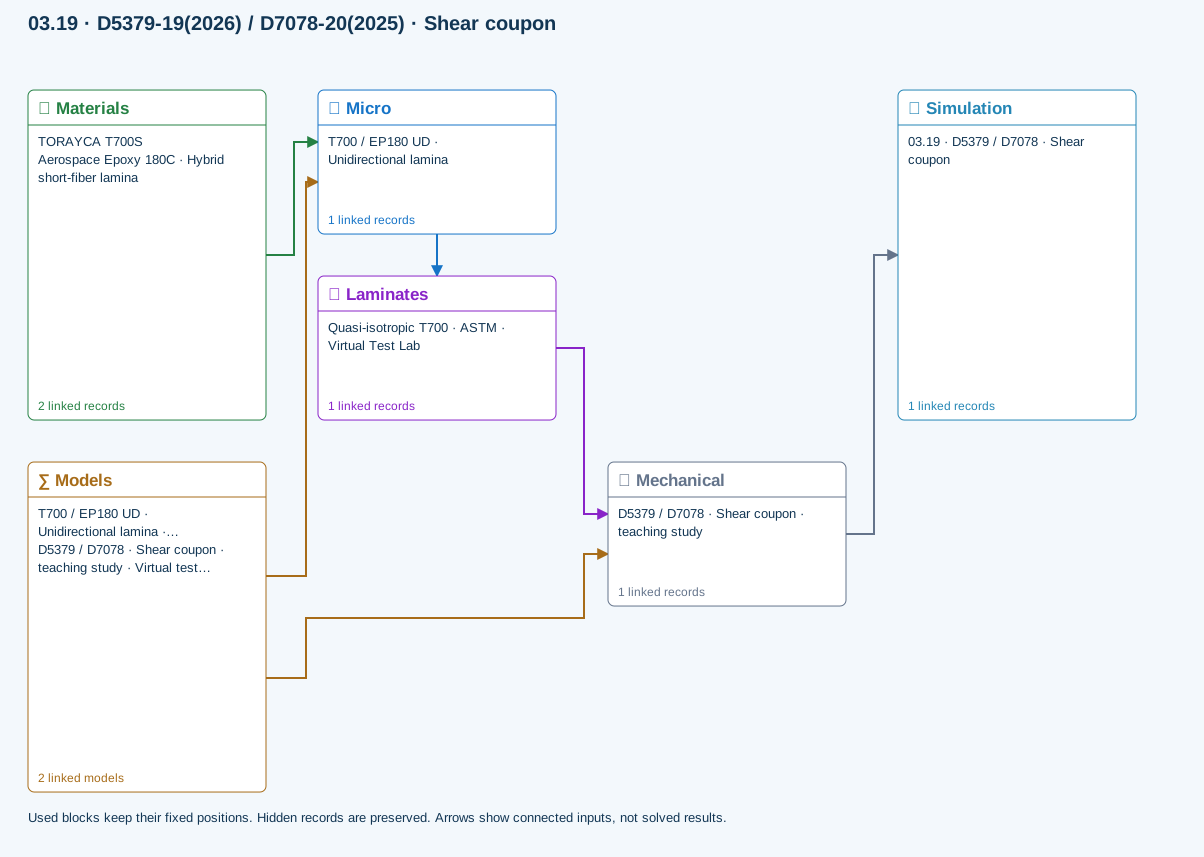
Uniform nominal shear between notches using linked laminate Gxy and thickness. Not a notch/fixture stress field or nonlinear shear solution. Gauge length is the effective shear deformation length, not crosshead travel.
Models → Structural models → ASTM · Virtual Test Lab
Representative exercise workflow · supplied records remain in place; only used connections have arrows.
All blocks keep the CREATE / DISCOVER / SIMULATE positions, with Equipment below Geometry; unused records remain disconnected. This changes the view only, not the exercise records.
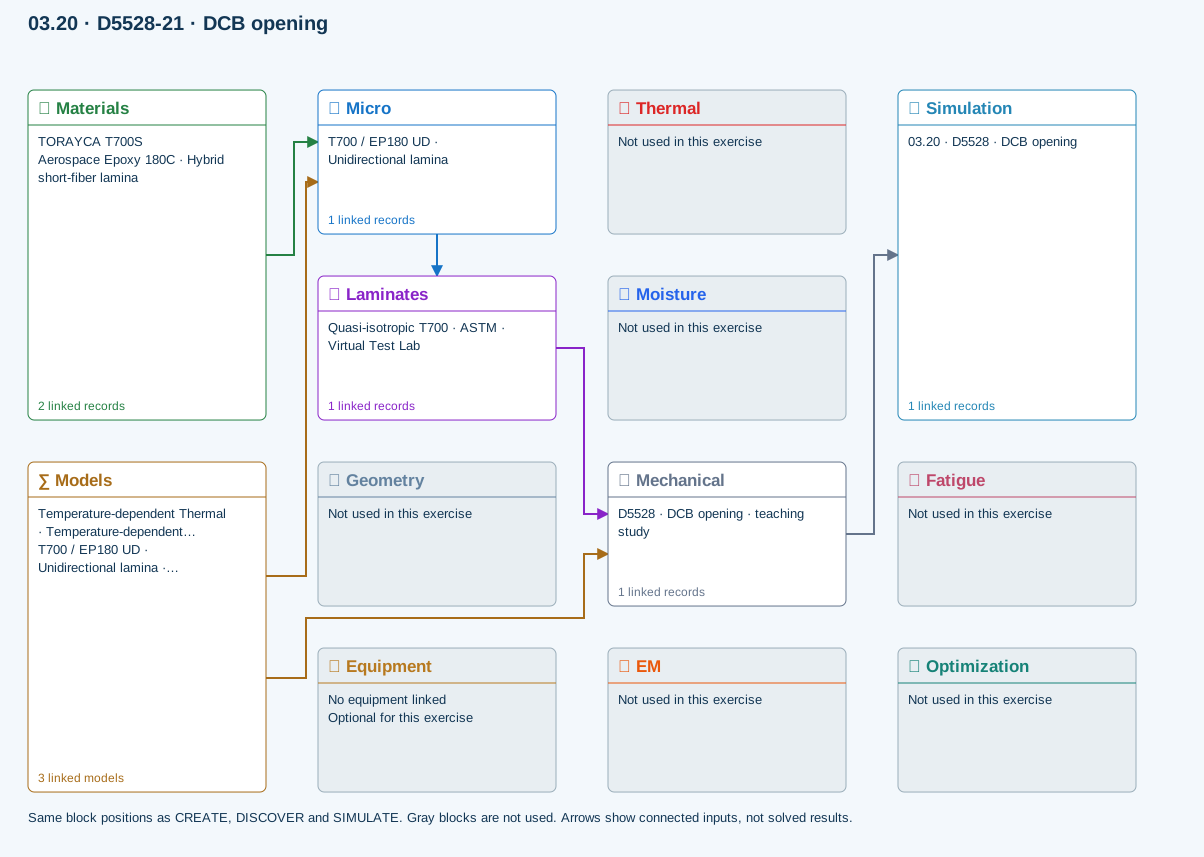
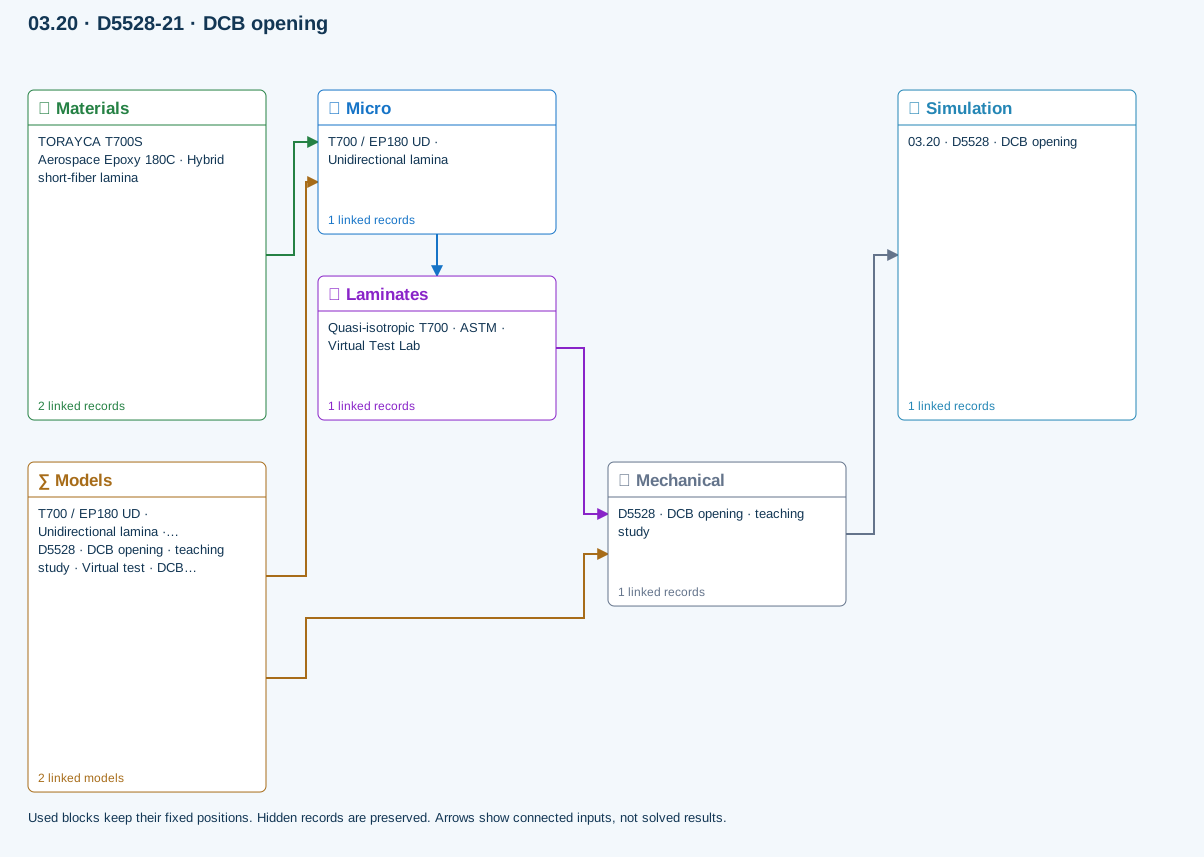
Ideal Euler–Bernoulli DCB with equal homogeneous 0° arms, each half the linked laminate thickness. No root rotation, shear, large displacement or cohesive growth. Critical load is an initiation estimate from supplied GIc.
Models → Structural models → ASTM · Virtual Test Lab
Representative exercise workflow · supplied records remain in place; only used connections have arrows.
All blocks keep the CREATE / DISCOVER / SIMULATE positions, with Equipment below Geometry; unused records remain disconnected. This changes the view only, not the exercise records.
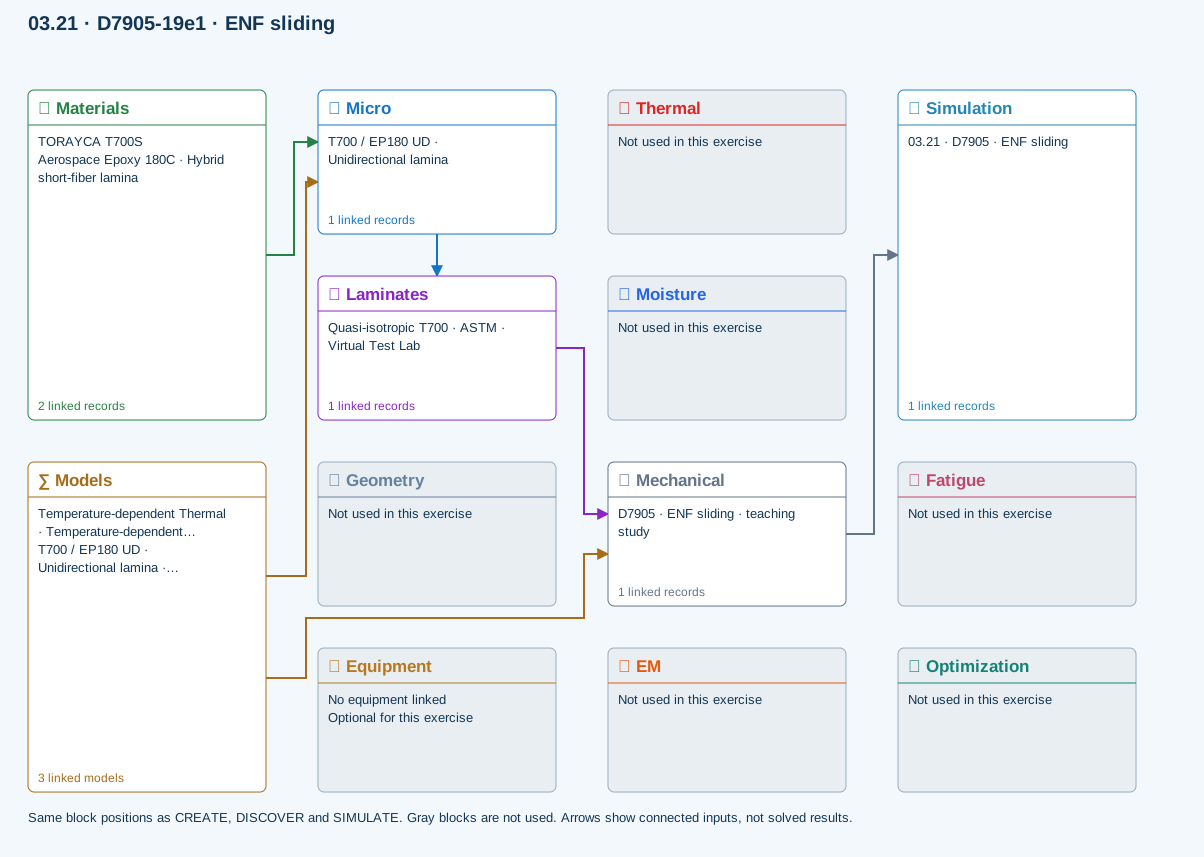
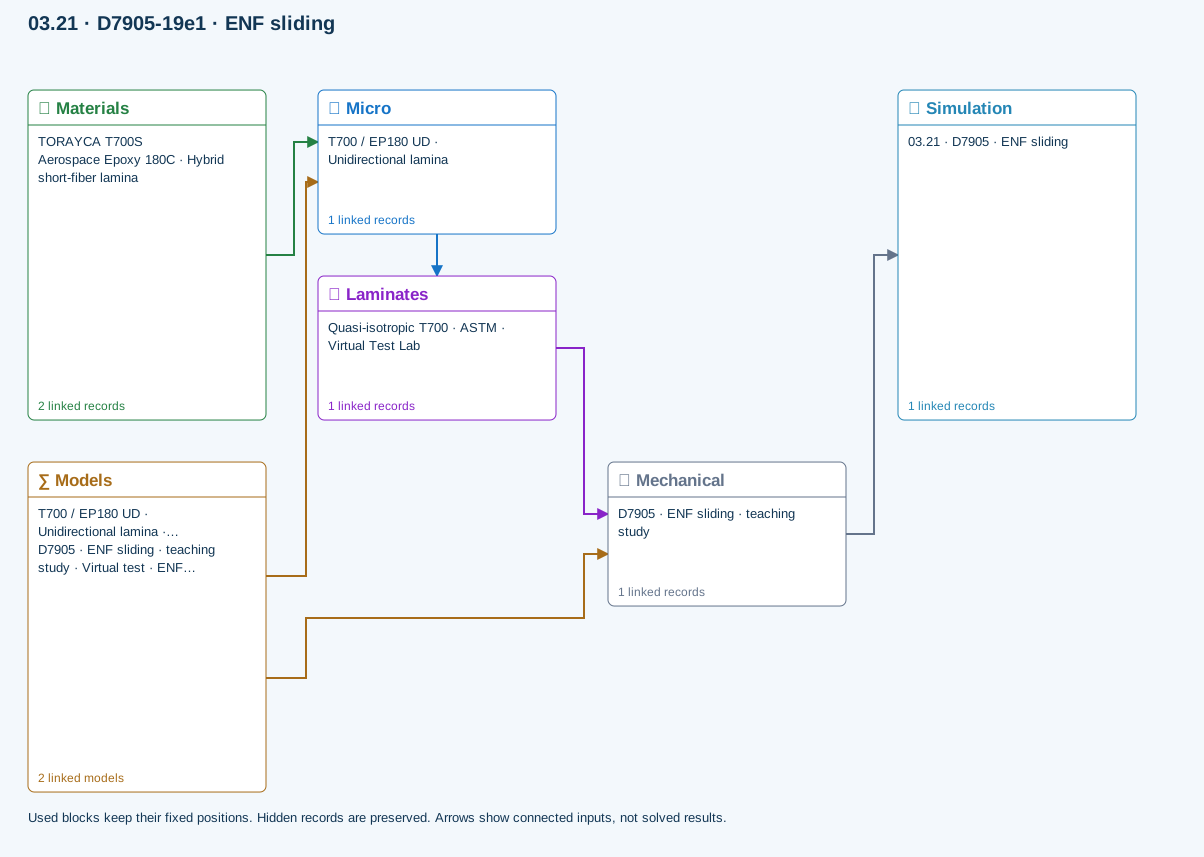
Ideal equal-arm, homogeneous 0° ENF beam; support span is twice the half-span. Crack must be shorter than the half-span. No shear/root correction or unstable crack growth. GIIc is supplied, not fitted automatically.
Models → Structural models → ASTM · Virtual Test Lab
Representative exercise workflow · supplied records remain in place; only used connections have arrows.
All blocks keep the CREATE / DISCOVER / SIMULATE positions, with Equipment below Geometry; unused records remain disconnected. This changes the view only, not the exercise records.
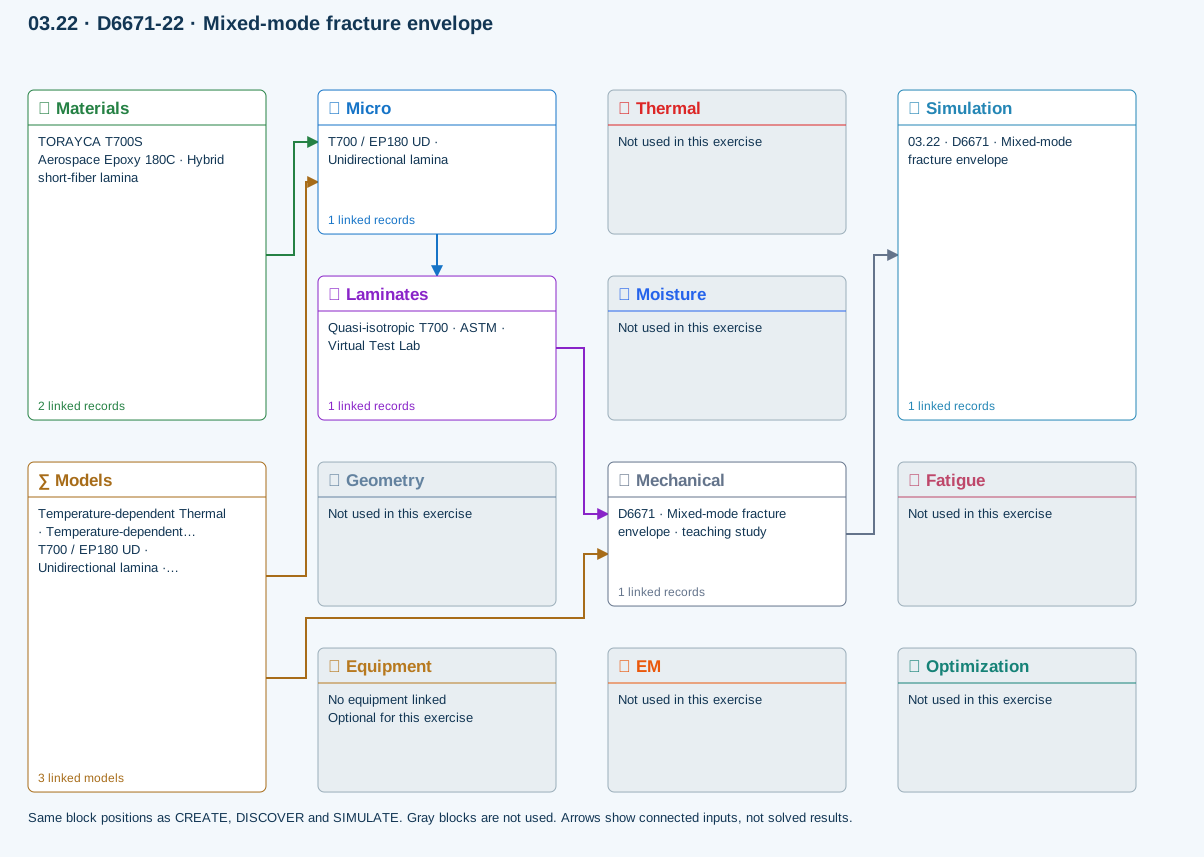
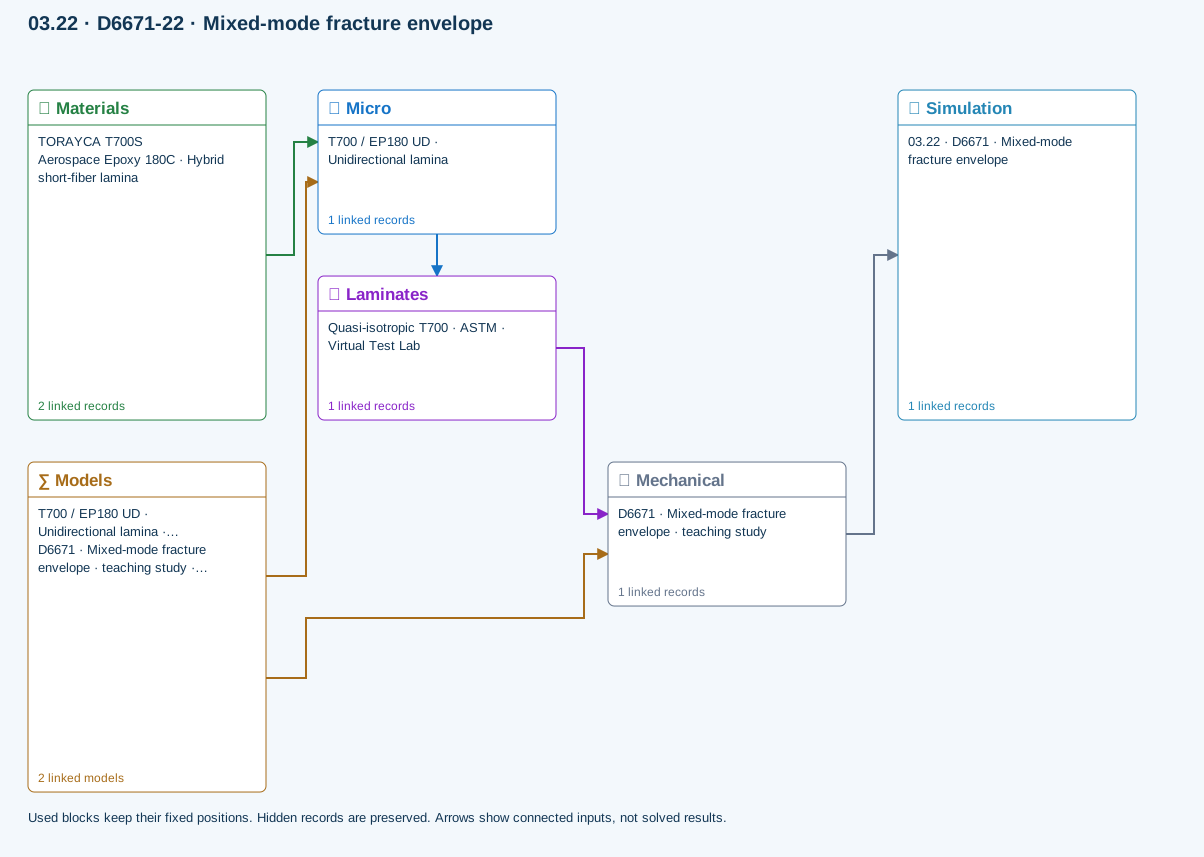
Benzeggagh–Kenane envelope from calibrated GIc, GIIc and exponent. Supplied GI/GII are energy-release rates from a separate test reduction or analysis. This does not resolve the MMB lever fixture or propagate a crack.
Models → Structural models → ASTM · Virtual Test Lab
Representative exercise workflow · supplied records remain in place; only used connections have arrows.
All blocks keep the CREATE / DISCOVER / SIMULATE positions, with Equipment below Geometry; unused records remain disconnected. This changes the view only, not the exercise records.
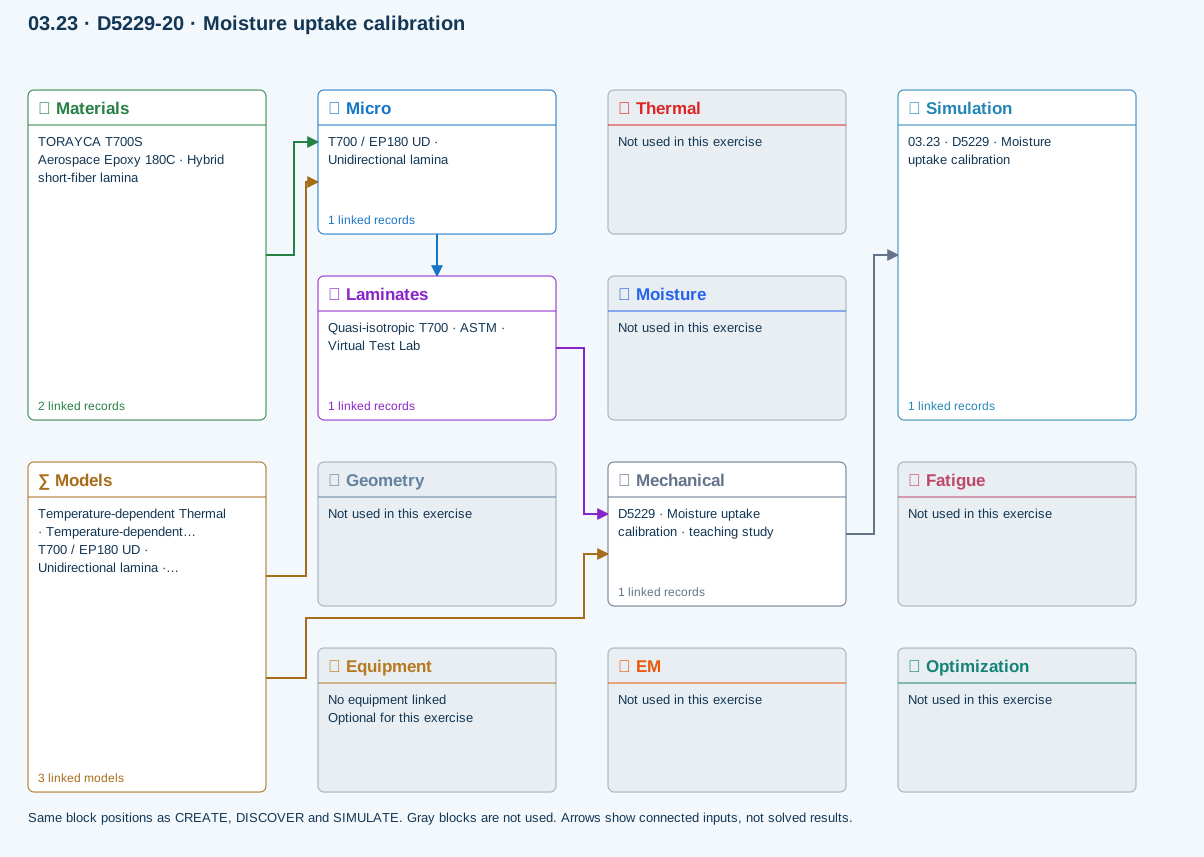
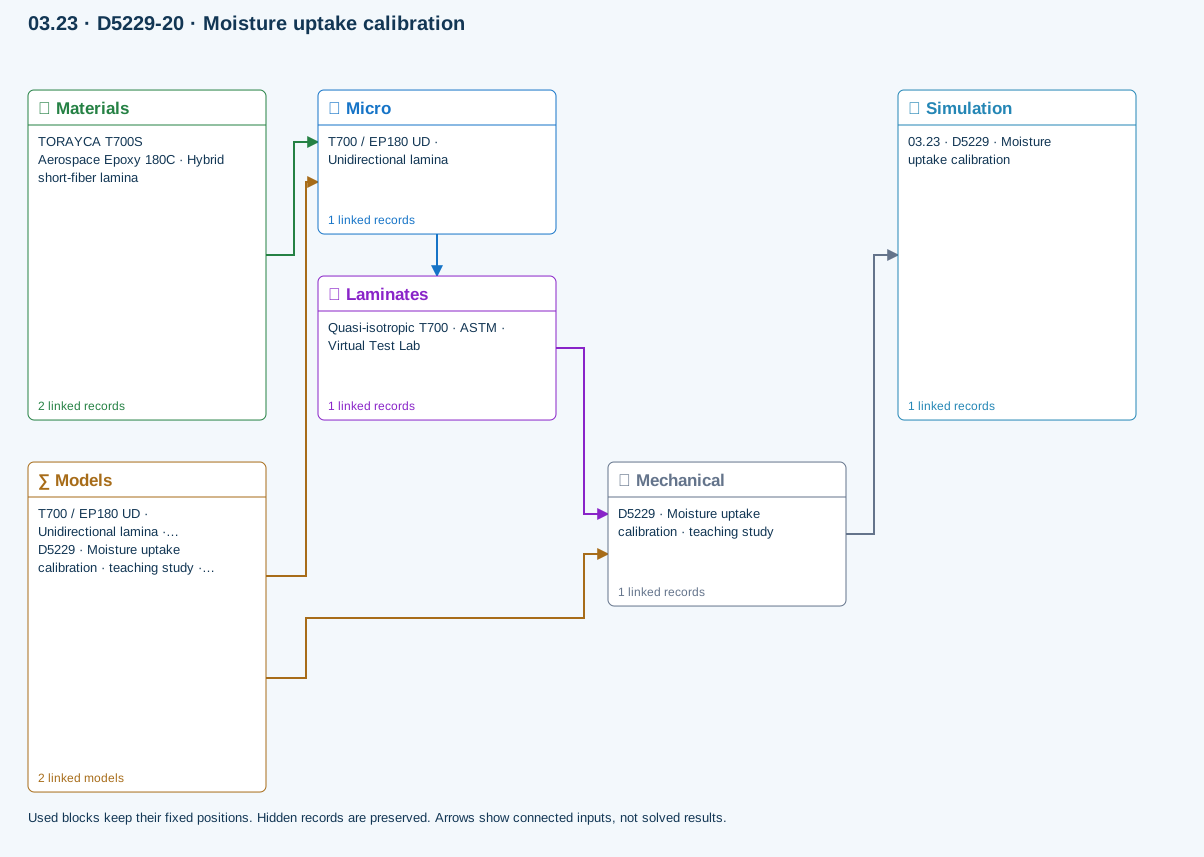
Homogeneous slab, initially dry, both faces held at equilibrium moisture. Fits diffusivity from two early uptake measurements (both ≤50% saturation) using the square-root-time approximation. Edge ingress and temperature dependence are excluded. Does not overwrite material properties.
Models → Structural models → ASTM · Virtual Test Lab
Representative exercise workflow · supplied records remain in place; only used connections have arrows.
All blocks keep the CREATE / DISCOVER / SIMULATE positions, with Equipment below Geometry; unused records remain disconnected. This changes the view only, not the exercise records.
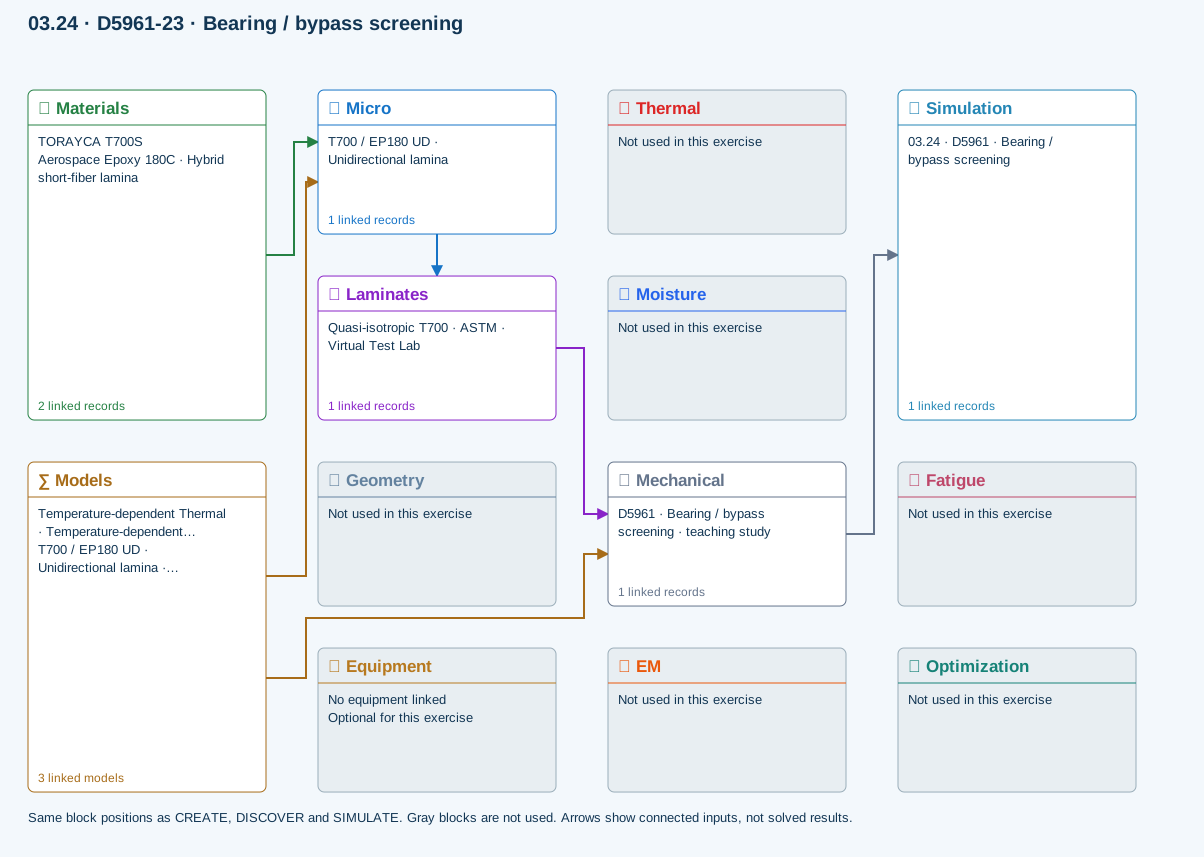
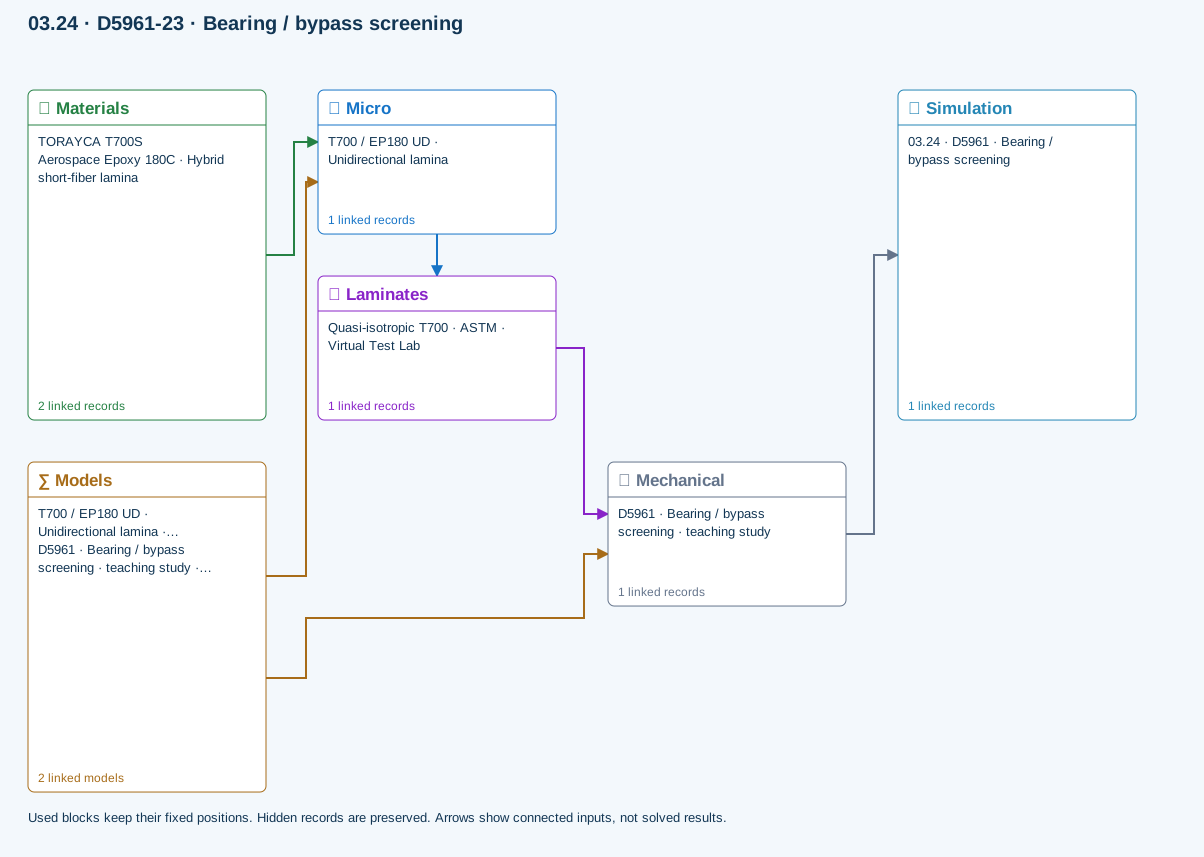
Single-pin nominal bearing, net-section and shear-out checks with independent measured allowables. Bypass tension is added to net-section load only. No contact, bolt preload, load redistribution or validated bearing–bypass interaction envelope.
Models → Structural models → ASTM · Virtual Test Lab
Representative exercise workflow · supplied records remain in place; only used connections have arrows.
All blocks keep the CREATE / DISCOVER / SIMULATE positions, with Equipment below Geometry; unused records remain disconnected. This changes the view only, not the exercise records.
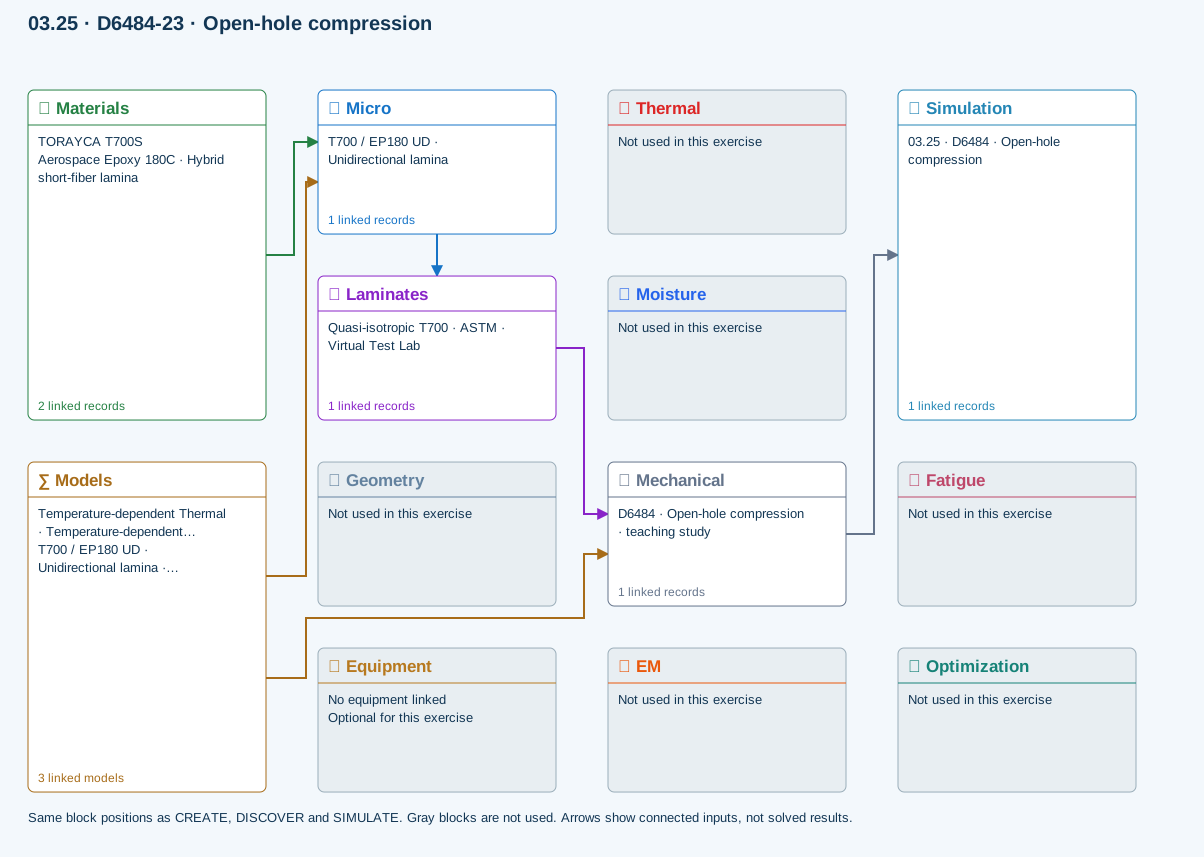
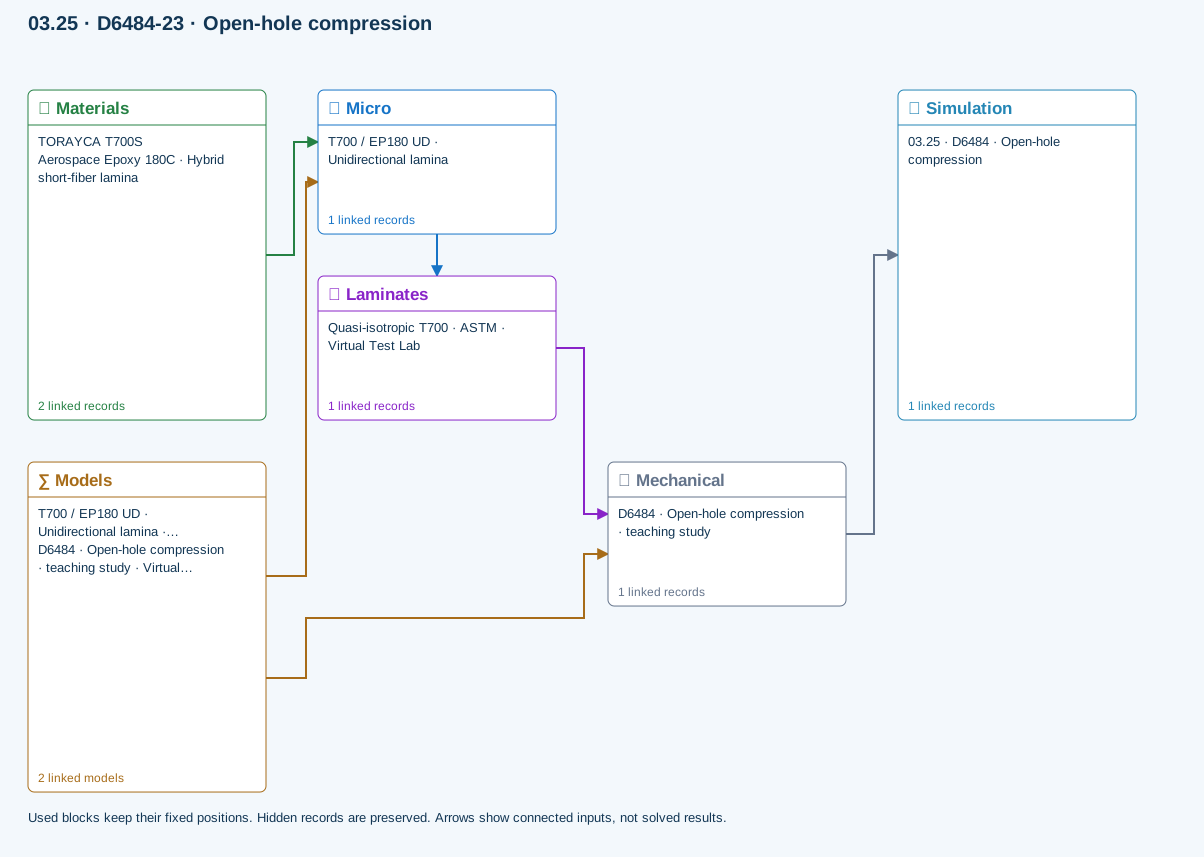
Nominal gross/net stress and demand relative to measured open-hole compressive strength for this geometry and layup. This is test-data screening, not an uncalibrated notch-strength prediction. No local buckling or kink-band simulation.
Models → Structural models → ASTM · Virtual Test Lab
Representative exercise workflow · supplied records remain in place; only used connections have arrows.
All blocks keep the CREATE / DISCOVER / SIMULATE positions, with Equipment below Geometry; unused records remain disconnected. This changes the view only, not the exercise records.
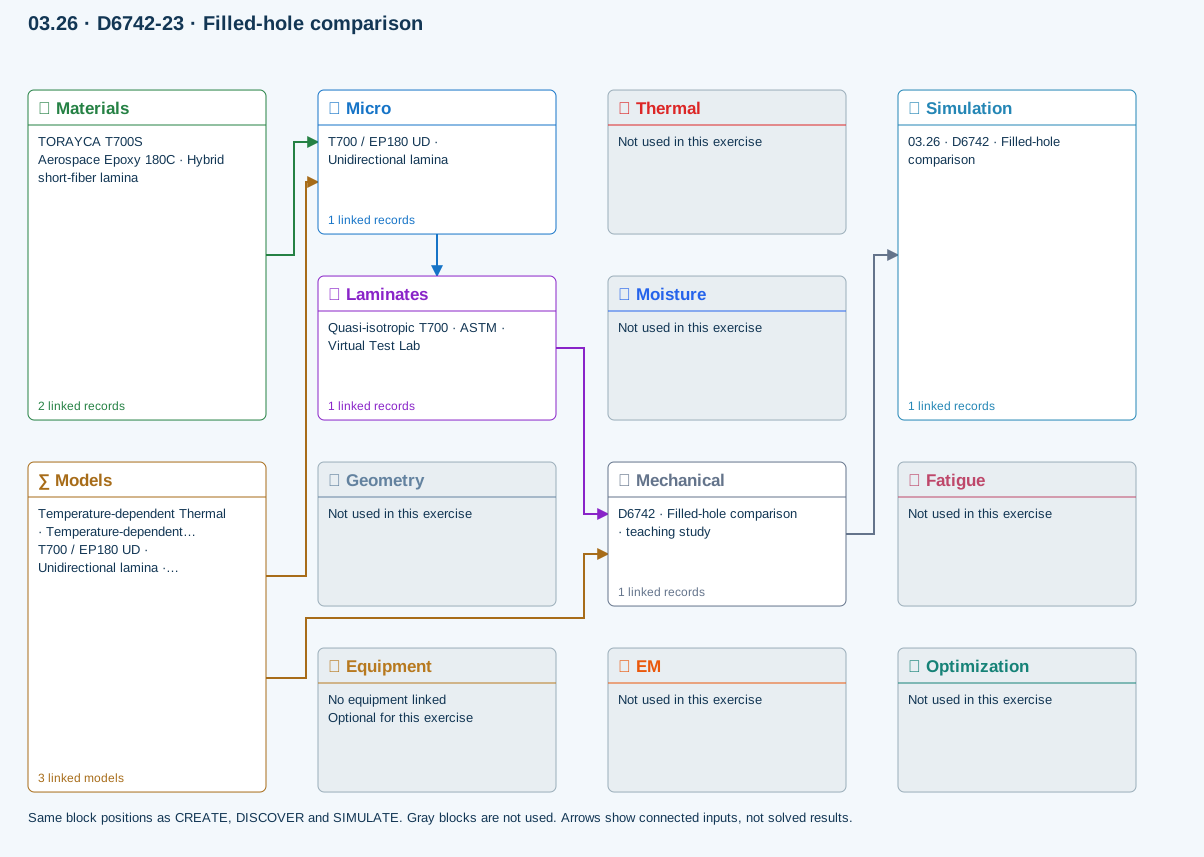
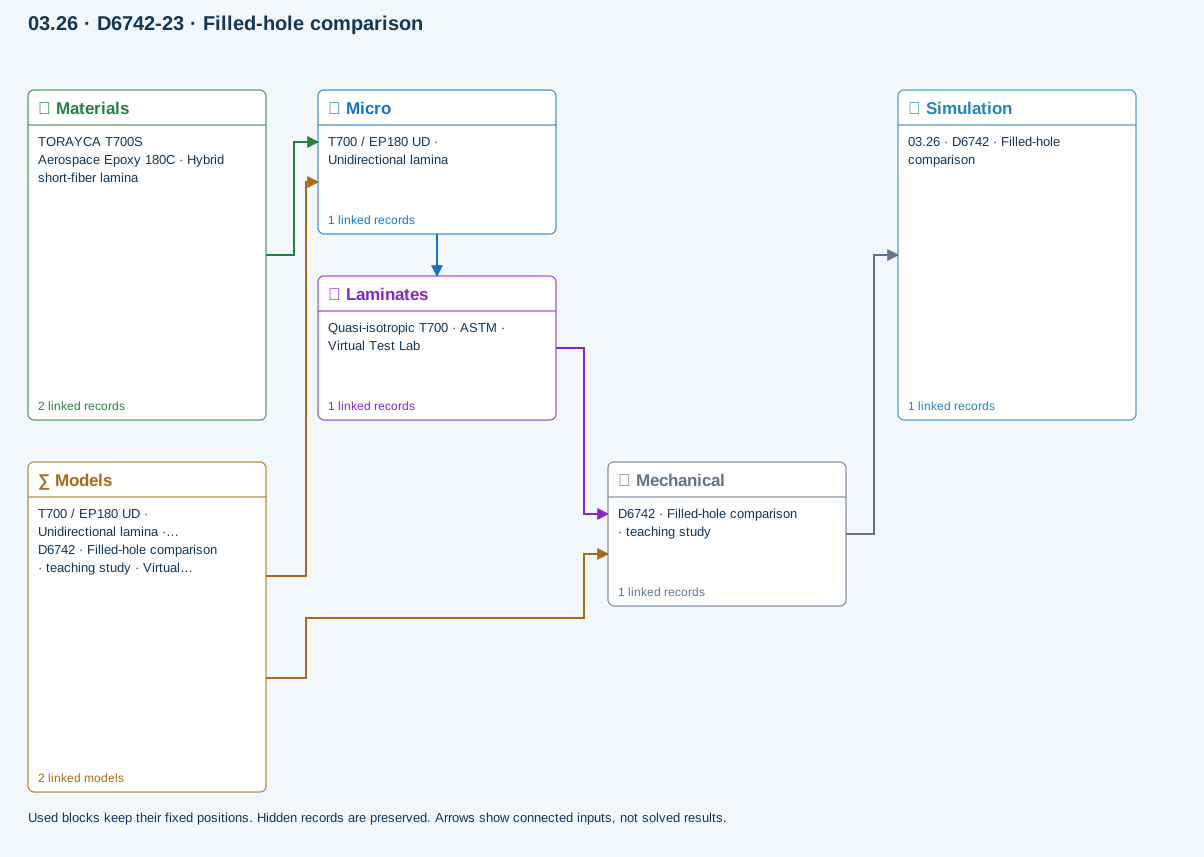
Compares user-measured open- and filled-hole compressive strengths using gross-section stress. Use matched layup, hole, environment and fastener condition. Filling a hole does not automatically recover strength; no fastener contact/preload model is applied.
Models → Structural models → ASTM · Virtual Test Lab
Representative exercise workflow · supplied records remain in place; only used connections have arrows.
All blocks keep the CREATE / DISCOVER / SIMULATE positions, with Equipment below Geometry; unused records remain disconnected. This changes the view only, not the exercise records.
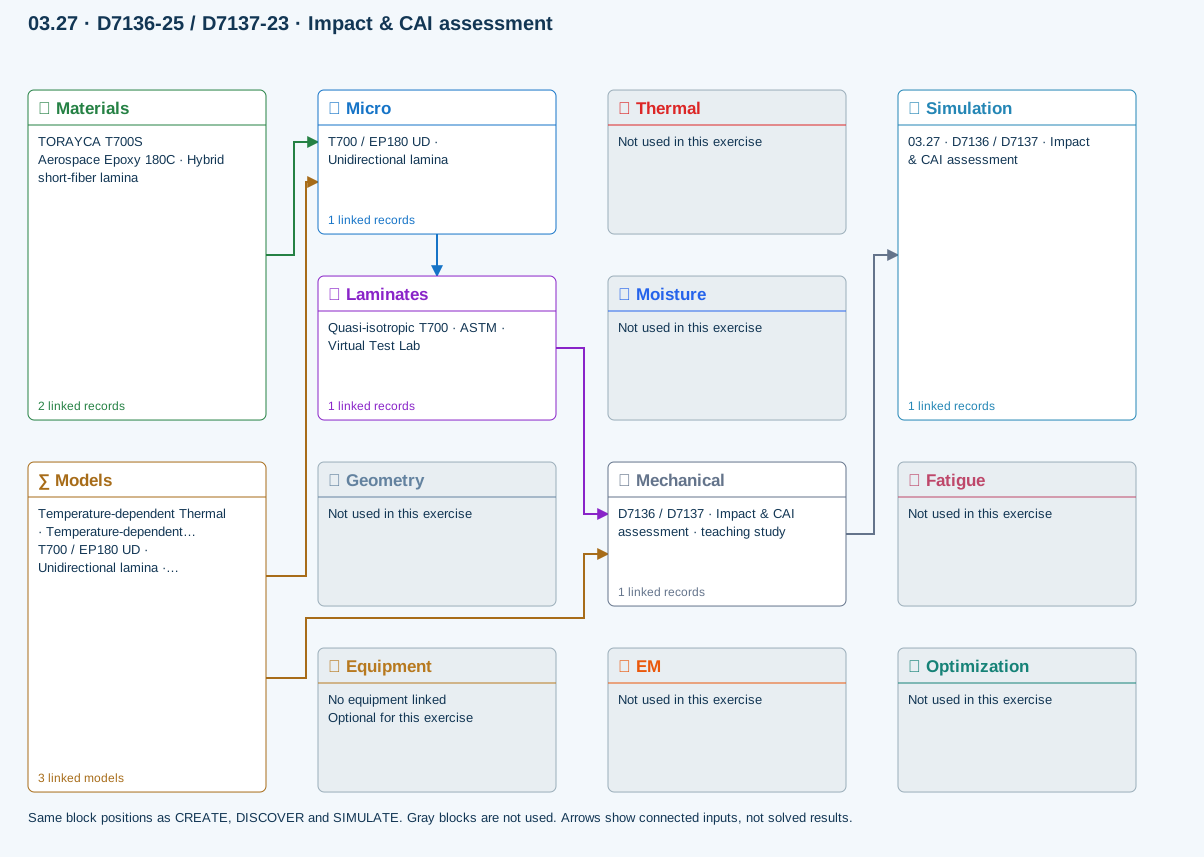
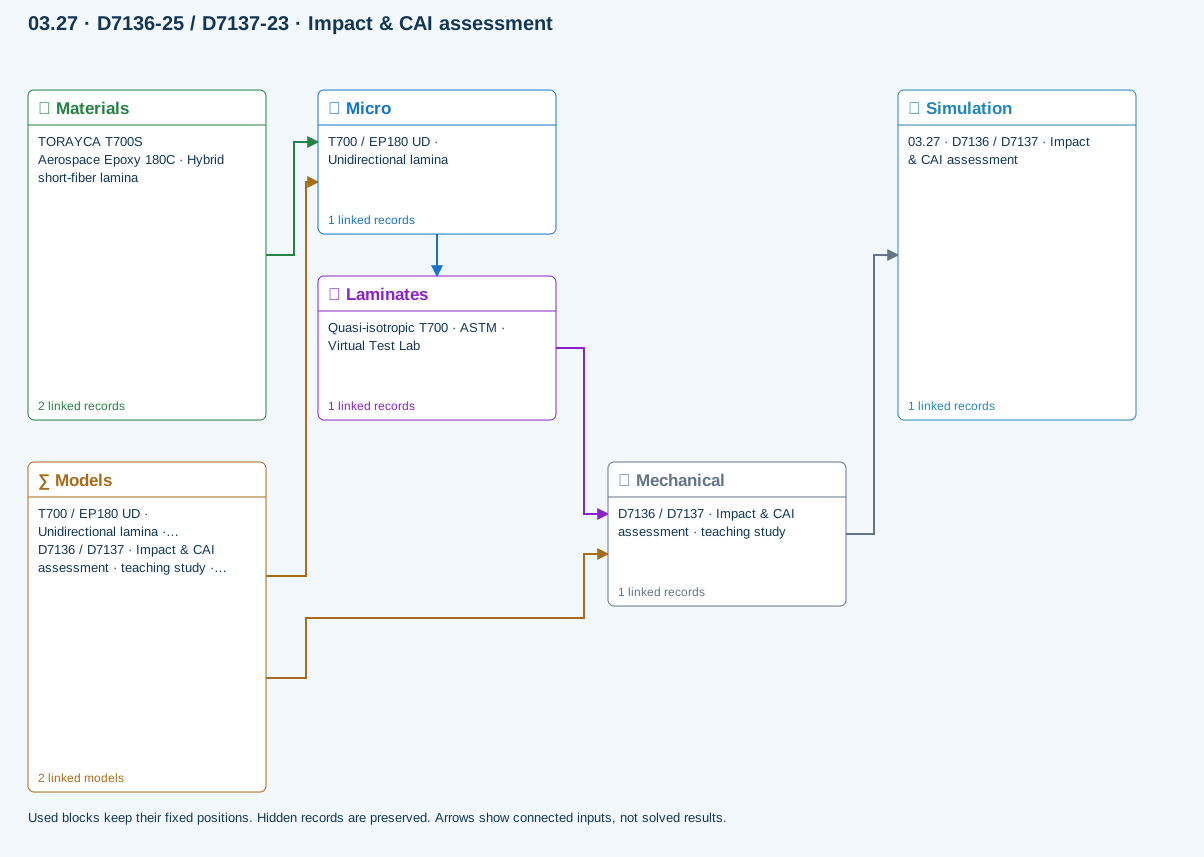
Incident energy from measured impact velocity; residual compressive strength from measured peak CAI force. Rebound energy estimates energy not returned to the striker, NOT damage energy. No impact/contact solver, damage-area prediction or energy-to-strength extrapolation.
Design dielectric mixtures, shielding and periodic layers
Models → Electromagnetics · RF → Wiener series and parallel
Representative exercise workflow · supplied records remain in place; only used connections have arrows.
All blocks keep the CREATE / DISCOVER / SIMULATE positions, with Equipment below Geometry; unused records remain disconnected. This changes the view only, not the exercise records.
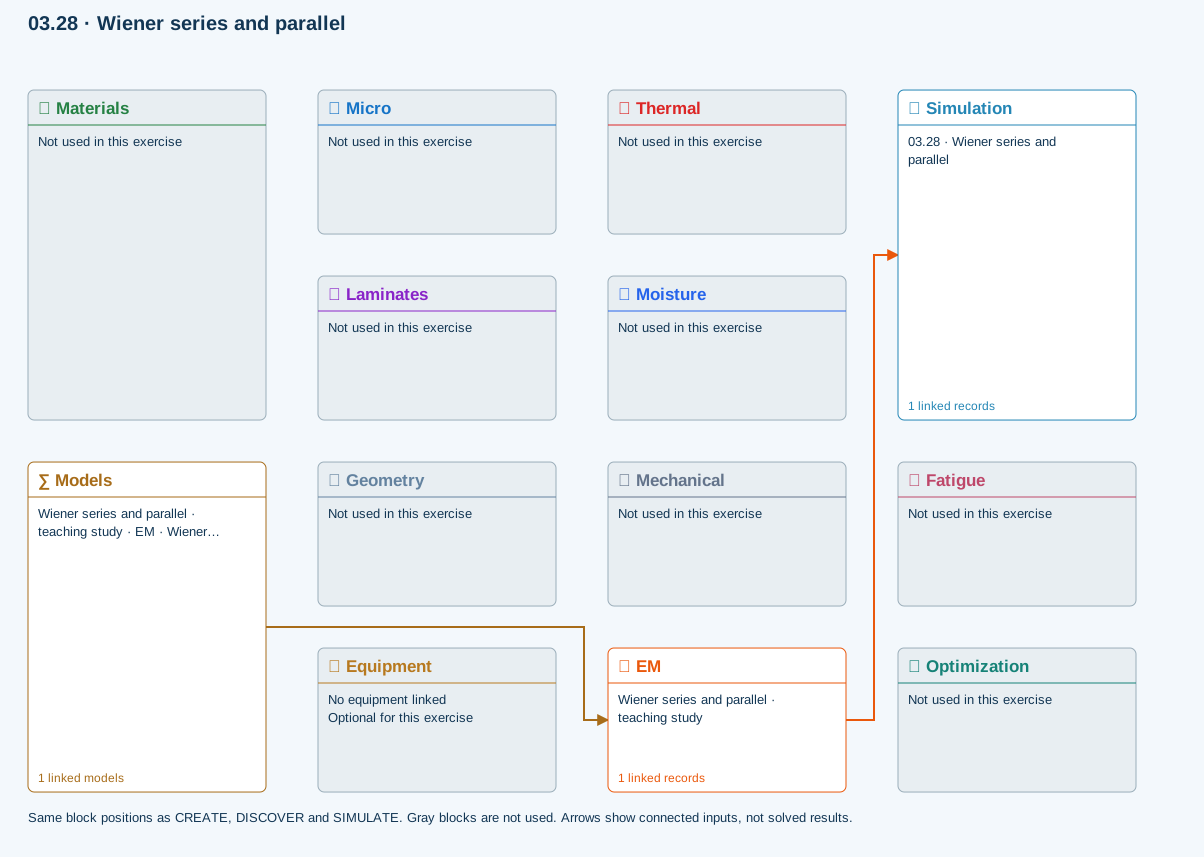
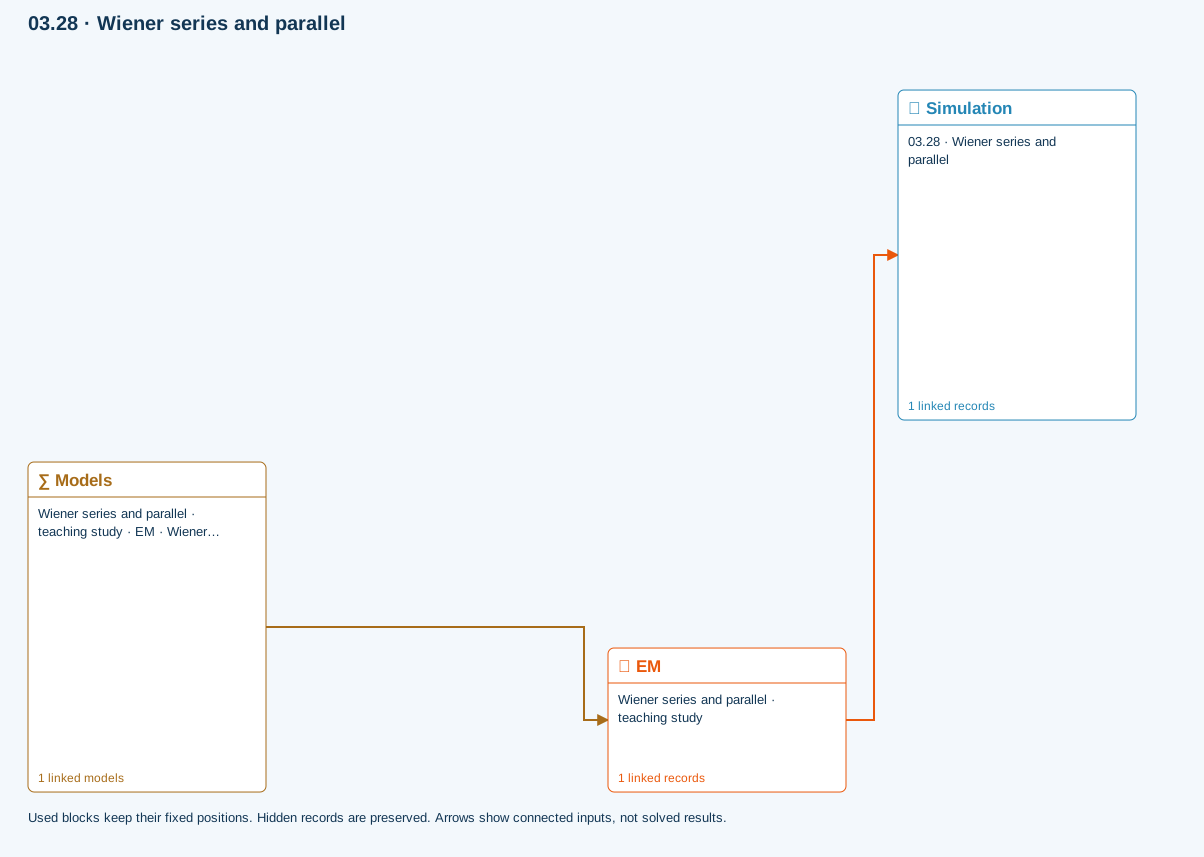
Positive lossless dielectric bounds; complex directional estimates.
Models → Electromagnetics · RF → Looyenga / Landau–Lifshitz–Looyenga
Representative exercise workflow · supplied records remain in place; only used connections have arrows.
All blocks keep the CREATE / DISCOVER / SIMULATE positions, with Equipment below Geometry; unused records remain disconnected. This changes the view only, not the exercise records.
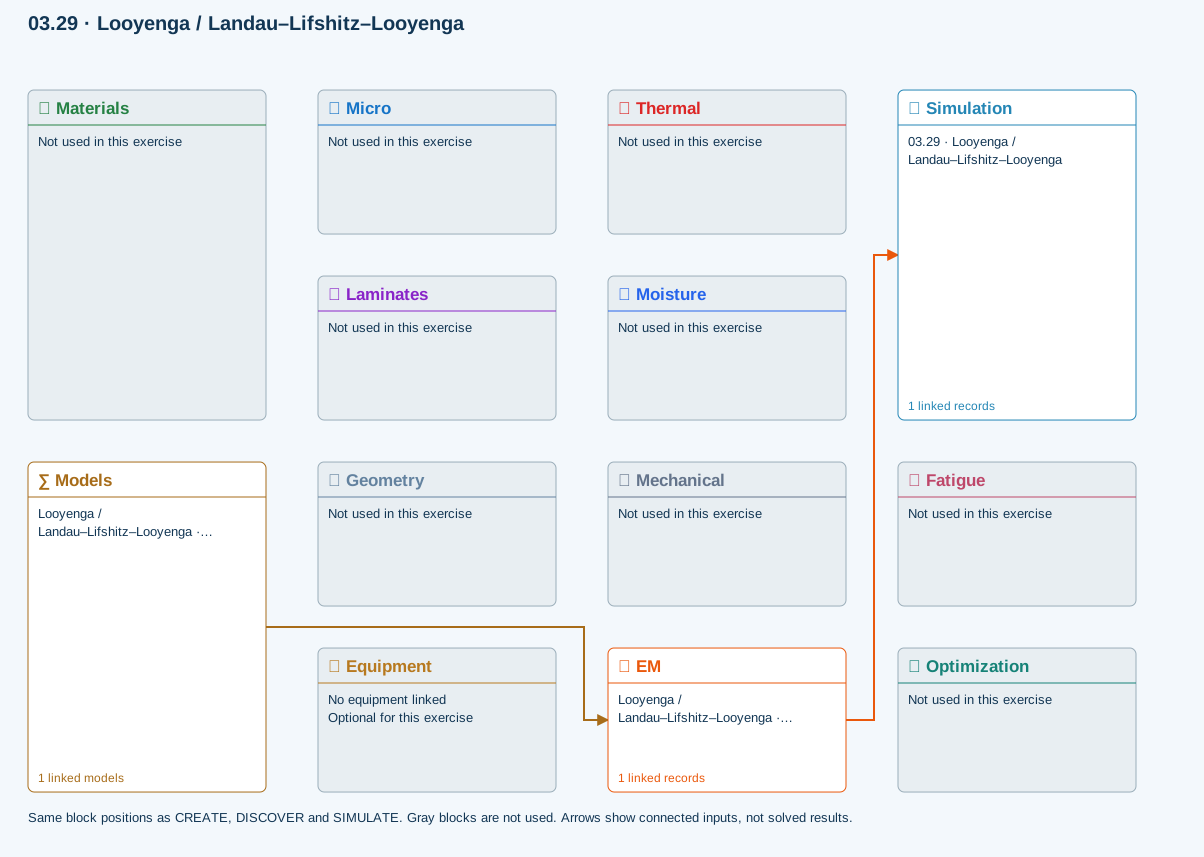
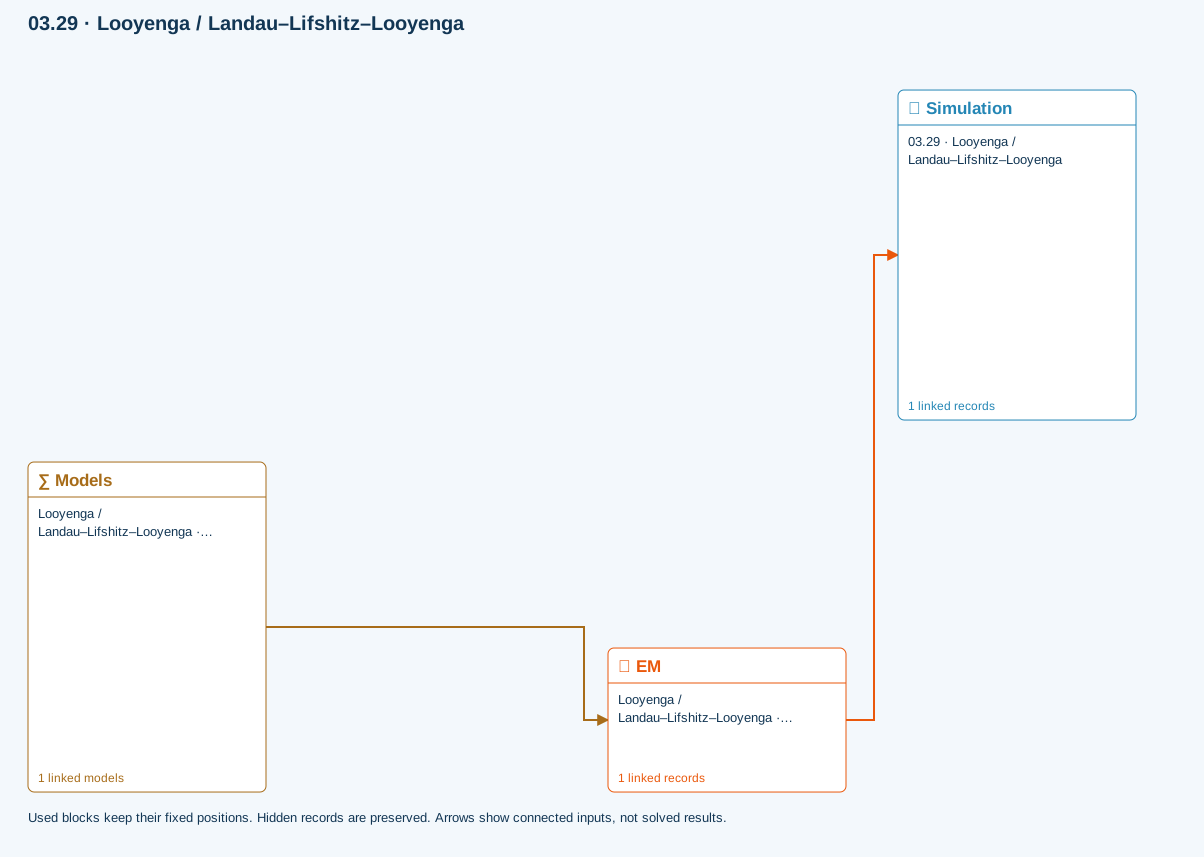
One cube-root mixing law, not two independent models.
Models → Electromagnetics · RF → Maxwell–Garnett
Representative exercise workflow · supplied records remain in place; only used connections have arrows.
All blocks keep the CREATE / DISCOVER / SIMULATE positions, with Equipment below Geometry; unused records remain disconnected. This changes the view only, not the exercise records.
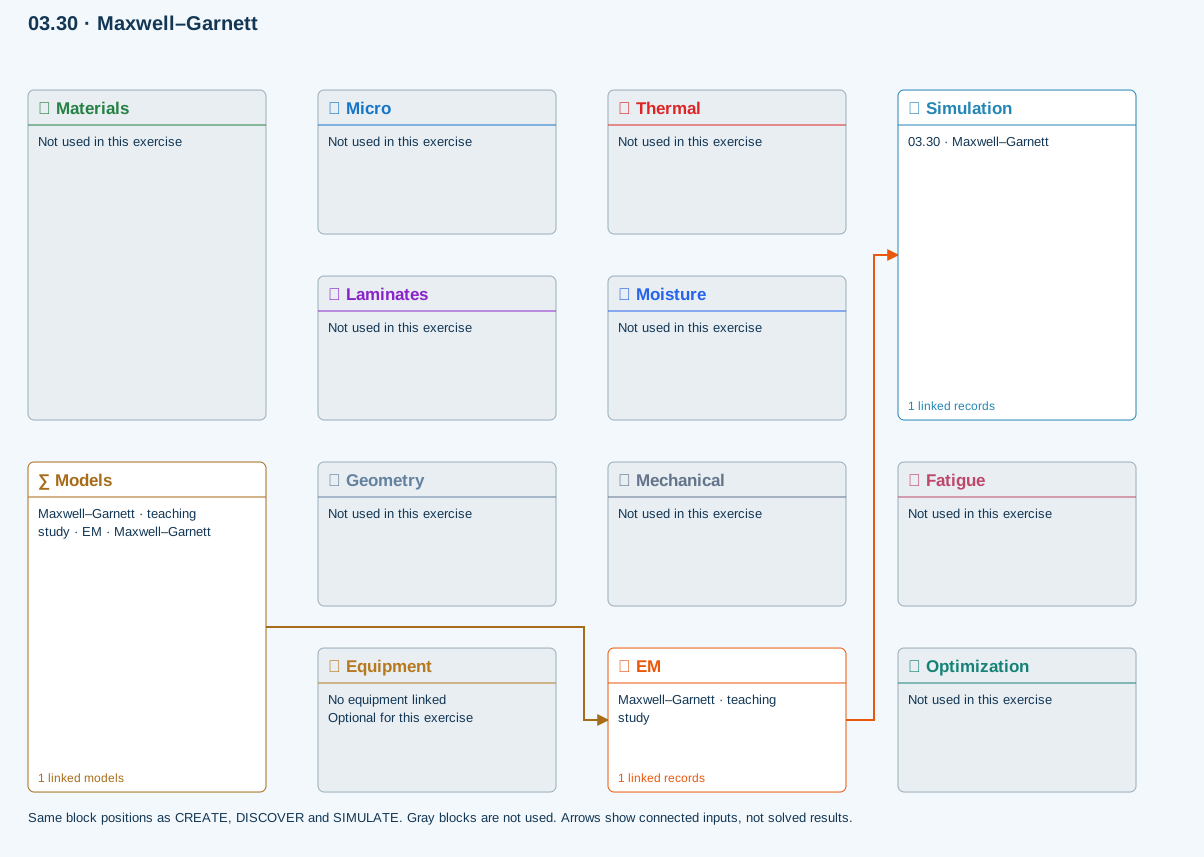
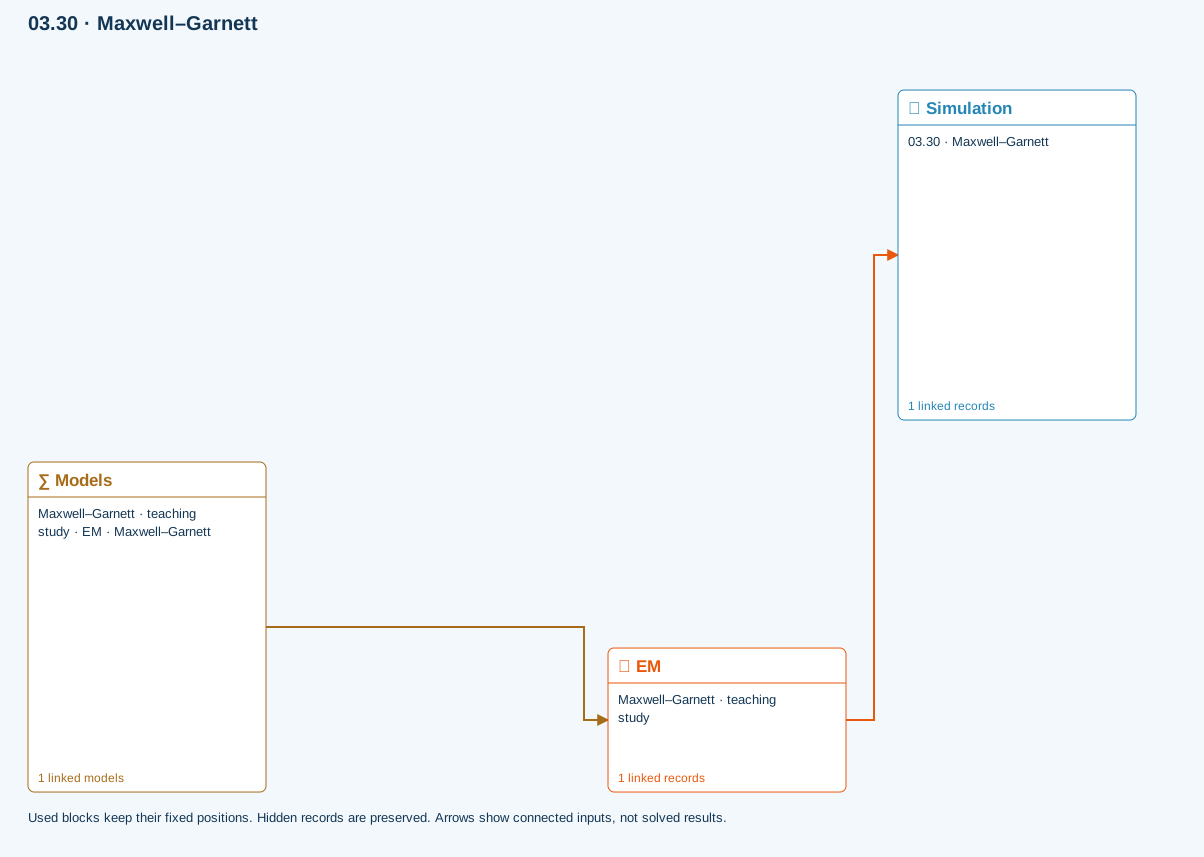
Dilute subwavelength spherical inclusions in a host.
Models → Electromagnetics · RF → Normal-incidence laminate TMM
Representative exercise workflow · supplied records remain in place; only used connections have arrows.
All blocks keep the CREATE / DISCOVER / SIMULATE positions, with Equipment below Geometry; unused records remain disconnected. This changes the view only, not the exercise records.
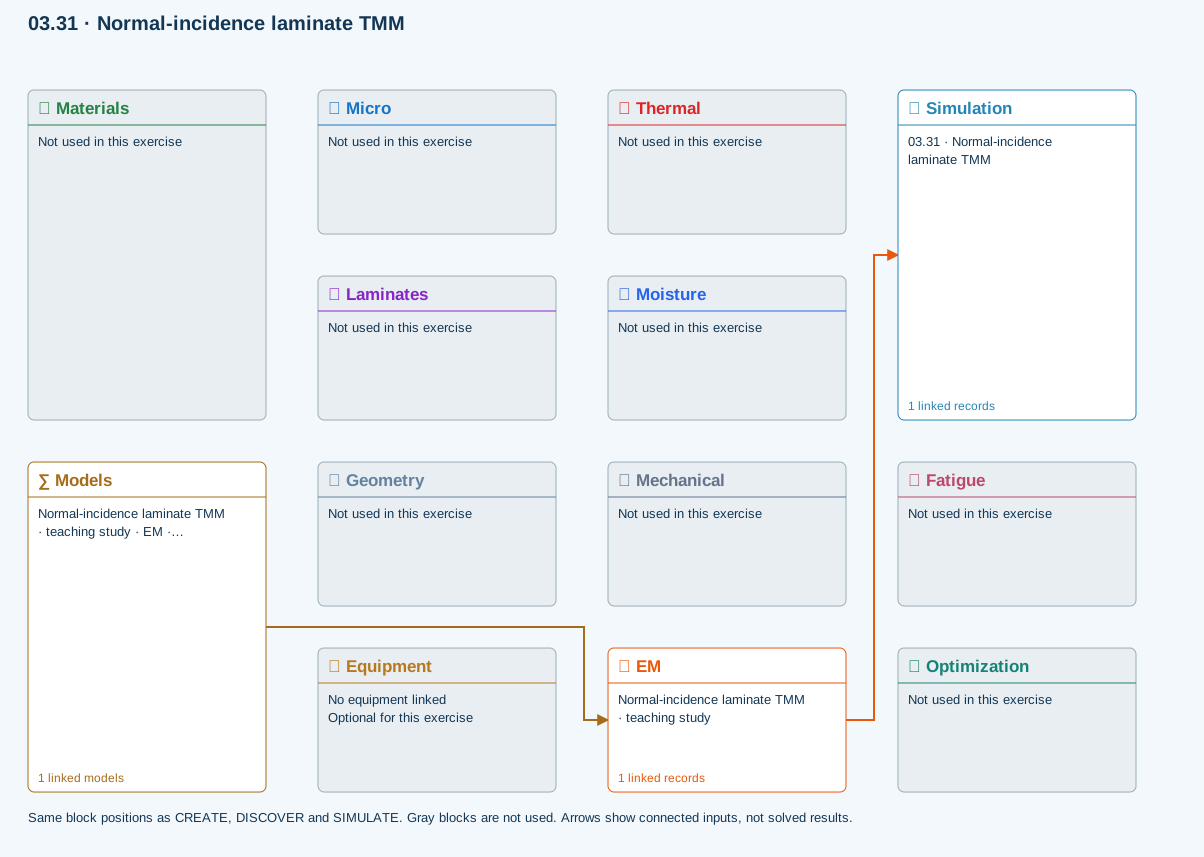
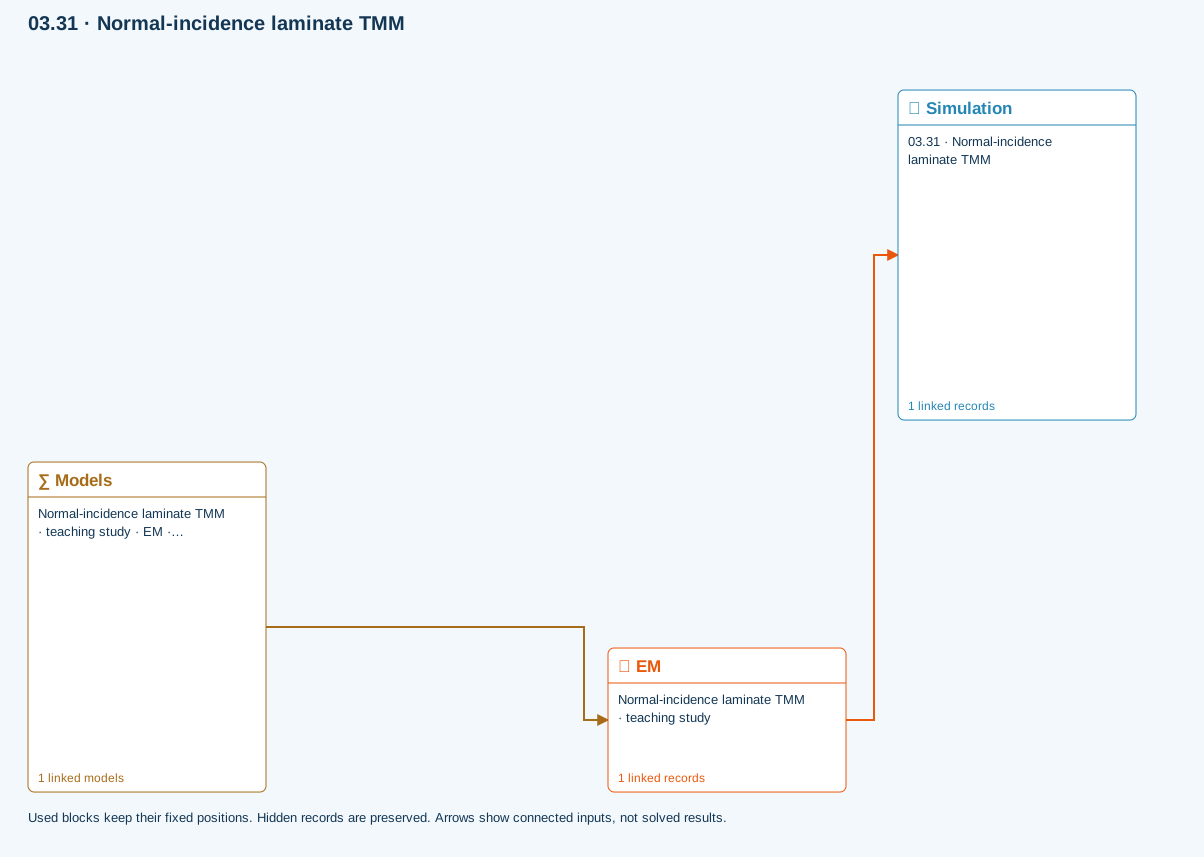
Coherent isotropic nonmagnetic layers between air half-spaces.
Models → Electromagnetics · RF → Bruggeman symmetric EMT
Representative exercise workflow · supplied records remain in place; only used connections have arrows.
All blocks keep the CREATE / DISCOVER / SIMULATE positions, with Equipment below Geometry; unused records remain disconnected. This changes the view only, not the exercise records.
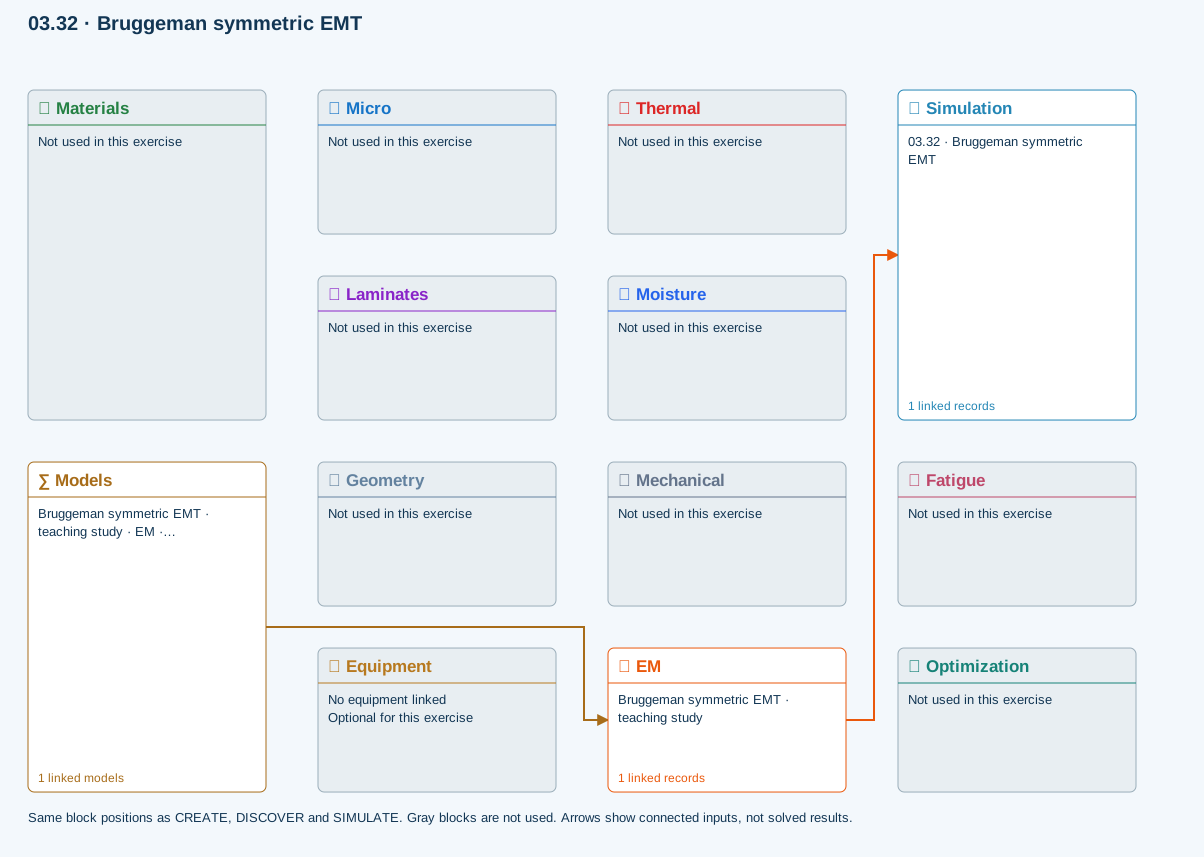
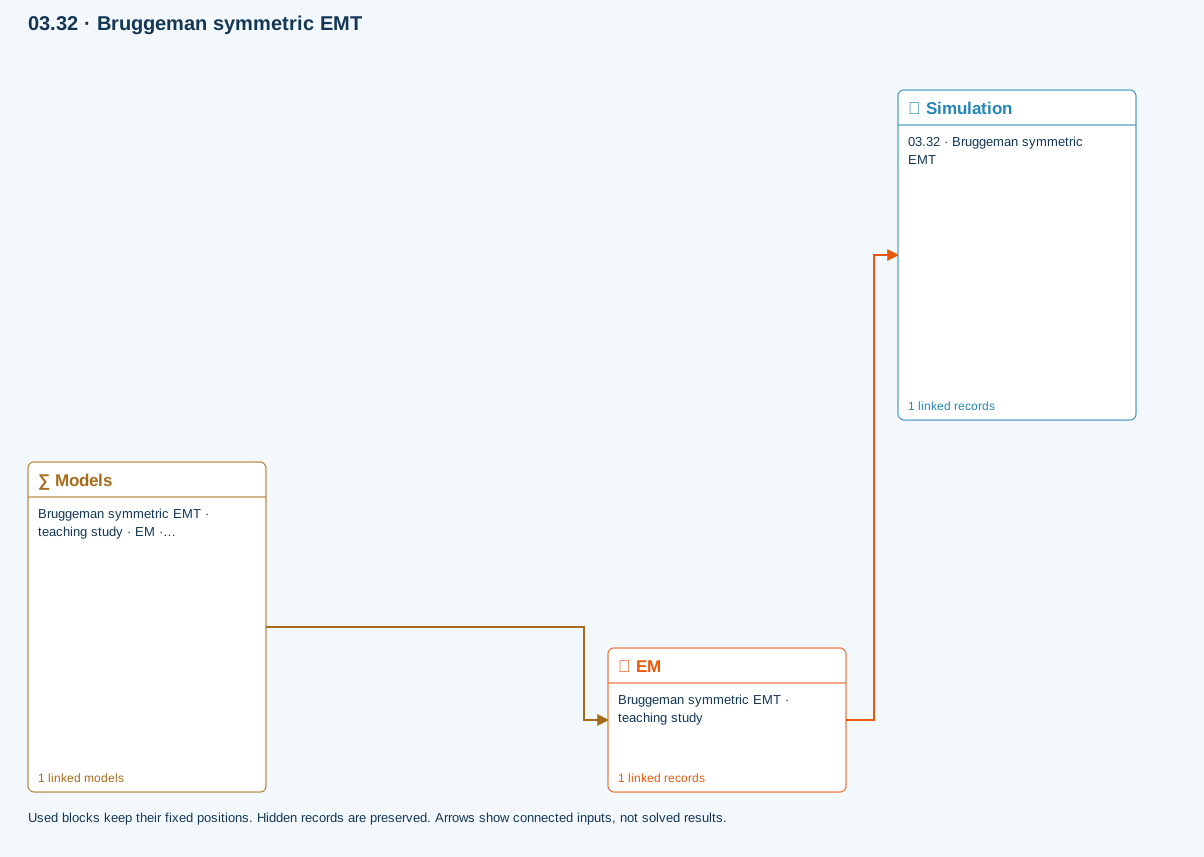
Two positive-permittivity phases; no explicit contact network.
Models → Electromagnetics · RF → EM Mori–Tanaka
Representative exercise workflow · supplied records remain in place; only used connections have arrows.
All blocks keep the CREATE / DISCOVER / SIMULATE positions, with Equipment below Geometry; unused records remain disconnected. This changes the view only, not the exercise records.
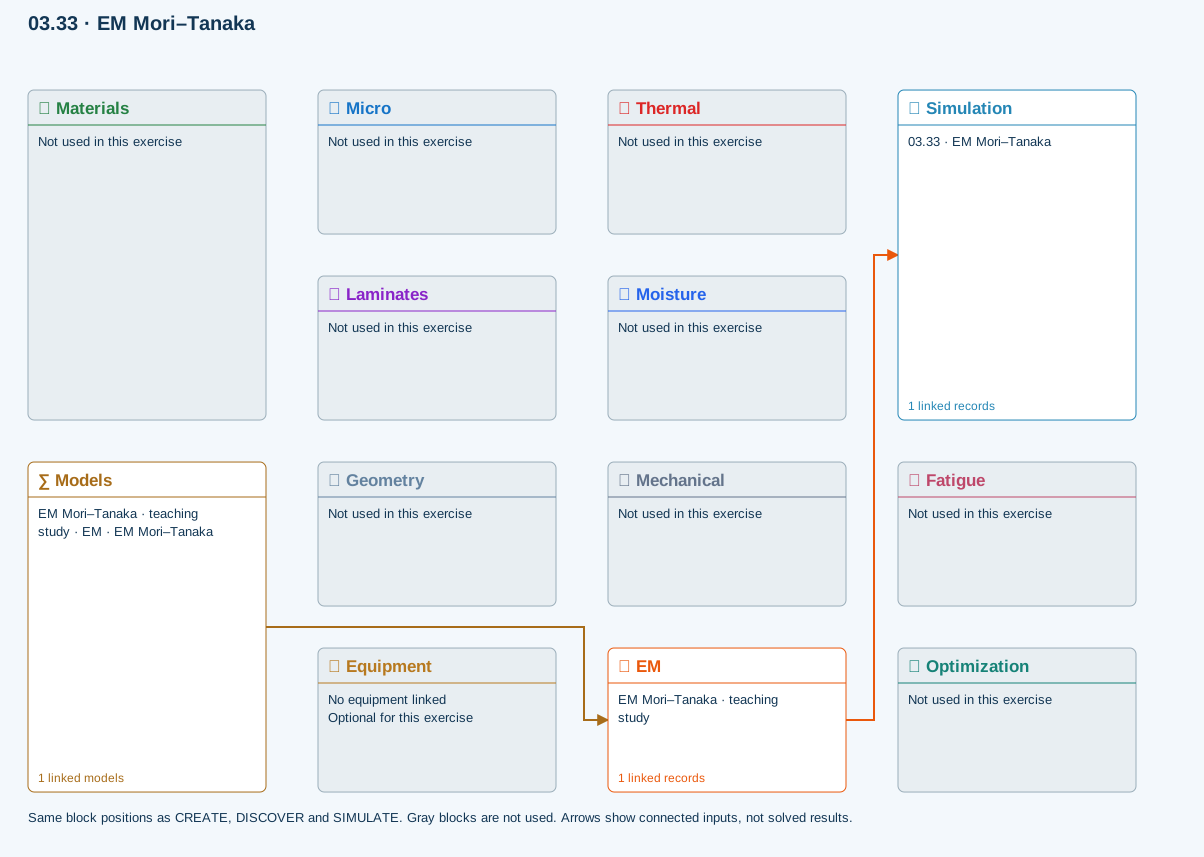
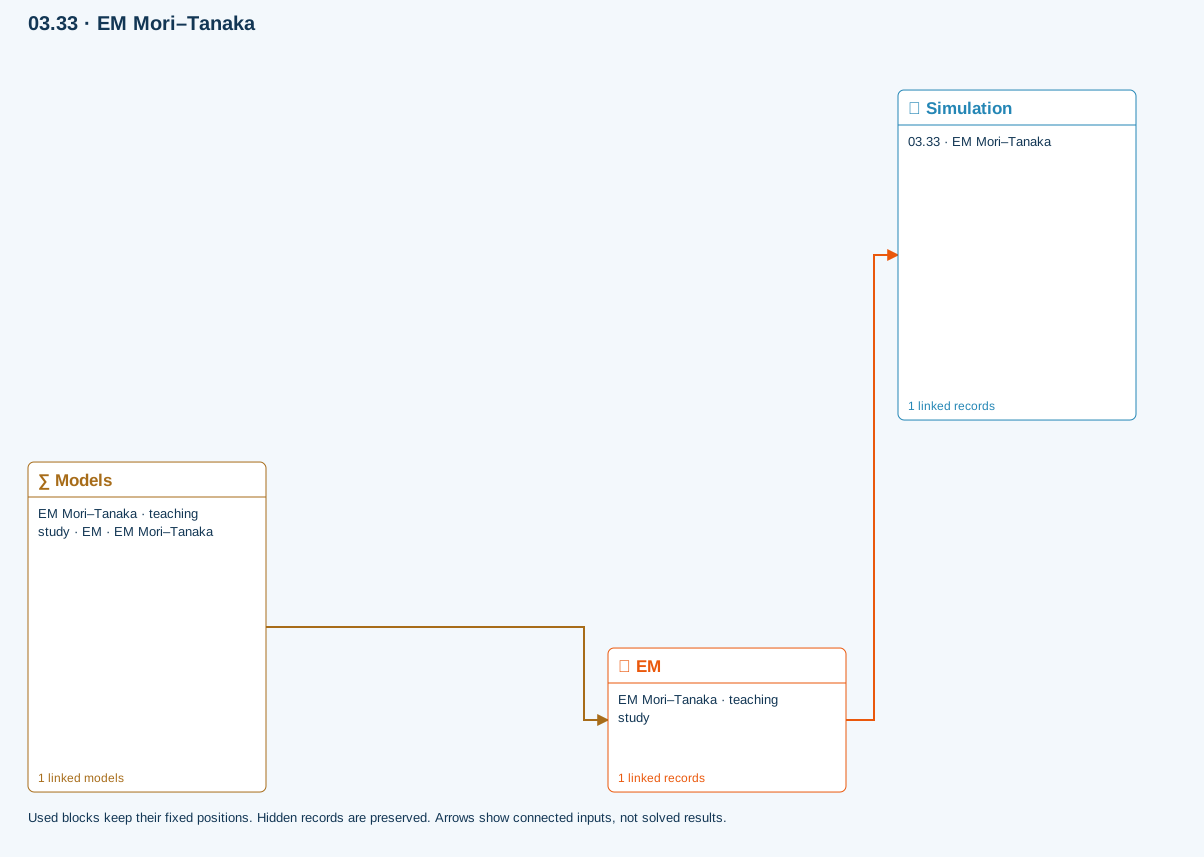
Scalar principal-axis ellipsoidal field approximation.
Models → Electromagnetics · RF → EM self-consistent
Representative exercise workflow · supplied records remain in place; only used connections have arrows.
All blocks keep the CREATE / DISCOVER / SIMULATE positions, with Equipment below Geometry; unused records remain disconnected. This changes the view only, not the exercise records.
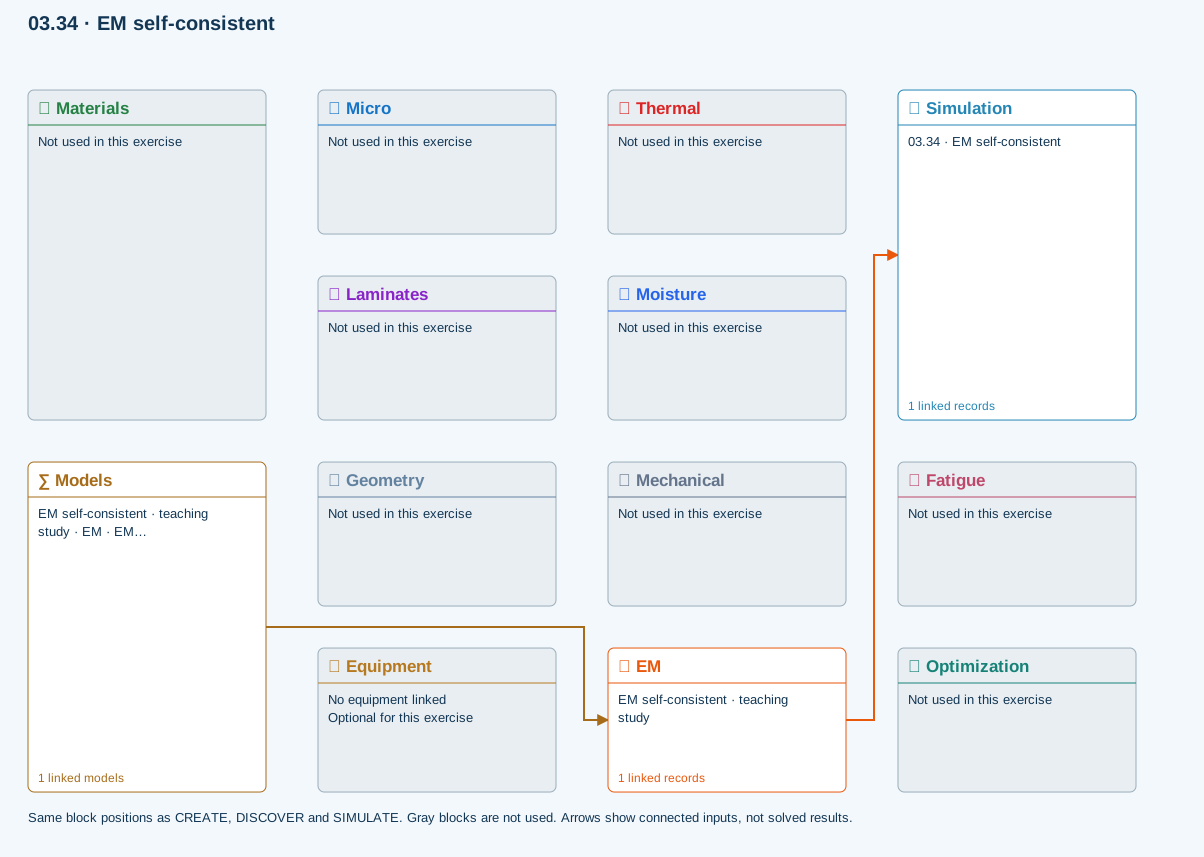
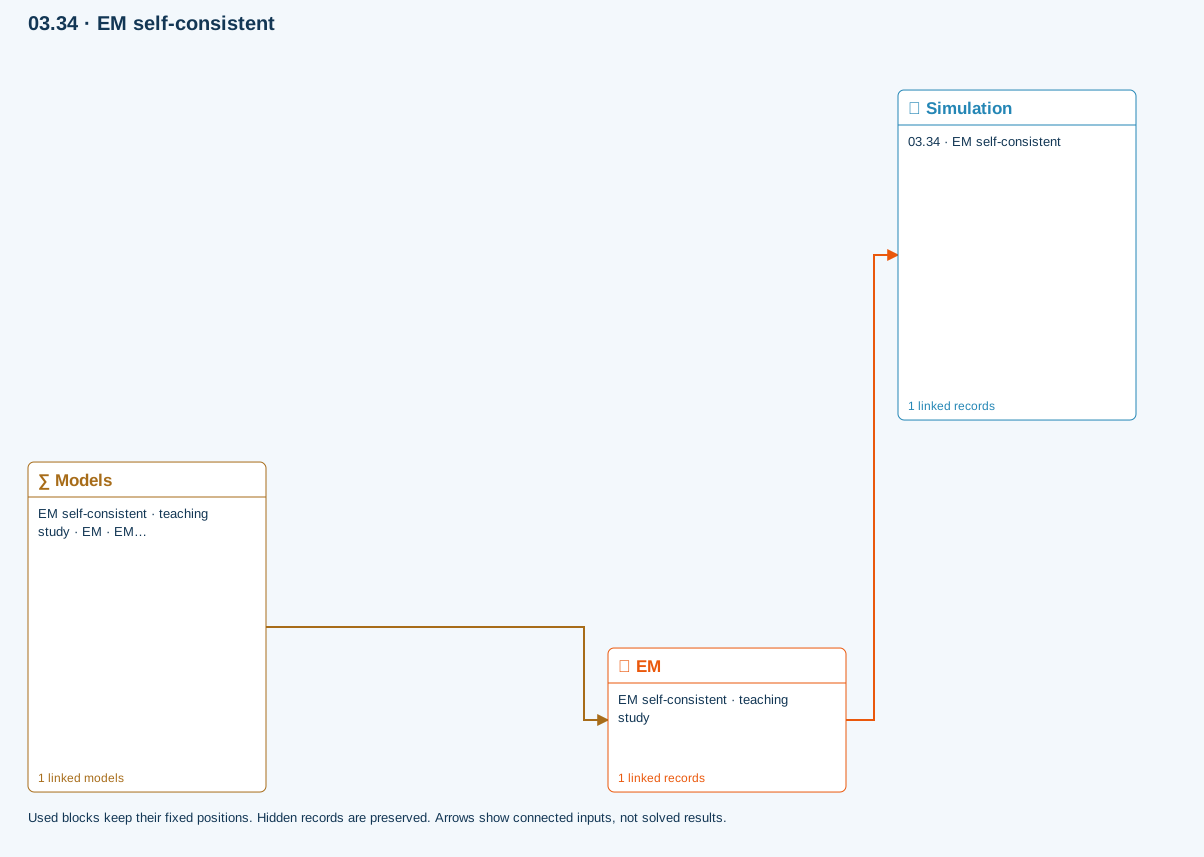
Scalar principal-axis self-consistency; spherical case equals Bruggeman.
Models → Electromagnetics · RF → Differential effective medium
Representative exercise workflow · supplied records remain in place; only used connections have arrows.
All blocks keep the CREATE / DISCOVER / SIMULATE positions, with Equipment below Geometry; unused records remain disconnected. This changes the view only, not the exercise records.
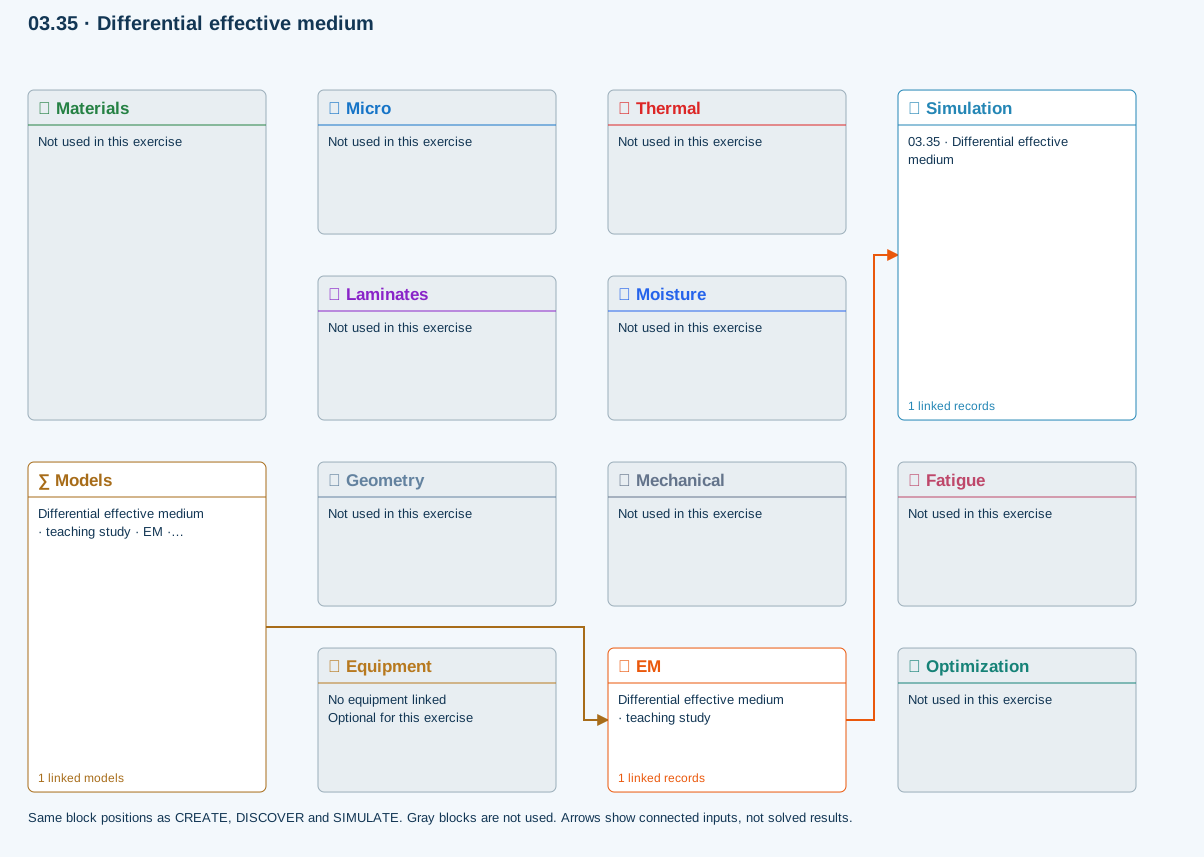
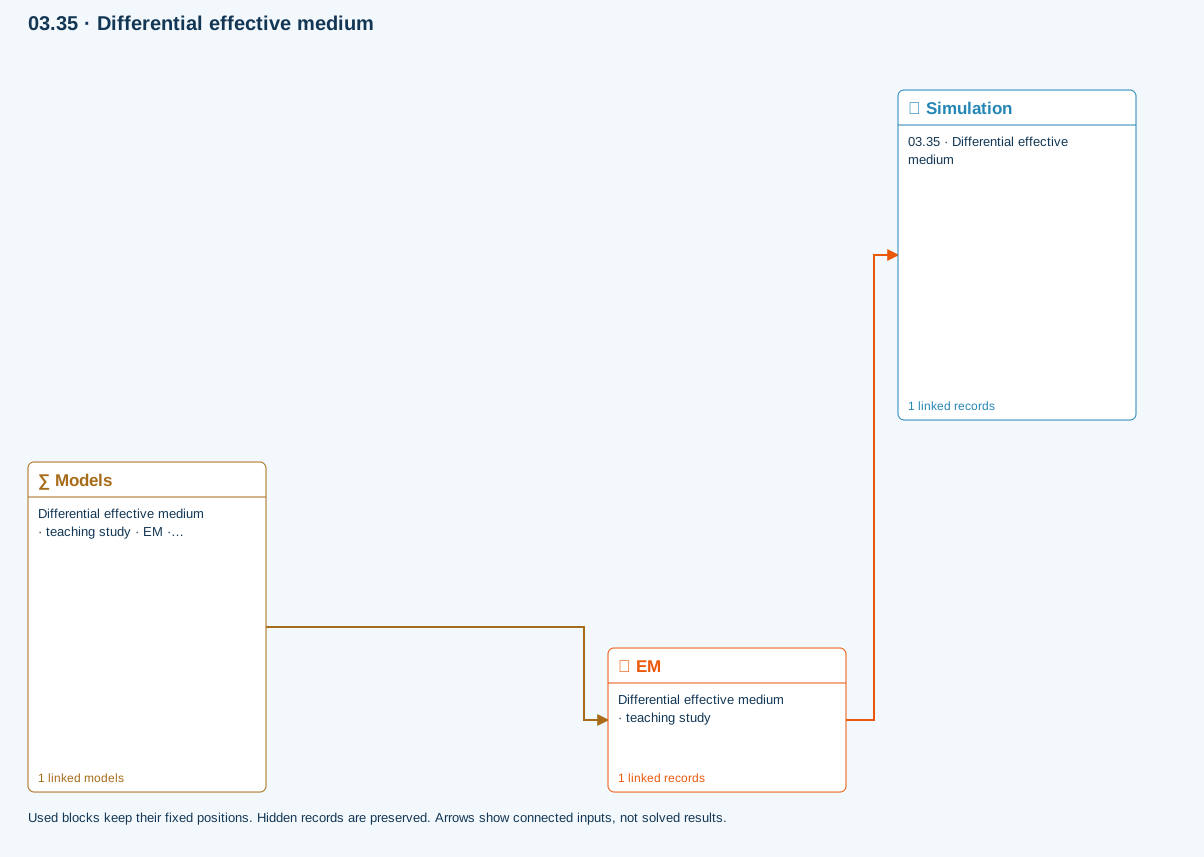
Incremental mixing with time-step refinement check.
Models → Electromagnetics · RF → Coated sphere and interphase
Representative exercise workflow · supplied records remain in place; only used connections have arrows.
All blocks keep the CREATE / DISCOVER / SIMULATE positions, with Equipment below Geometry; unused records remain disconnected. This changes the view only, not the exercise records.
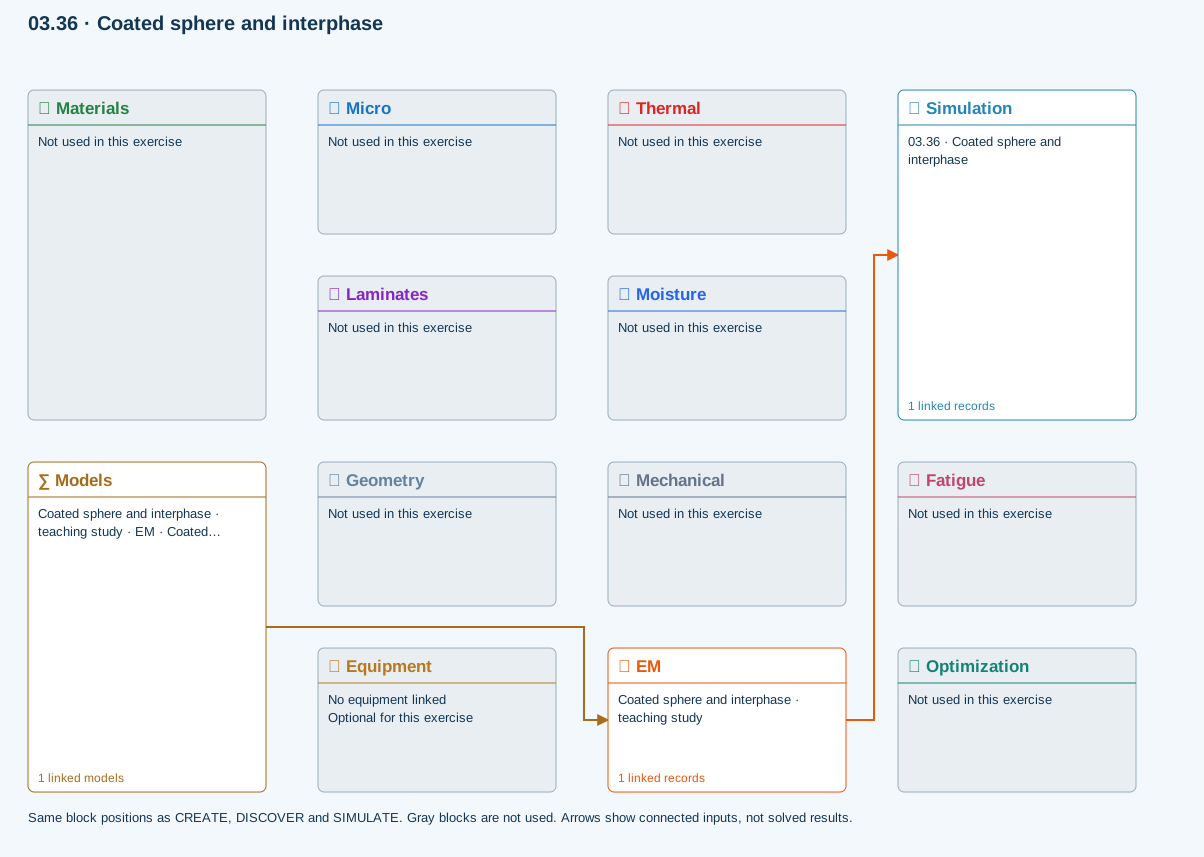
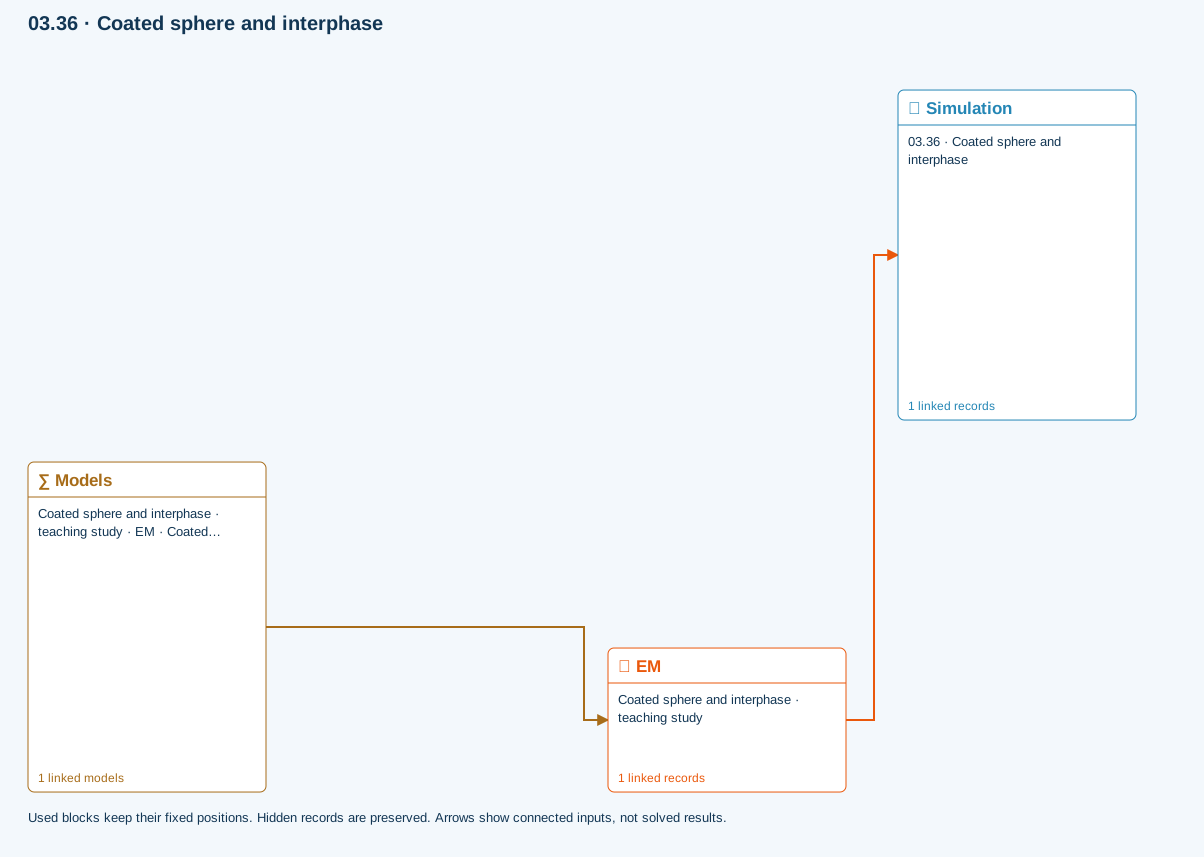
Concentric subwavelength coated spheres; no dynamic Mie scattering.
Models → Electromagnetics · RF → Generalized multiphase EMT
Representative exercise workflow · supplied records remain in place; only used connections have arrows.
All blocks keep the CREATE / DISCOVER / SIMULATE positions, with Equipment below Geometry; unused records remain disconnected. This changes the view only, not the exercise records.
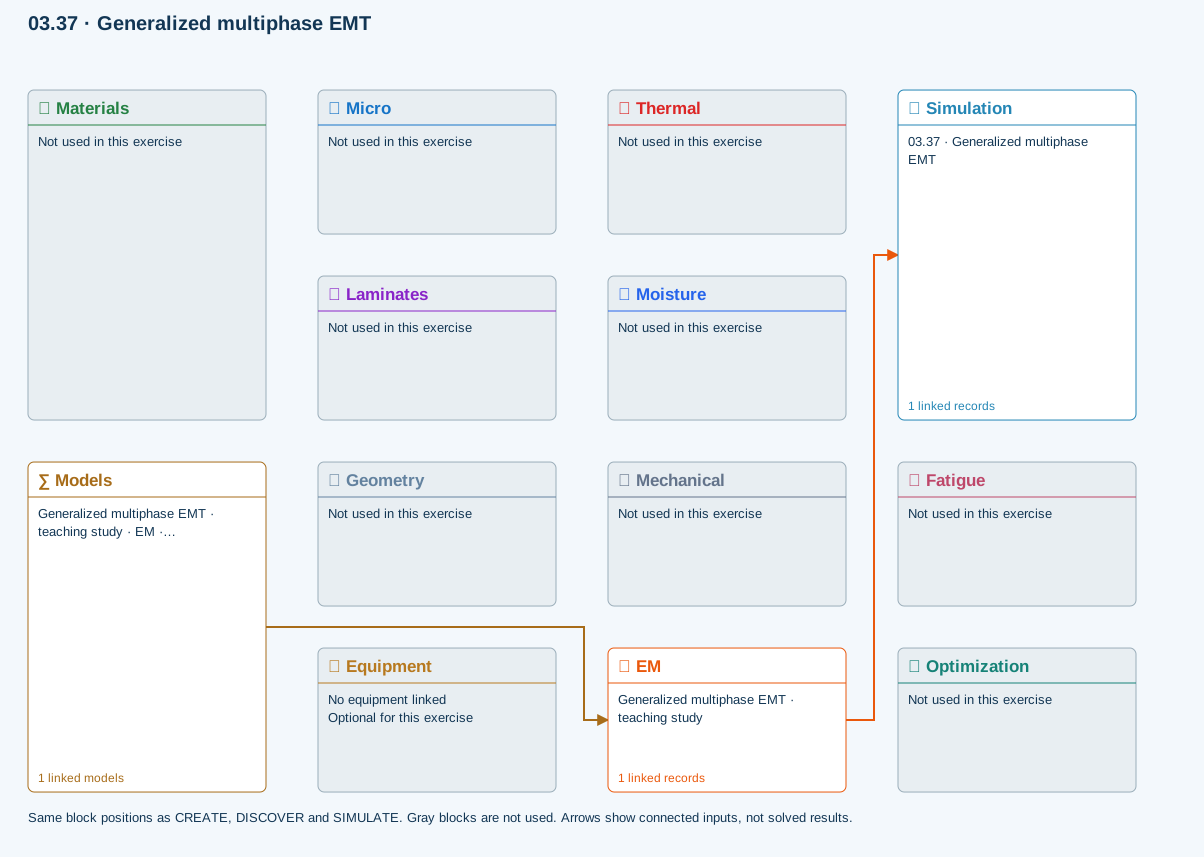
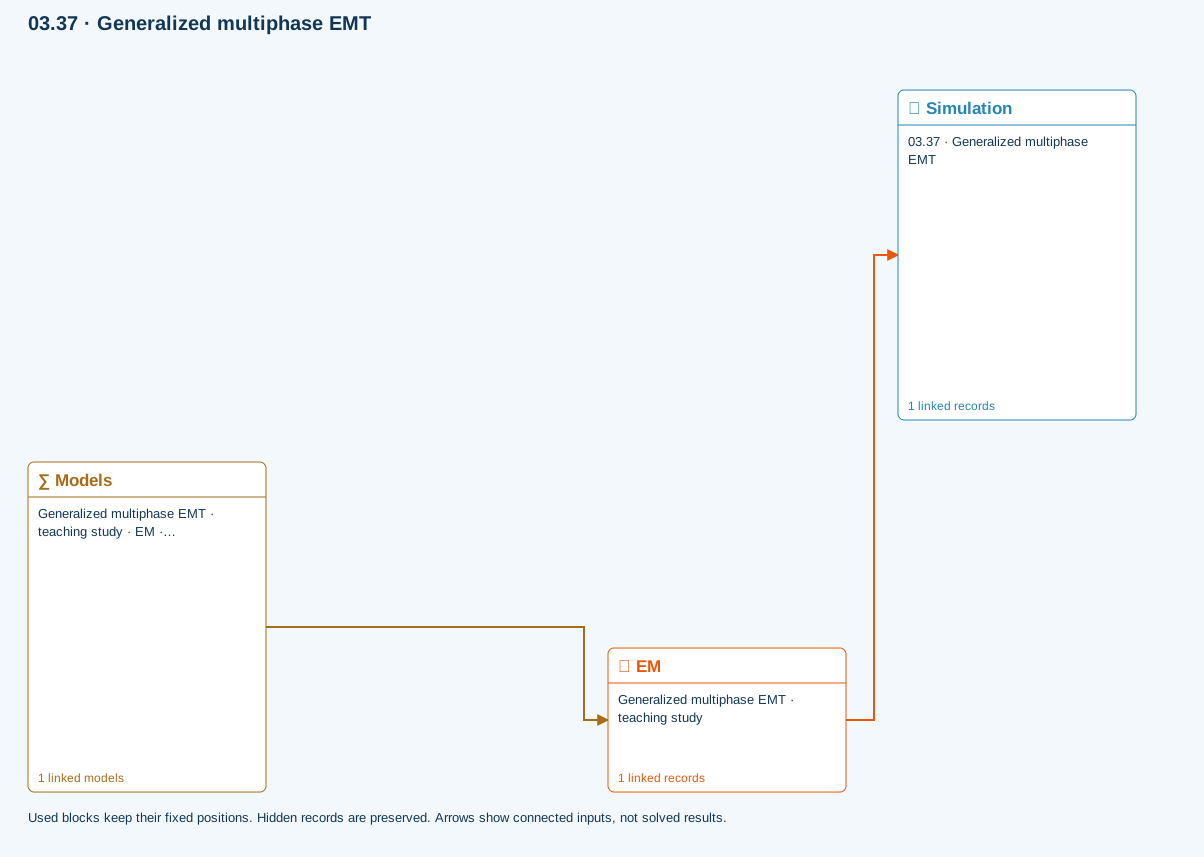
Spherical multiphase Bruggeman with convergence checks.
Models → Electromagnetics · RF → Oblique polarized laminate TMM
Representative exercise workflow · supplied records remain in place; only used connections have arrows.
All blocks keep the CREATE / DISCOVER / SIMULATE positions, with Equipment below Geometry; unused records remain disconnected. This changes the view only, not the exercise records.
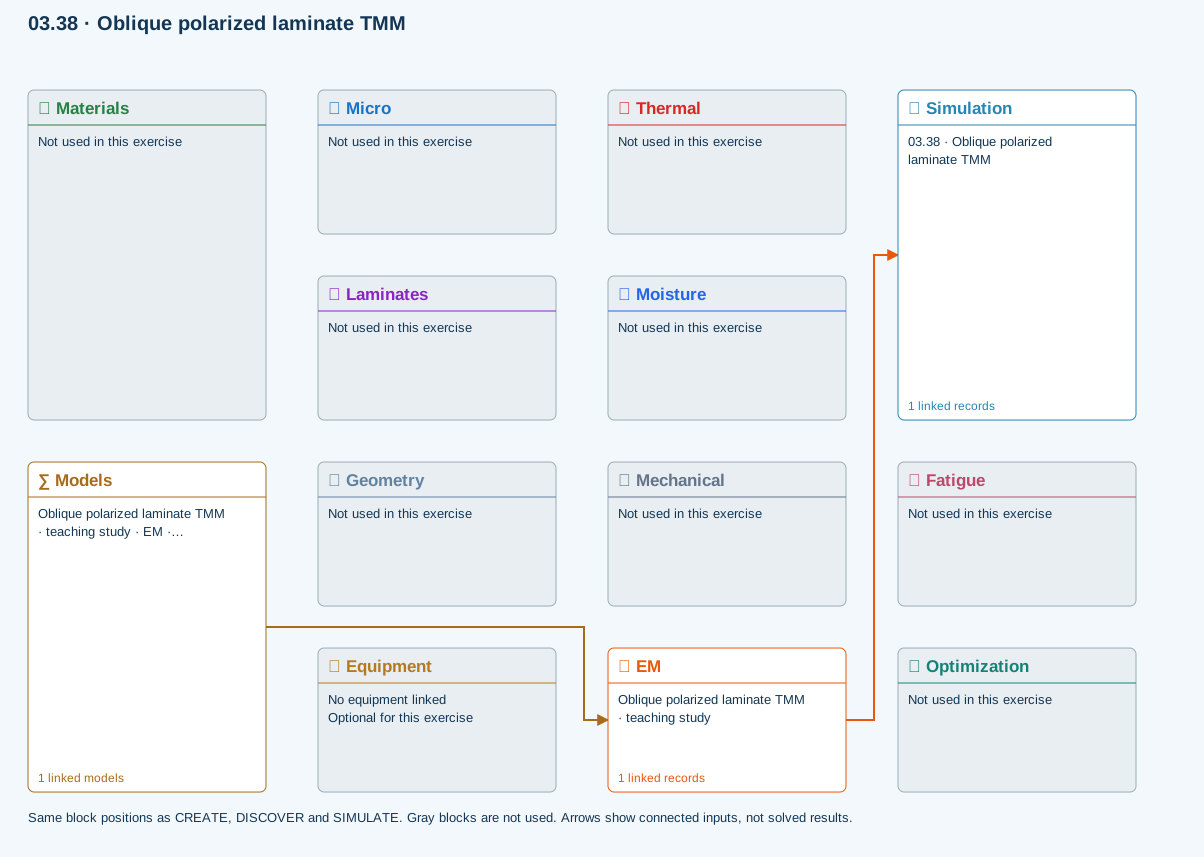
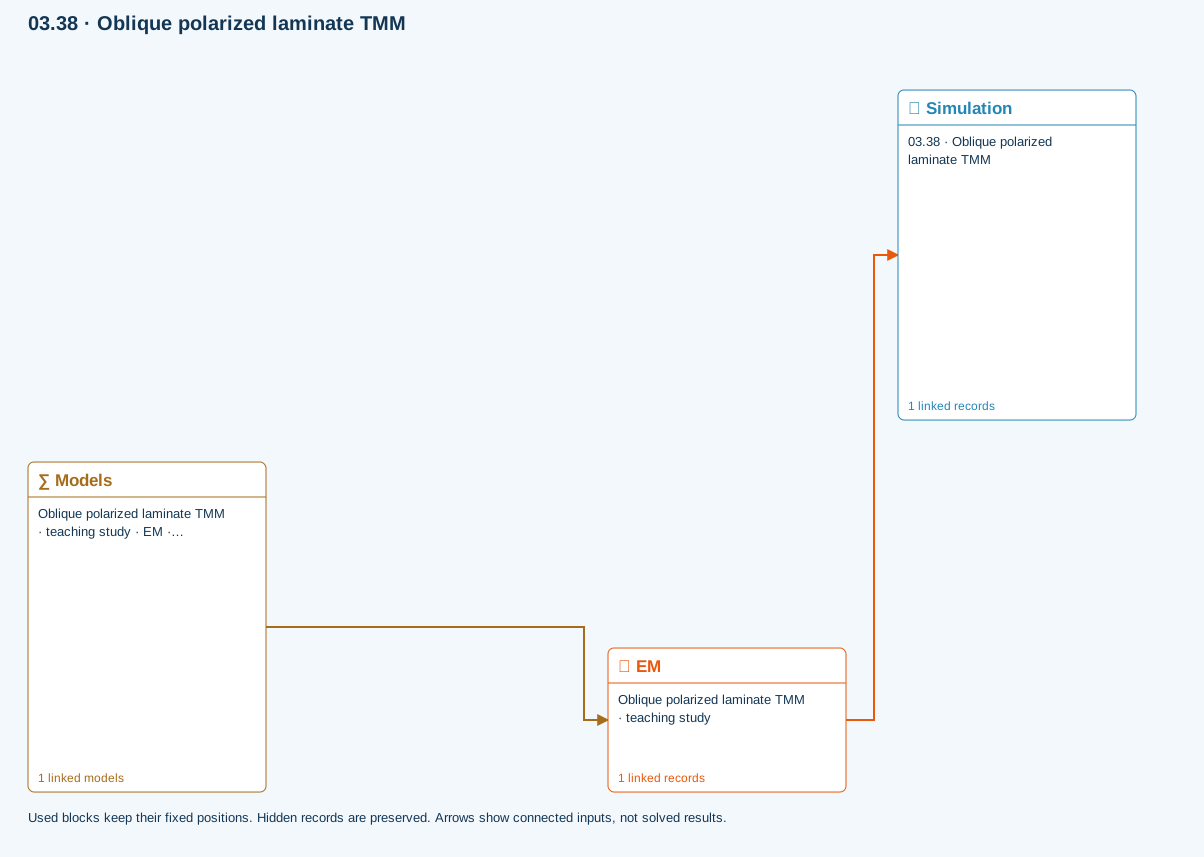
TE or TM waves; scalar isotropic layers, no polarization conversion.
Models → Electromagnetics · RF → 1D transmission line matrix
Representative exercise workflow · supplied records remain in place; only used connections have arrows.
All blocks keep the CREATE / DISCOVER / SIMULATE positions, with Equipment below Geometry; unused records remain disconnected. This changes the view only, not the exercise records.
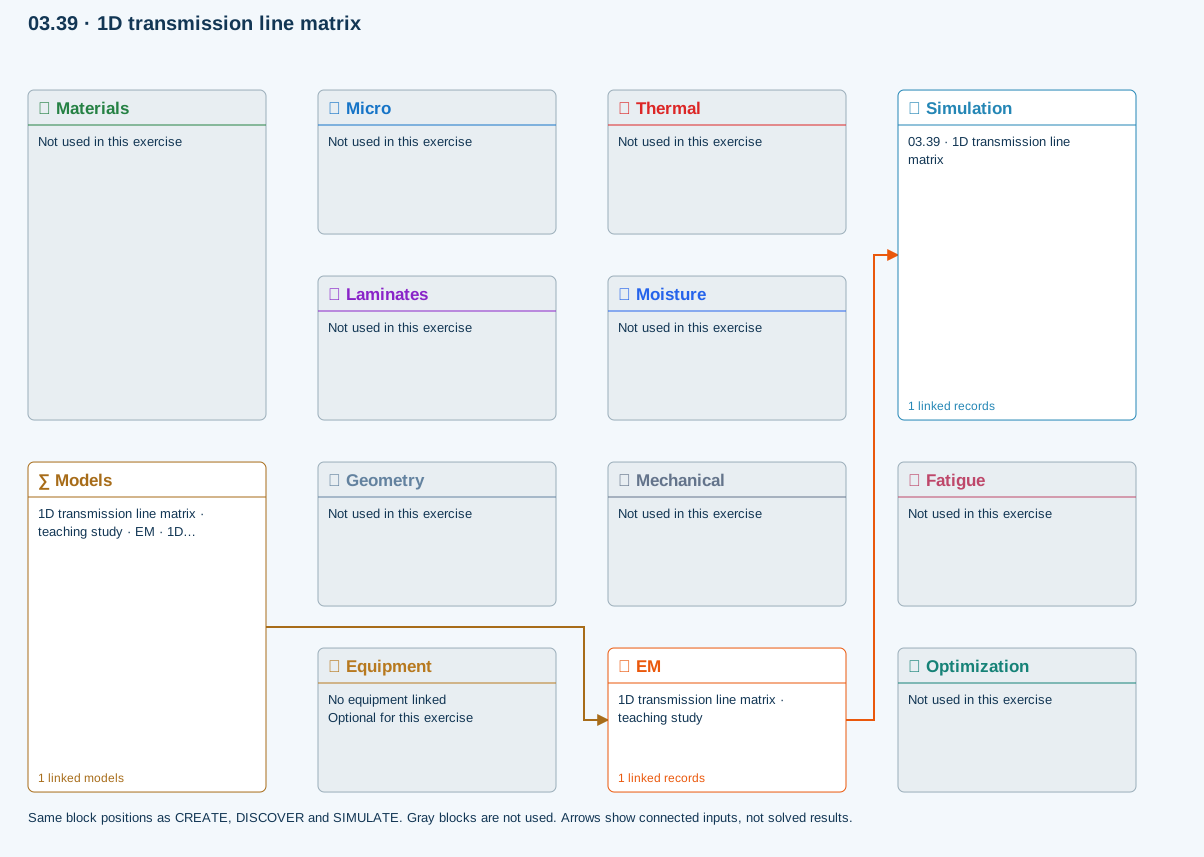
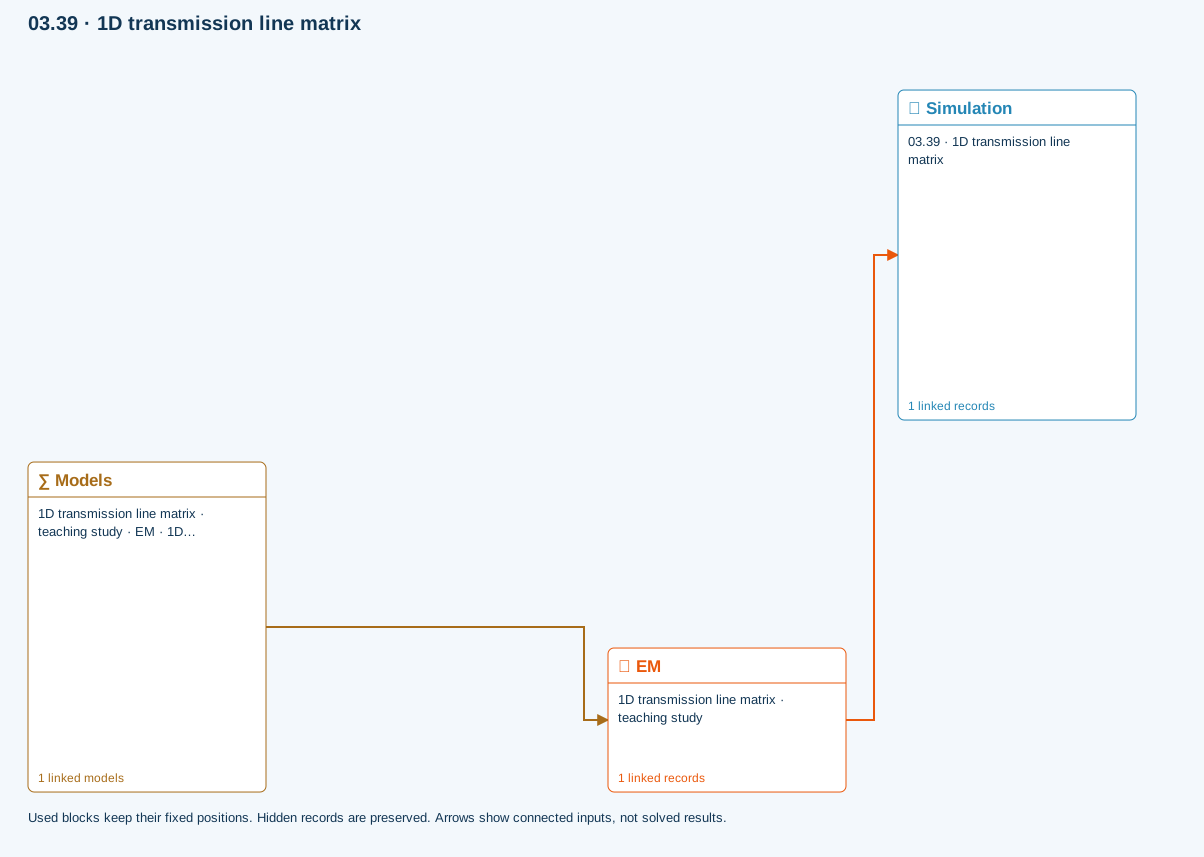
Normal-incidence lossless delay-line mesh with pulse decay, energy and mesh-refinement safeguards. Explicit Run required; not a 3D solver.
Models → Electromagnetics · RF → 1D Floquet–Bloch periodic layers
Representative exercise workflow · supplied records remain in place; only used connections have arrows.
All blocks keep the CREATE / DISCOVER / SIMULATE positions, with Equipment below Geometry; unused records remain disconnected. This changes the view only, not the exercise records.
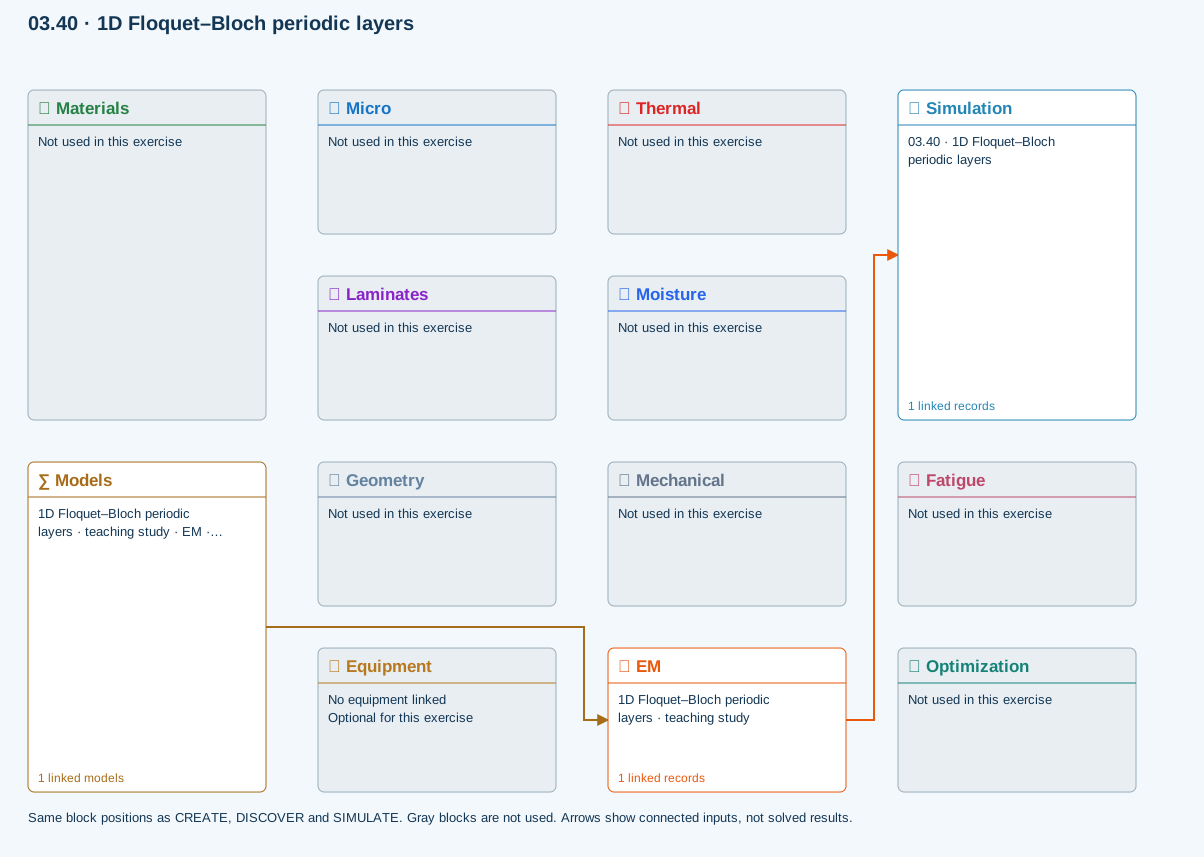
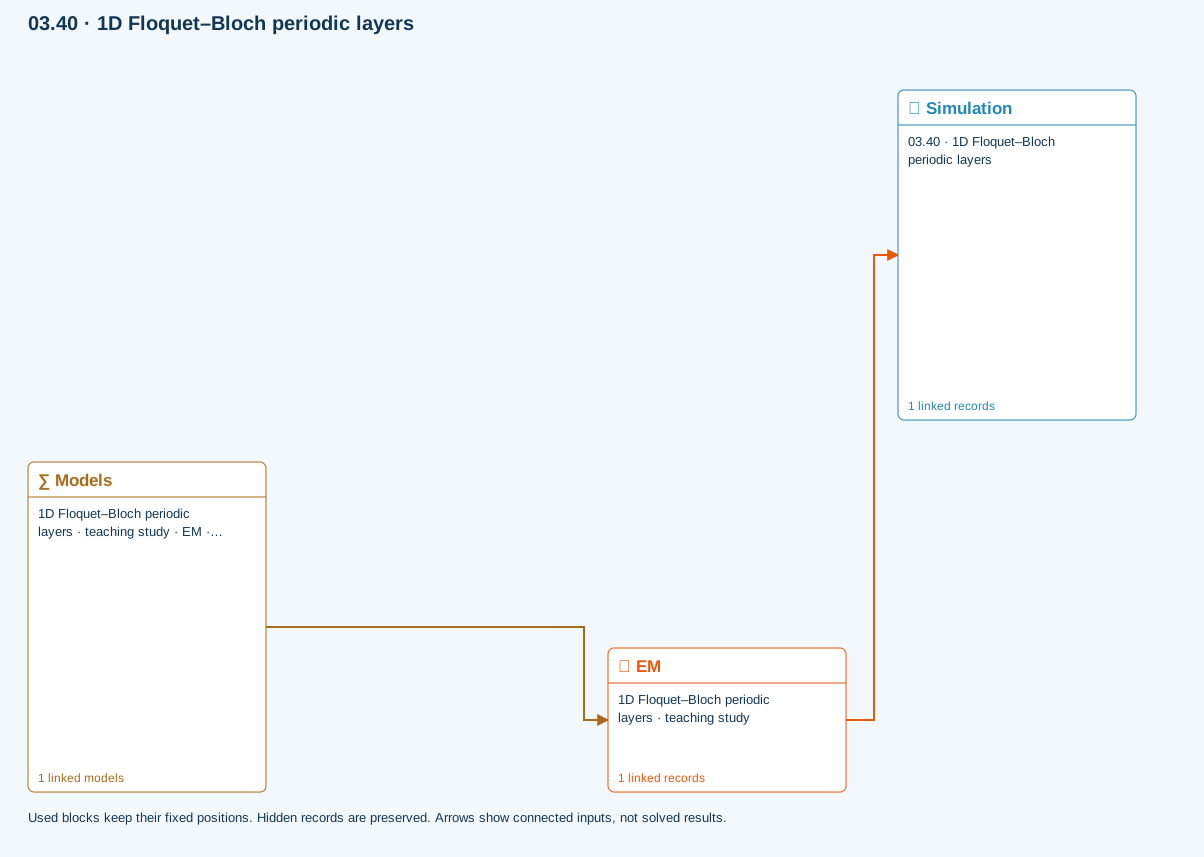
Lossless isotropic A/B unit-cell eigenvalues, folded Bloch phase and stop-band attenuation at normal incidence. Not arbitrary-cell homogenization.