
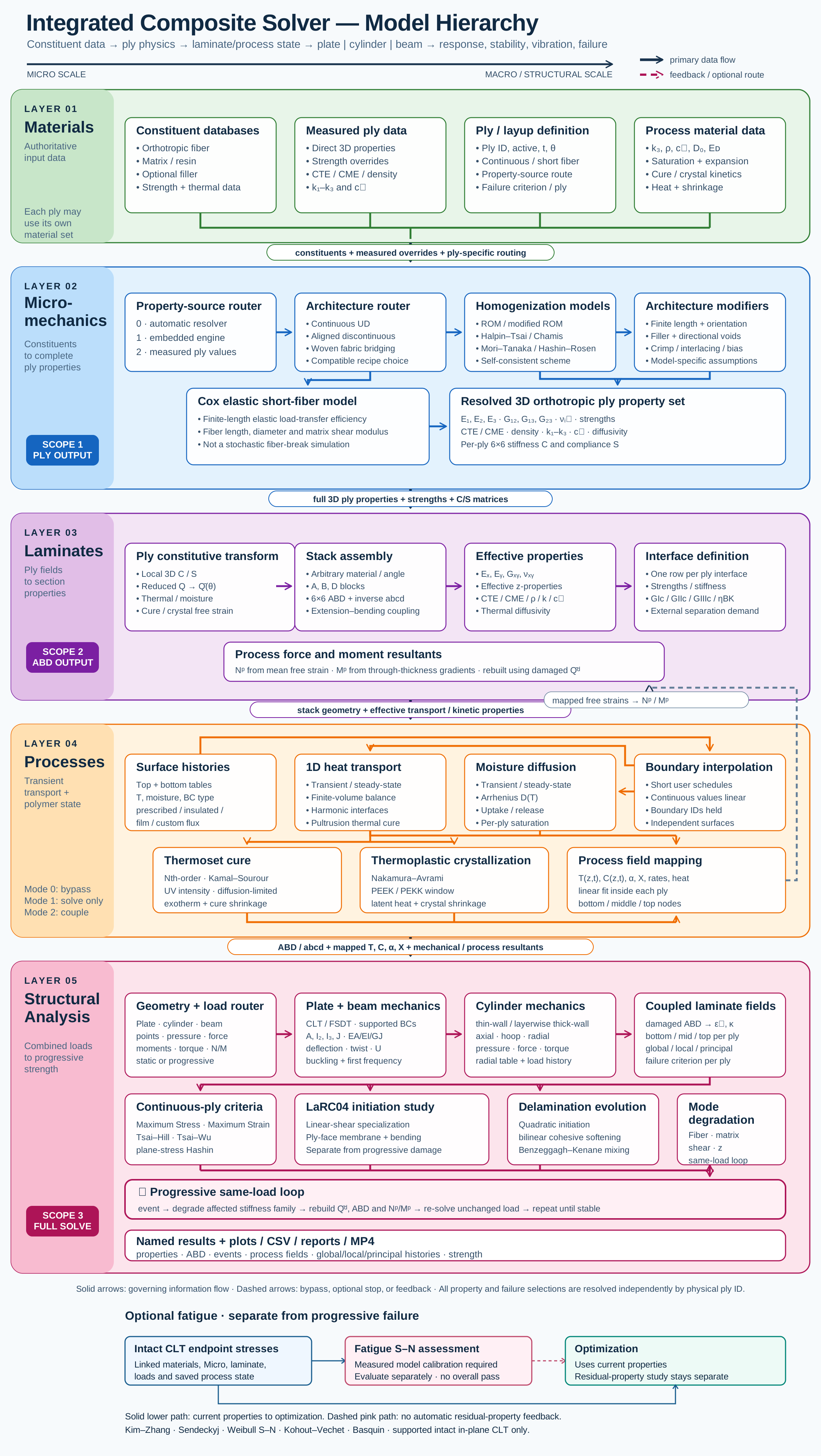
The input chain begins with data whose source and reference state are known. Decide whether a measured ply already represents the system or whether constituent data must be combined through micromechanics. Review transport and strength inputs independently of elasticity so that a complete mechanical record is not mistaken for a complete process record.
2.1 Build a trusted materials foundation.
Workflow / 03.1 Materials
Organize source-aware constituents, vendor records, prepregs, adhesives, cores, sandwich systems, diffusion data, cure kinetics, crystallization kinetics, reaction heat, and process shrinkage into reusable engineering records.
Connected model layer
Materials model map
Select a block to explore its theory or workflow. View the complete Model Map
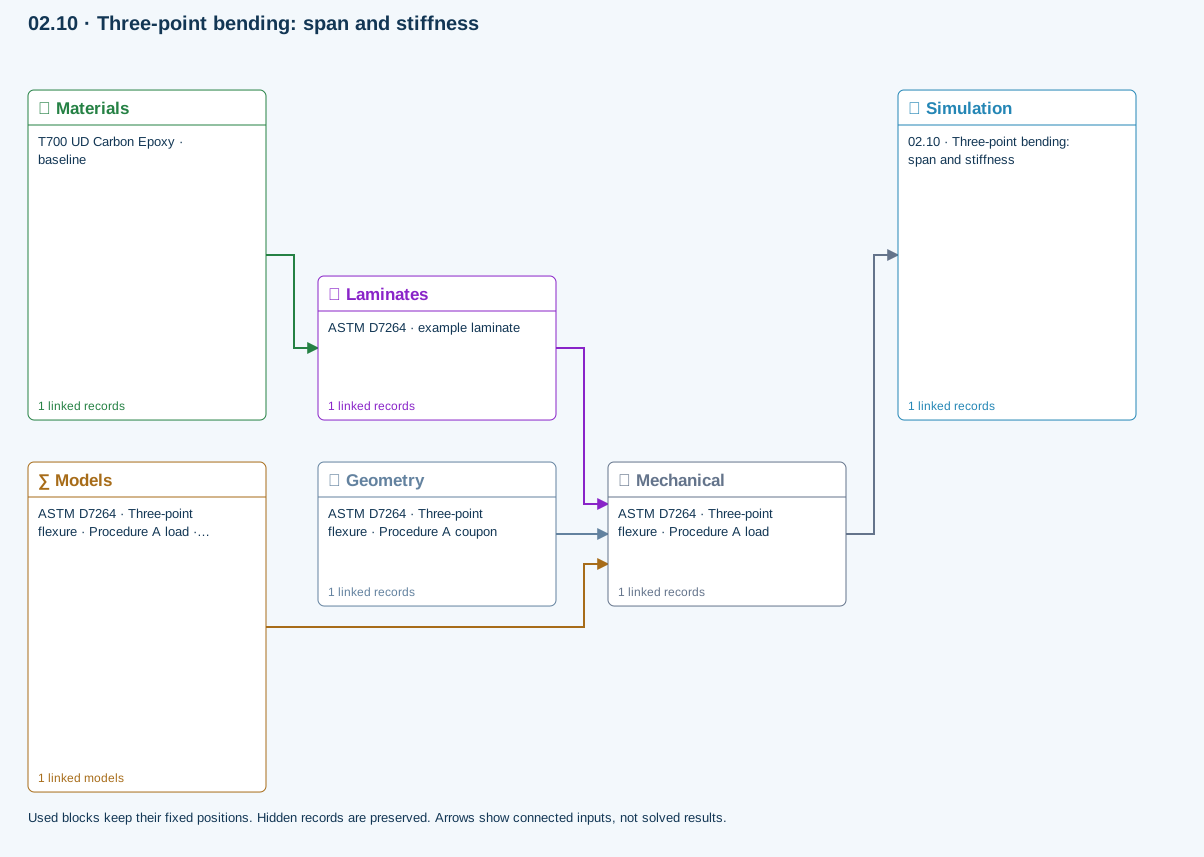
02.10 · Three-point bending: span and stiffness
Level 3IntermediateEst. 25 min
Only blocks on the exercise path are shown. This changes the view only, not the exercise records.
∑ Used models & submodels
Only models assigned to records used by this exercise are listed here. The full-layout option preserves the supplied starter records; no Workbench records are changed.
Euler–Bernoulli beam · Linear static · ASTM D7264 · Three-point flexure · Procedure A load
Beam bending uses effective laminate axial stiffness, the linked section geometry, support span and applied loading. Euler–Bernoulli deflection excludes transverse shear deformation, roller contact and indentation. Ply stress recovery for rectangular laminate coupons is separate from section-level beam stress recovery.
∑ Theory & assumptionsData travelling between blocks
Materials → Laminates
Stored ply stiffness, strength, density and expansion properties.
Mechanical → Simulation
SIMULATION selects this case and its analysis model; the case owns its applicable cycle and input references.
Laminates → Mechanical
Ply angles and thicknesses, stiffness, mass and ply properties.
Geometry → Mechanical
Part shape and dimensions, thickness or section definition, and model-specific geometric inputs. Each selected case consumes only the dimensions its model supports.
Models → Mechanical
Applied model assignment: Euler–Bernoulli beam · Linear static. Model parameters and formulation are used by Mechanical.
Inspect specimen width, laminate thickness, support span and central force.
Models: Euler–Bernoulli beam · ASTM D7264-based
Study scope and limitations
Procedure A teaching setup. Transverse shear deformation, roller contact and indentation are excluded.
03.1 / Workflow focus
Connected engineering recordSource-aware constituents
Keep elastic, strength, density and transport data with their units, sources and calibration basis.
Material models
Assign calibrated cure, crystallization, modulus or transport models through the material record. A model sitting in the tree does not contribute until it is linked.
Measured or predicted plies
A laminate ply can use a stored material or linked Micro recipe. Check the resolved properties before selecting the structural study.
Data handoff
Materials feed Micro and the linked laminate. Compatible transport studies evaluate the selected material laws; not every structural study includes processing.
Use this workflow in Workbench: interactive Blocks, record selections and connection controls →
Connected model layer
Materials · released model connections
Select a model family to follow its inputs, results, theory and exercise. All model families ↗
Follow the connections
Heat, moisture & manufacturing
Material laws & boundary cycles
Calibrated kinetics, modulus or transport laws and material assignment
Transport & reaction
History & compatible process fields
Material laws consumed by compatible Micro or transport calculations
Representative exercise: this map shows its supplied records and active connections, not every possible configuration of the model family.
Only blocks on the exercise path are shown. This changes the view only, not the exercise records.
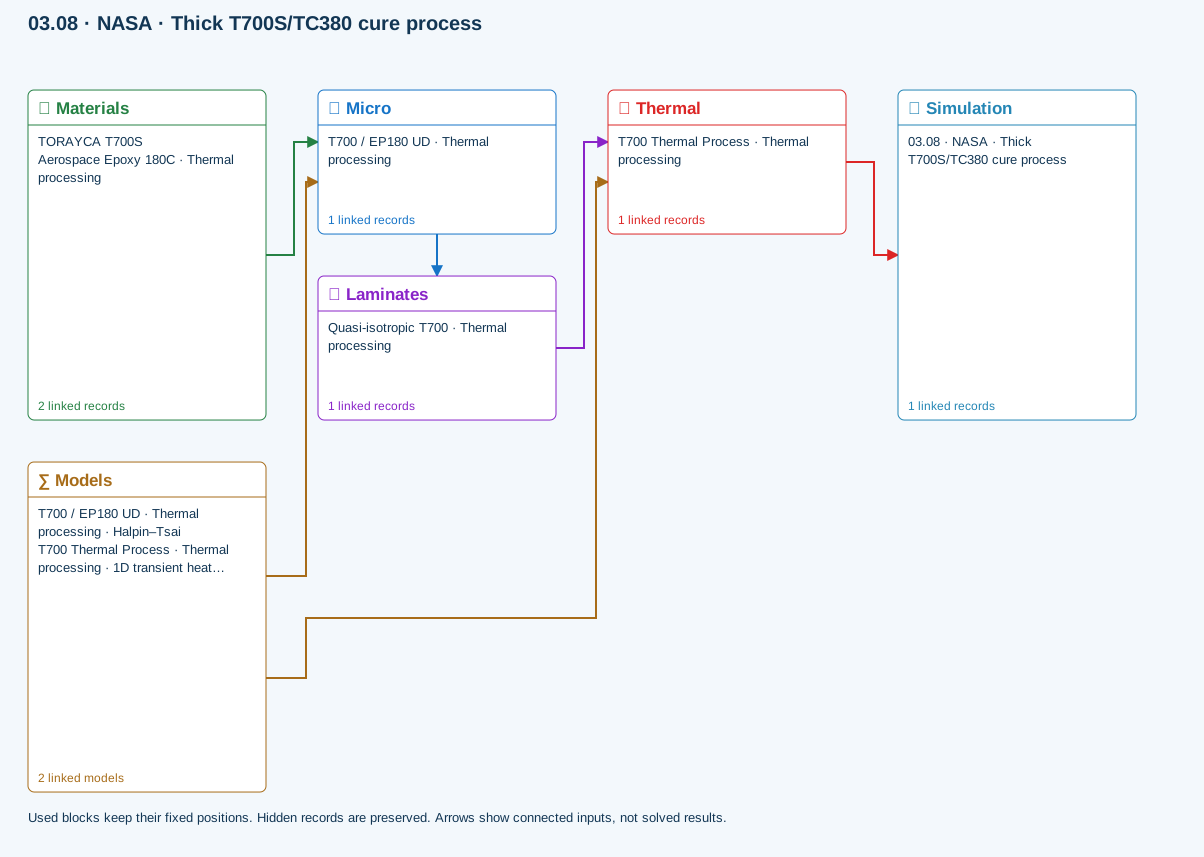
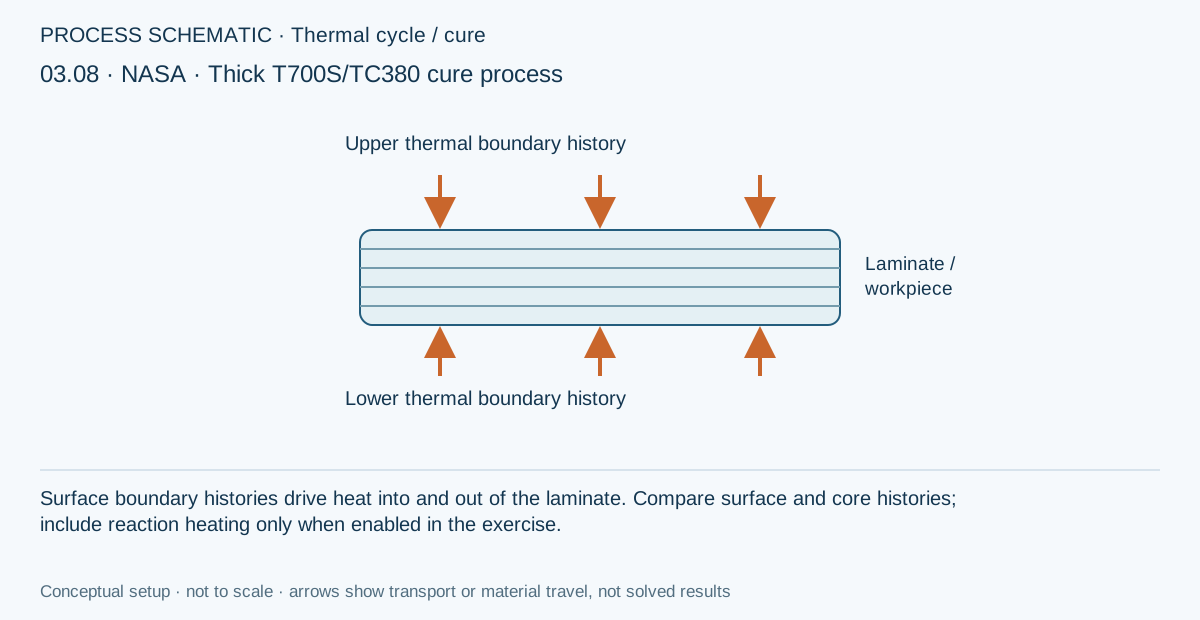
Cure, crystallization & material transport
Independent model records can be linked together through material inputs. A saved model must be assigned to a material before it contributes to a simulation.
Model choices and Workbench location
Models → material-model folders · assigned through Materials
- Kamal–Sourour autocatalytic
- Kamal–Sourour with diffusion control
- Nth-order Arrhenius
- CHILE (degree of cure)
- UV intensity-dependent cure
- Nakamura–Avrami
- Temperature-dependent tabular
- 1D Fickian diffusion
Chapter review
The next stage should receive the properties it actually needs, with explicit sources and units.
Current Workbench model references
These model-specific guides describe the documented Workbench controls. Read their calibration requirements and coupling limits; release notes distinguish announced releases from development previews.
References and source sections
References are retained with the formulations they support. Software instructions describe implementation scope; a cited source does not establish independent validation of a CDS calculation.