
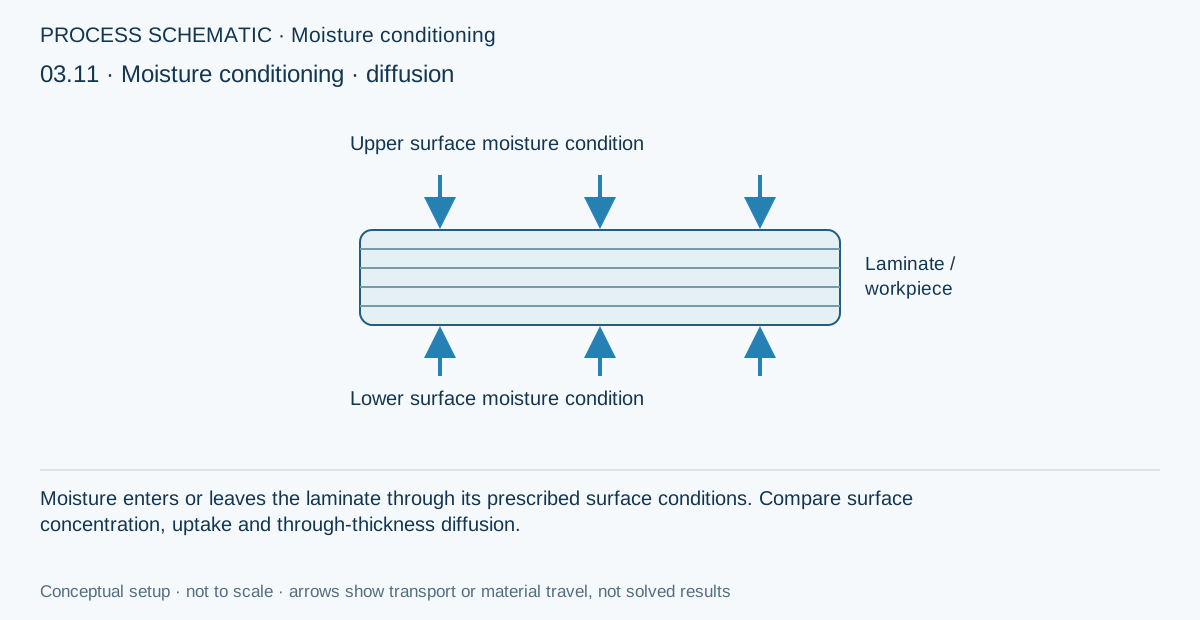
Moisture exposure establishes a boundary condition, while uptake inside the material develops over time. This exercise examines that distinction by following the surface and core histories and comparing the response at different conditioning durations.
Open this exercise in Workbench
Prepare the baseline
Record initial moisture, the environmental schedule, equilibrium or saturation inputs and diffusivity before running. Check the quantity and units used at the boundary. Extend the duration as instructed without also changing the material properties, so that the comparison isolates the time available for transport.
Worked procedure
1. Inspect initial moisture, the conditioning cycle, saturation and diffusivity inputs.
2. Run and compare surface and core moisture histories.
3. Increase conditioning duration and rerun; explain why core uptake lags the boundary.
Review checkpoints
Distinguish humidity boundary inputs from moisture concentration inside the material.
Check units and the linked diffusivity before comparing time scales.
Model limits
One-dimensional Fickian transport with the selected constitutive inputs, not a prediction of chemical degradation.
Interpret the comparison
Explain what the surface and core values show about the progress of conditioning, rather than assuming the whole specimen has reached the boundary state. Keep absorbed concentration separate from environmental humidity. Any swelling or mechanical conclusion requires the appropriate expansion data and an explicitly supported structural connection.
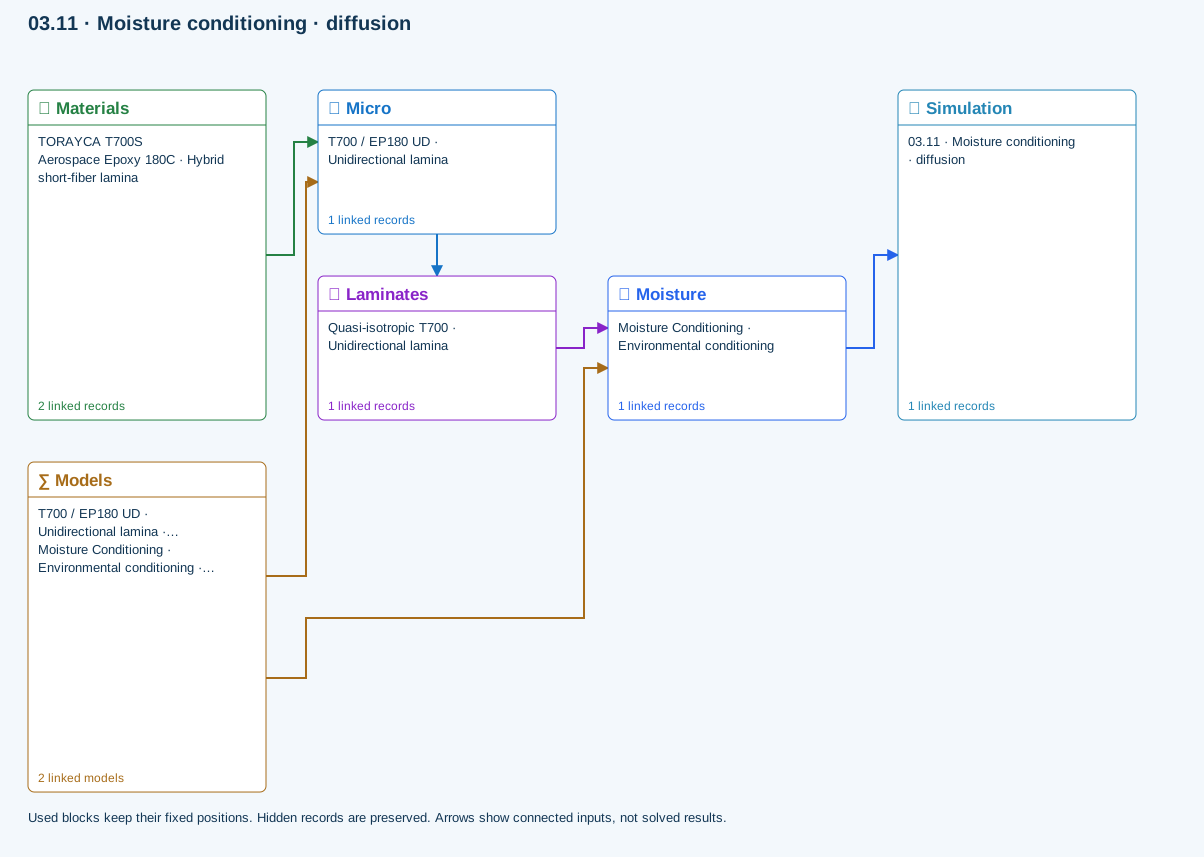
How information passes between models
Micro → Laminates: Predicted ply stiffness, strength, density and expansion properties.
Materials → Micro: Constituent stiffness, strength, density and thermal / moisture properties.
Moisture → Simulation: SIMULATION selects this case and its analysis model; the case owns its applicable cycle and input references.
Laminates → Moisture: Ply angles and thicknesses, stiffness, mass and ply properties.
Models → Micro: Applied model assignment: Halpin–Tsai. Model parameters and formulation are used by Micro.
Models → Moisture: Applied model assignment: 1D transient moisture diffusion. Model parameters and formulation are used by Moisture.
Further reading and evidence
- Enter a process cycle and boundary conditions
- Edit material properties and units
- Run and review a model
- Connected inputs and result freshness
Review the recorded validation scope. Retain the original inputs and solver notices with the results. Representative teaching data are not design allowables.
References and source sections
References are retained with the formulations they support. Software instructions describe implementation scope; a cited source does not establish independent validation of a CDS calculation.