
An optimization study is a structured comparison within a stated set of choices and constraints. This exercise teaches you to define that comparison, inspect which candidates are feasible and preserve the search settings so that the selected result can be understood and reproduced.
Open this exercise in Workbench
Prepare the baseline
Run or inspect the baseline first, then enter the objective, bounds, constraints and sampling or search controls exactly as specified. Record the seed where one is provided. Keep infeasible outcomes visible: they help explain the constraints and should not be silently discarded or treated as a solver success.
Worked procedure
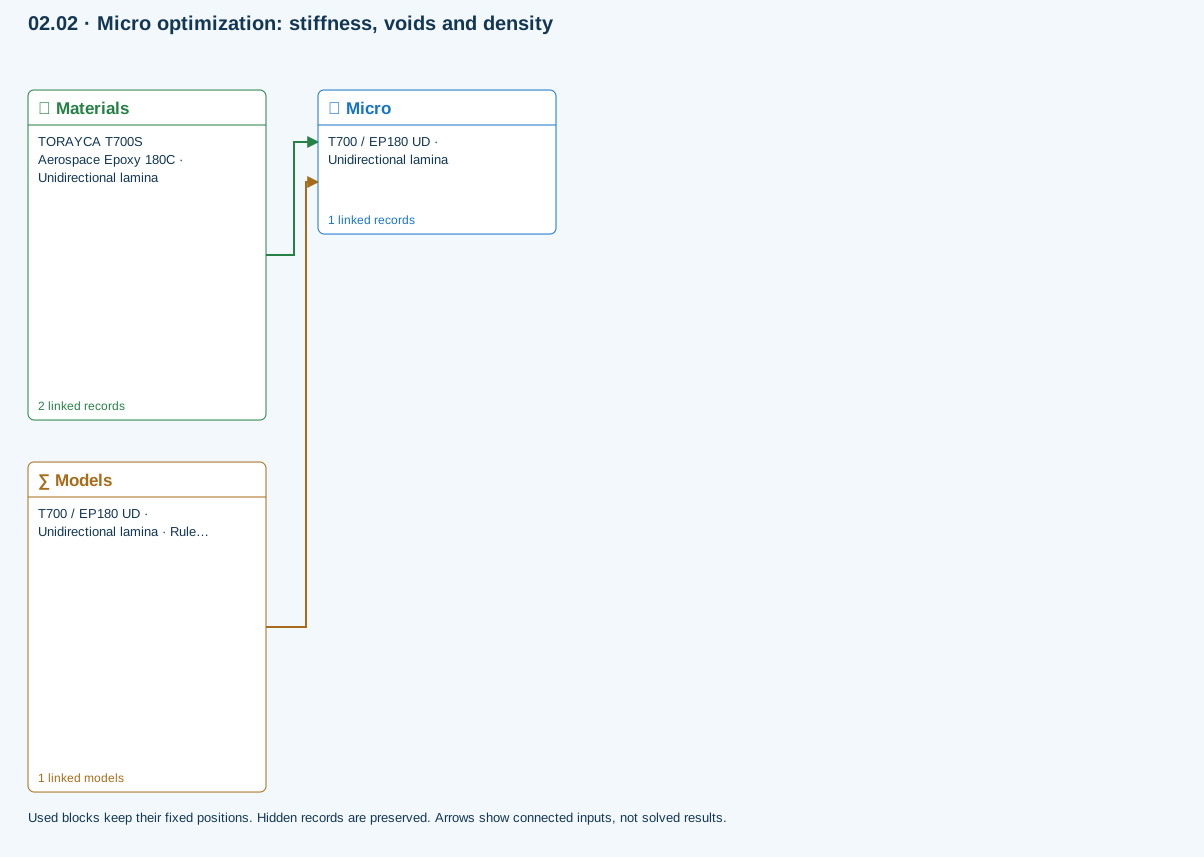
1. Open Simulation and identify the linked Micro recipe and constituent materials. Open Optimize → Lamina / Micro and select that recipe.
2. Set fiber volume fraction to Sweep, minimum 0.30 and maximum 0.70; set void volume fraction to Sweep, minimum 0 and maximum 0.05. Keep every other variable at its source value. Use 11 samples per axis.
3. Choose maximum E1 / density. Set minimum E2 = 0, minimum G12 = 0 and maximum density = 2000 kg/m³. Run the map and compare the best feasible point with neighboring samples.
4. Save as Micro stiffness-density study. Reopen Optimizations → Micro and inspect All saved optimization inputs. Change a source material and verify the saved effective inputs and result remain unchanged.
Review checkpoints
The maximum is best among the sampled designs, not a proof of a global continuous optimum.
Void and fiber fractions must leave a positive resin fraction. No strength pass is inferred from this elastic study.
Model limits
Guided optimization case study using shared database records. Configure the documented search in Optimize, then save its results and inputs. No precomputed optimum or benchmark-validation claim. Ideal continuous, aligned reinforcement with zero voids. This is a teaching comparison, not a measured material allowable.
Interpret the comparison
Describe the best feasible candidate found within this search, not an unqualified global optimum. Inspect neighbouring samples or repeat the stated search comparison where requested, then create and rerun the candidate in the relevant analysis. A saved optimization snapshot and a newly evaluated design are separate pieces of evidence.
How information passes between models
Materials → Micro: Constituent stiffness, strength, density and thermal / moisture properties.
Models → Micro: Applied model assignment: Rule of mixtures. Model parameters and formulation are used by Micro.
Further reading and evidence
- Optimization cases: complete inputs and guided studies
- Create and connect a lamina
- Connected inputs and result freshness
Review the recorded validation scope. Retain the original inputs and solver notices with the results. Representative teaching data are not design allowables.
References and source sections
References are retained with the formulations they support. Software instructions describe implementation scope; a cited source does not establish independent validation of a CDS calculation.